

Antique Black Chairs
These antique black chairs span centuries of dark finishes and ebonised timber, bringing structured presence and dramatic contrast to an interior.
Antique Black Chairs
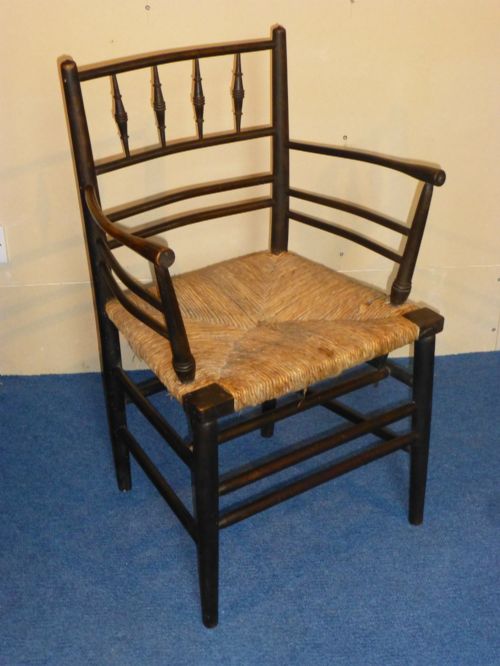
Antique black chairs encompass a wide variety of seating forms, ranging from formal Regency library chairs and Victorian dining chairs to rustic Windsor chairs and Arts and Crafts designs. The dark finish is achieved through ebonising timber, painting wood, or utilising naturally dark woods such as ebony and blackwood.
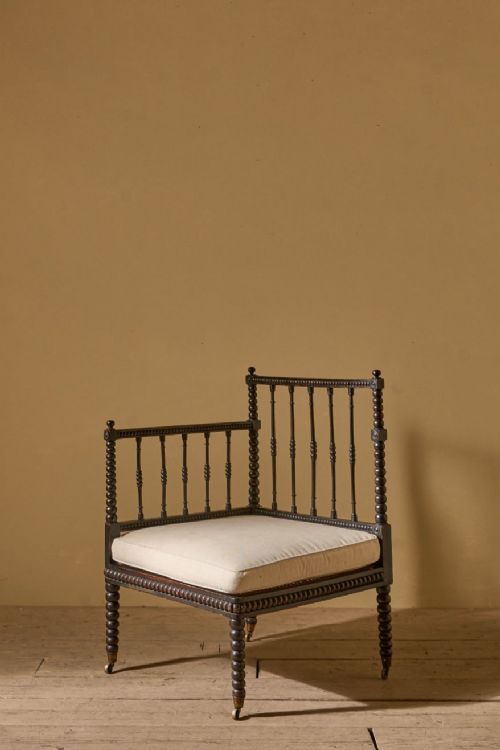
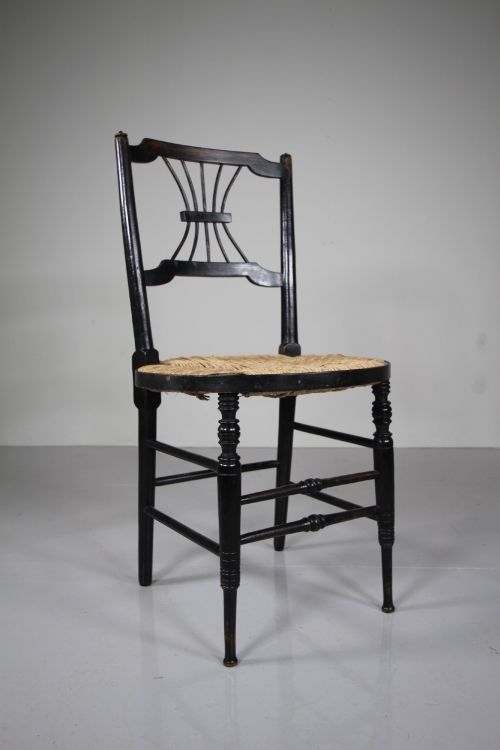
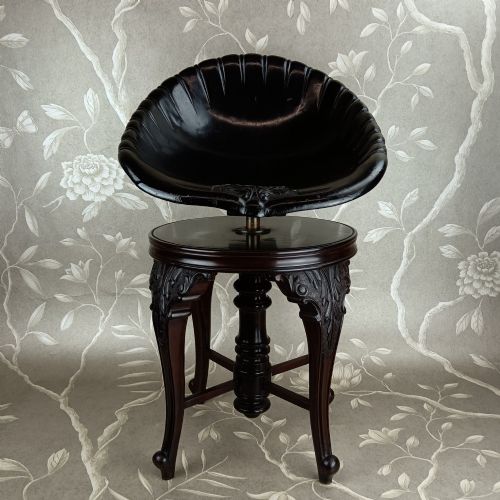
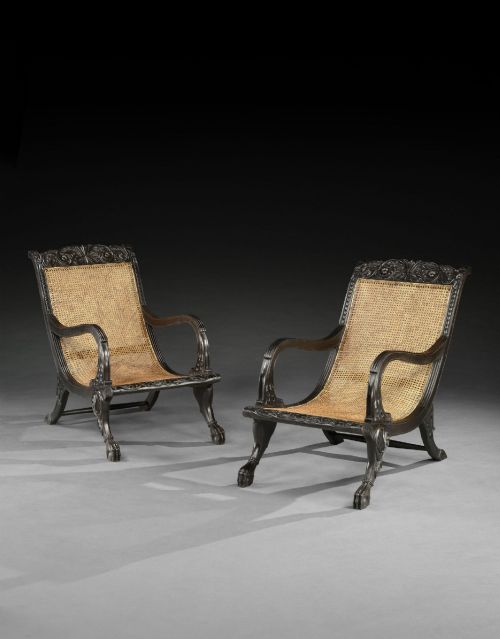
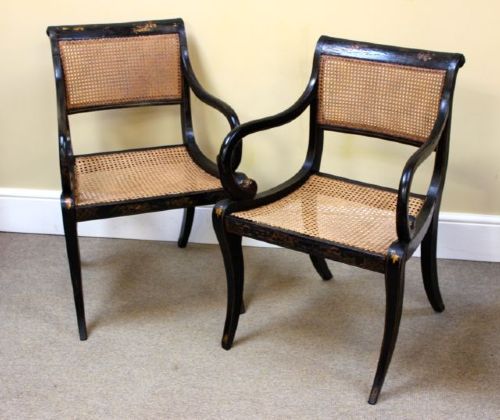
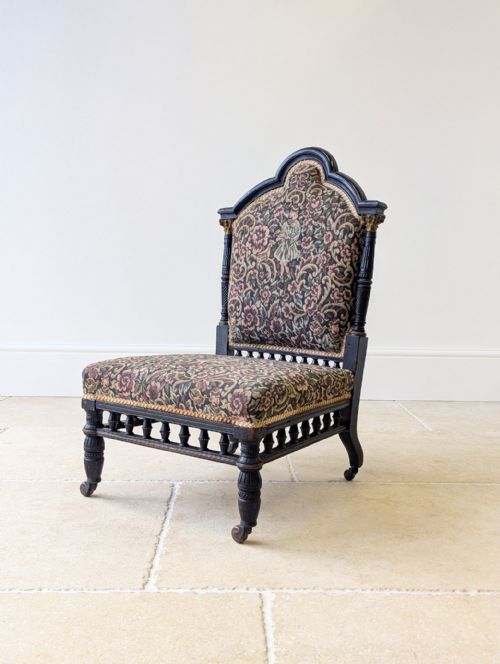
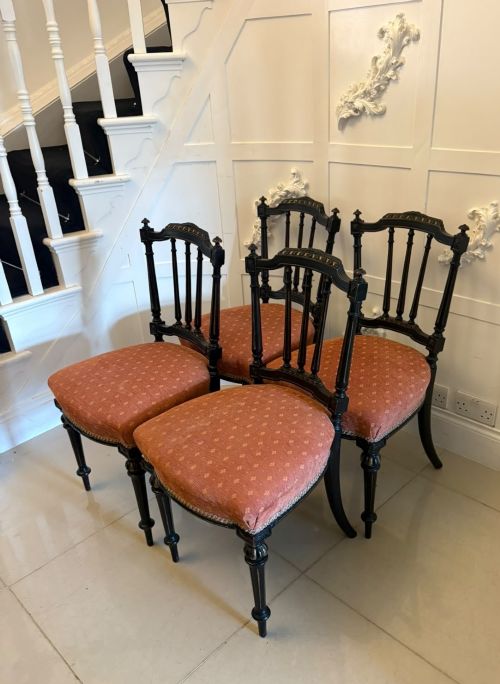
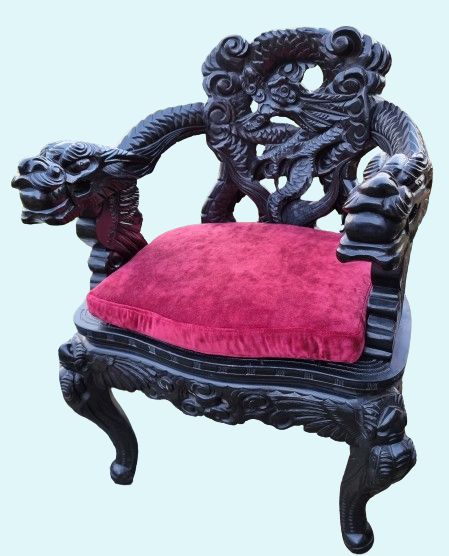
Buyers will most frequently encounter Victorian and 19th-century examples on this page, including ebonised side chairs, aesthetic movement salon chairs, and caned armchairs. Forms vary from simple desk chairs and music stools to elaborate carved Anglo-Indian and chinoiserie seating.
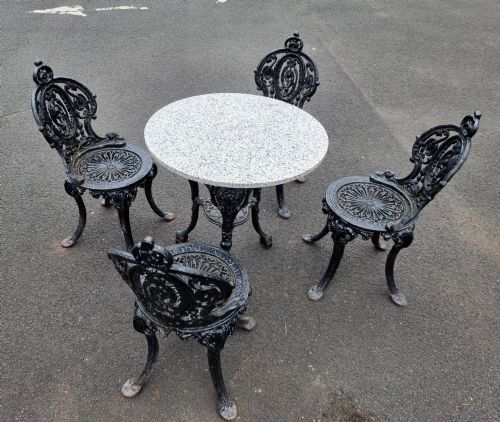
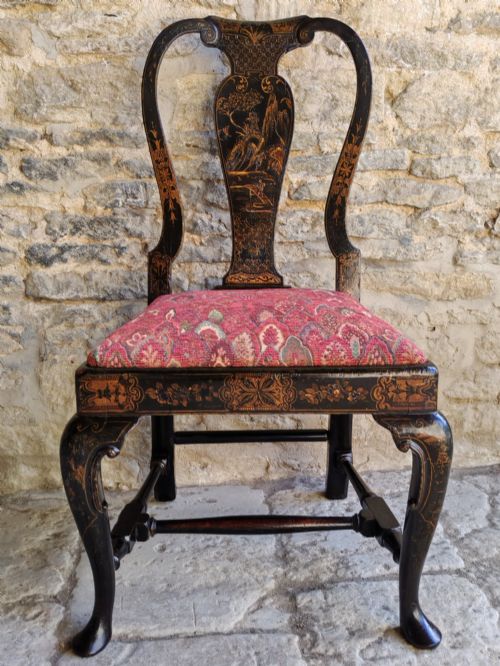
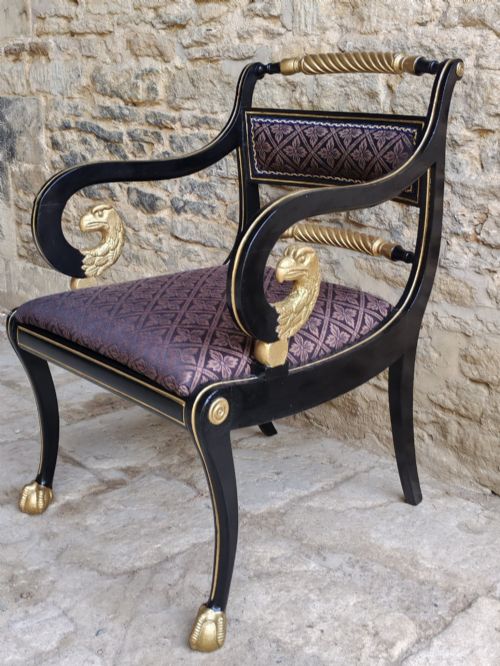
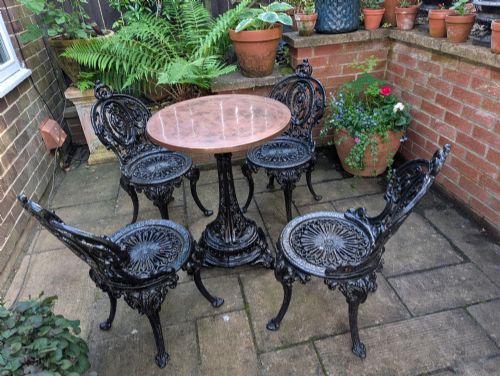
The selection also reaches back to the 18th century with painted George III pieces and chinoiserie side chairs, alongside 20th-century art deco birch armchairs and cast-iron garden sets. Each period brings its own characteristic silhouette, from the sabre legs of the Regency era to the clean lines of the Arts and Crafts movement.
How they were made
Makers utilised a range of techniques to achieve a dark surface, including applying black paint, lacquer, or polish to standard timbers like mahogany, beech, and ash, as well as working with solid exotic hardwoods such as ebony and blackwood. Ebonising involved staining lighter woods to imitate the dense, dark appearance of ebony.
Construction methods varied by period and function, combining traditional joinery with decorative elements such as cane seating, mother of pearl inlay, gilding, and intricate hand carving. Upholstered versions incorporated materials like leather and fabric, while specialised seating utilised brass hardware and cast-iron frames.
Listings feature ebonised wood, mahogany, brass, cane, leather, and cast-iron across periods from the eighteenth century to the 1930s.
What varies in quality
The distinction in quality often lies in the depth and preservation of the dark finish, whether it is an original ebonised surface, period paint, or the natural grain of solid ebony and blackwood. Finer examples display crisp hand-carving and meticulous details like gilding or mother of pearl inlay.
Structural integrity and the retention of original elements, such as cane seats or specific hardware, set superior examples apart from heavily restored pieces. Maker attribution and documented provenance further elevate certain chairs above standard production models of the same period.
William Morris·Jennens & Bettridge·Morris & Co·Philip Webb·Hindley & Sons
The Antique Black Chairs Glossary
- Ebonised Wood
- Timber that has been stained or finished to resemble solid ebony. This treatment was particularly popular during the Victorian and Aesthetic periods.
- Caned
- Seating surfaces woven from split rattan or cane strips. It provides a lightweight and flexible base seen on Regency and Victorian chairs.
- Chinoiserie
- European imitation and adaptation of Chinese artistic styles and motifs. It frequently appears on lacquer and painted furniture from the 18th and 19th centuries.
- Aesthetic Movement
- A late 19th-century design style emphasising art for art's sake. Chairs from this movement often feature ebonised finishes, faux bamboo, and sparse, elegant lines.
- Bergere
- An enclosed upholstered armchair with wooden framing. These seats often include cane panels on the sides and back.
Antique Black Chairs: Frequently Asked Questions
How do I care for ebonised wood?
Dust regularly with a soft, dry cloth to prevent scratching the dark surface. Avoid placing the furniture in direct sunlight or near heat sources to protect the finish.
Condition the wood periodically with an appropriate furniture wax recommended for dark antique surfaces. Minimise moisture exposure to preserve the integrity of the ebonisation.
How can I tell the period of a black chair?
Examine the overall silhouette, joinery methods, and decorative motifs for clues to the era of manufacture. Regency pieces often feature classical lines and sabre legs, whereas Victorian examples may incorporate rich carving or ebonised surfaces.
Material choices also offer guidance, as solid exotic hardwoods appear more frequently in mid-19th-century pieces, while painted finishes span both 18th-century and later revival styles.
What is the difference between painted and ebonised chairs?
Painted chairs feature a layer of coloured pigment or lacquer applied to the surface of the timber. This technique is common in chinoiserie and decorative regional seating.
Ebonising specifically refers to treating light wood to imitate ebony, altering the surface tone while often retaining the grain underneath. Both methods achieve a dark aesthetic but utilise distinct chemical and physical processes.