

Black Victorian Chairs
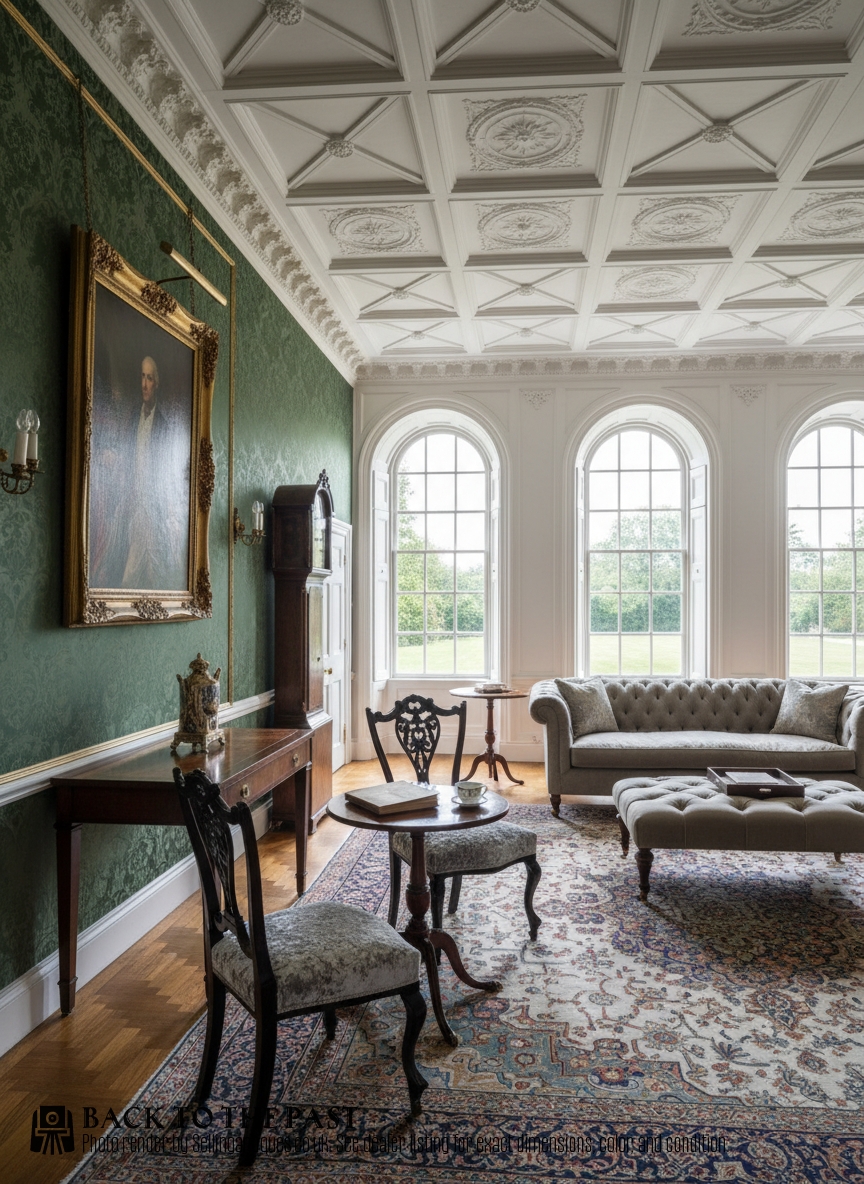
Black victorian chairs bring deep nineteenth-century ebonised surfaces and dark woods into a room, offering both decorative presence and sturdy seating.
Black Victorian Chairs
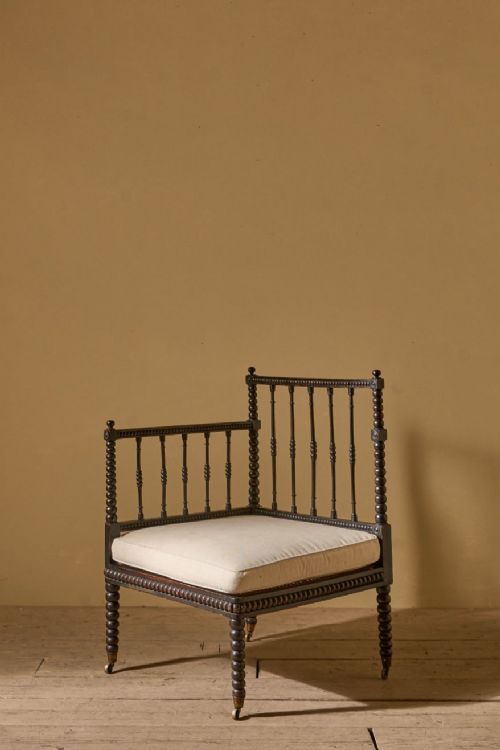
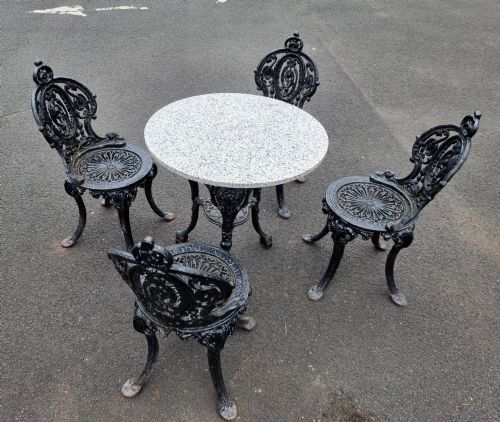
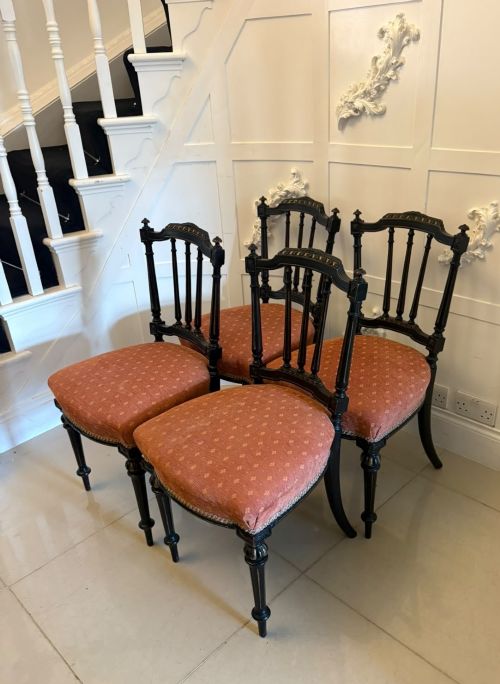
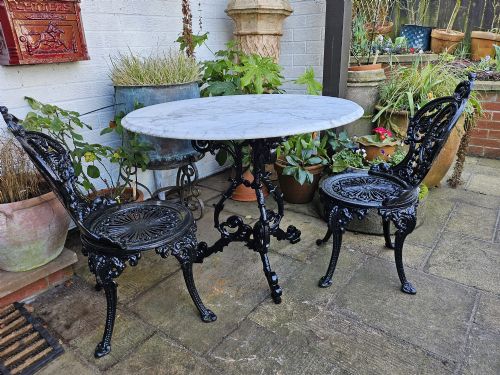
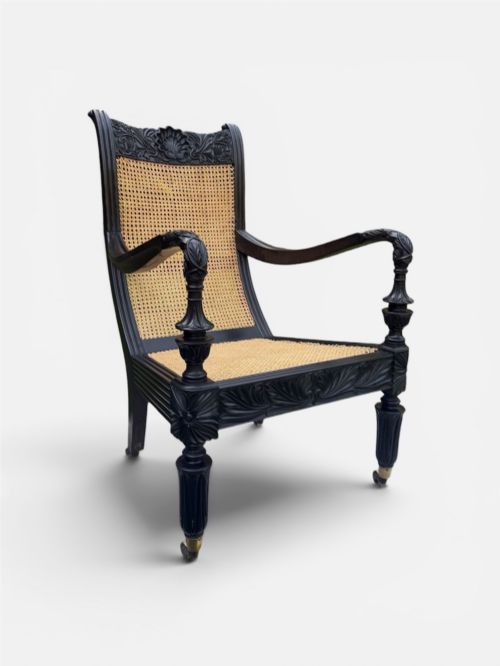
Black victorian chairs encompass a broad spectrum of nineteenth-century seating, from ebonised salon chairs to heavy cast-iron garden sets and library armchairs. When searching for black victorian chairs, buyers frequently encounter ebonised wood frames, dark lacquered finishes, and sombre tones across diverse forms such as armchairs, side chairs, and desk chairs.
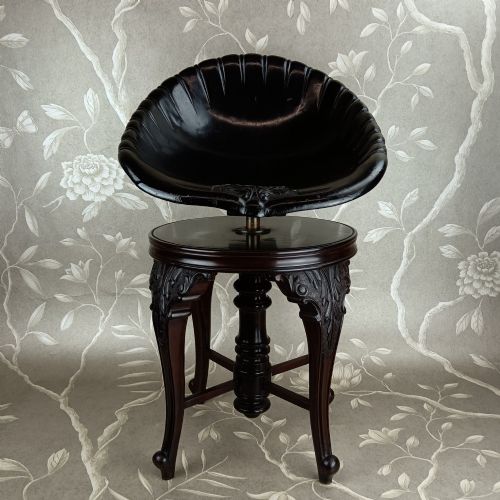
The selection ranges widely in style and origin, taking in Aesthetic Movement pieces, Gothic Revival designs, and Arts and Crafts creations alongside French bistro sets and Anglo-Indian carvings. These variations reflect the eclectic tastes of the period, uniting disparate functions under the banner of dark, polished, or painted woodwork.
Materials and construction
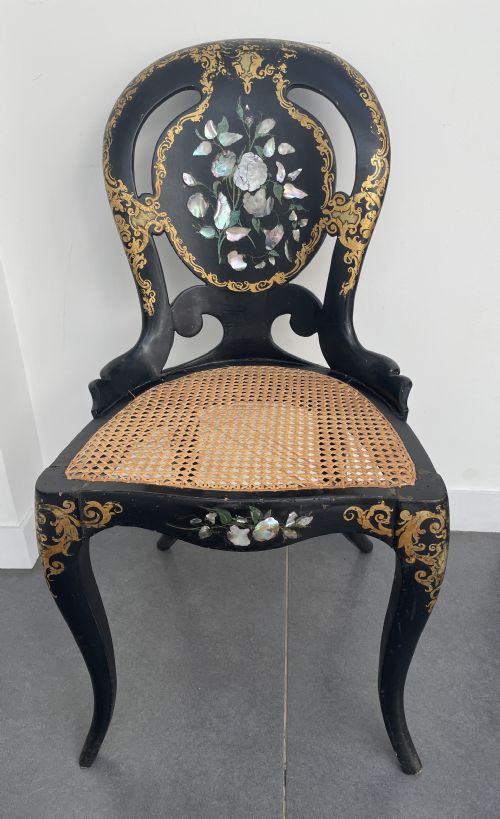
Makers utilised solid ebonised wood, mahogany, oak, and ash as the foundational structures for these seats, often applying black lacquer, paint, or polish to achieve the desired dark finish. Such timber frames frequently incorporated decorative elements like brass mounts, mother-of-pearl inlay, and carved detailing.
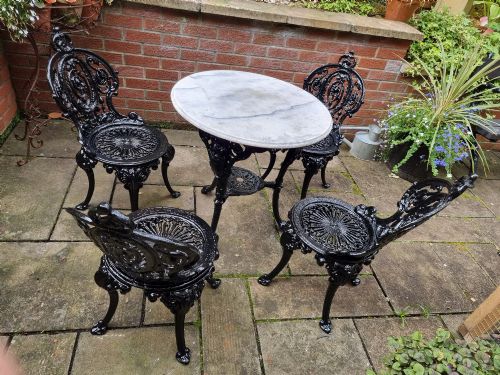
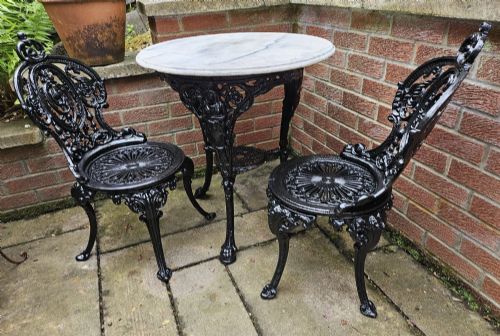
Upholstered variants relied on leather, velvet, and various fabrics stretched over webbed or sprung bases, while outdoor and garden iterations employed heavy cast iron. Joinery techniques varied from traditional mortise and tenon joints in wooden frames to robust metal casting for exterior settings.
The listings span periods from the 1840s through the 1930s, featuring materials such as brass, cast iron, leather, and ebonised wood.
Distinctions in quality
Quality reveals itself in the crispness of carved wooden or cast-iron detail and the integrity of the ebonised or lacquered surface. Superior examples demonstrate careful attention to joinery, substantial timber selection, and well-executed ornamentation such as gilding or marquetry.
The refinement of the upholstery work and the durability of the underlying frame also divide the standard production from finer workshop pieces. Pieces bearing maker attribution or specific stylistic coherence tend to exhibit a higher degree of finishing and structural longevity.
Jennens & Bettridge·Morris & Co·Hindley & Sons·Gillows·W.Williamson & Sons
The Black Victorian Chairs Glossary
- Ebonised
- Wood treated with a stain or finish to imitate ebony, producing a dense black surface common on nineteenth-century frames. This technique allowed cheaper timbers to achieve a fashionable, dark appearance.
- Aesthetic Movement
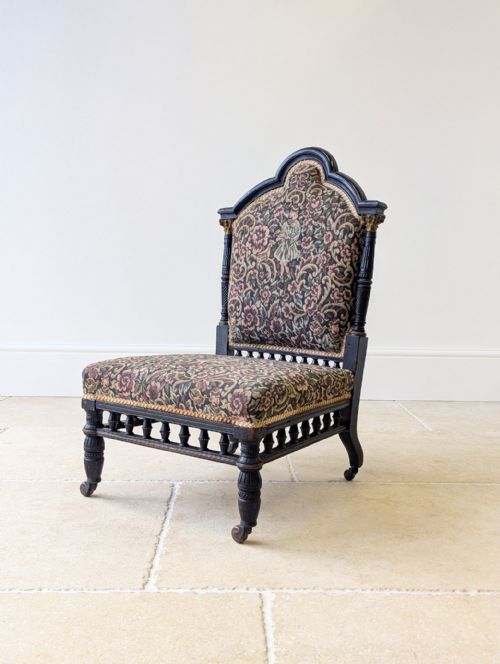
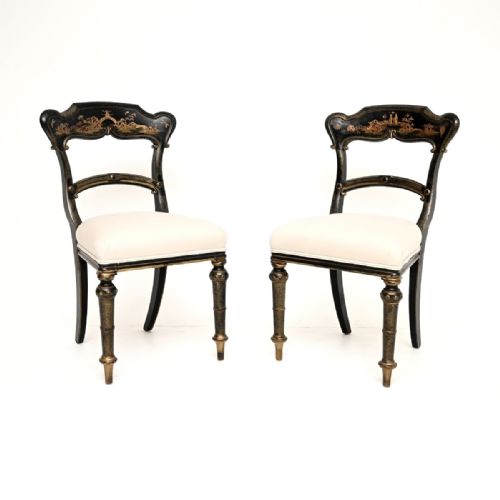
- A late nineteenth-century design style emphasising visual beauty over narrative or moral function. Pieces from this movement often feature ebonised wood with gilt highlights and sparse, elegant lines.
- Sussex Chair
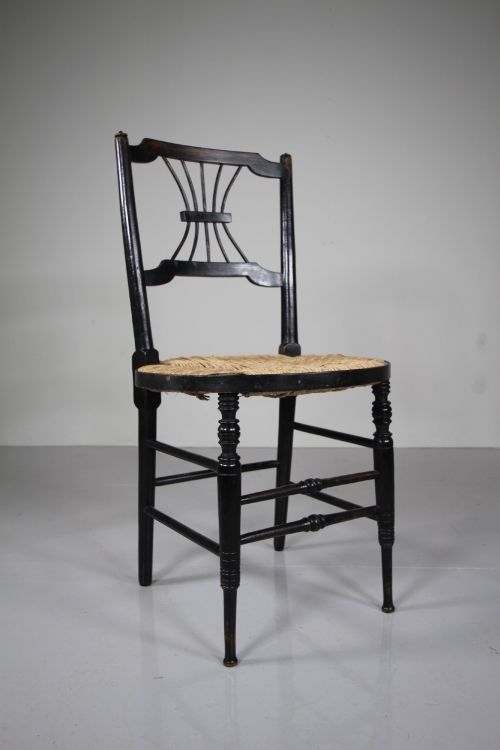
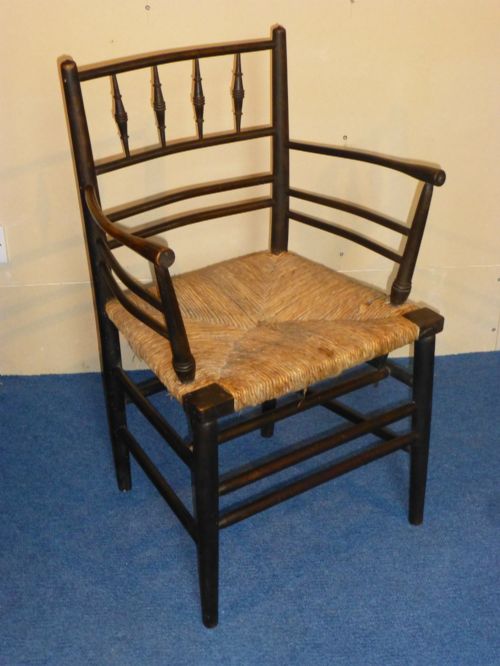
- A nineteenth-century vernacular seating form inspired by traditional rush-seated country chairs and popularised by Morris and Co. These feature lightweight turned wood frames and rush or woven seats.
- Papier-Mâché
- A composite material made from paper pulp or layers of paper bound with glue, pressed and dried into shape. In Victorian seating, it was used for chair backs and panels before receiving deep black lacquer and inlay.
- Gothic Revival
- An architectural and decorative style drawing on medieval ecclesiastical forms, characterised by pointed arches and heavy carved woodwork. Chairs in this style display structural verticality and solemn ornamentation.
Black Victorian Chairs: Frequently Asked Questions
Are black victorian chairs comfortable?
Many upholstered library armchairs and sprung desk chairs offer considerable padding and ergonomic support for extended sitting. Other examples, such as rigid side chairs or spindle-backed models, prioritise upright posture and decorative utility.
Buyers seeking daily comfort usually select cushioned armchair variants, whereas decorative side chairs suit occasional use in hallways or parlours.
How do I identify an Aesthetic Movement chair?
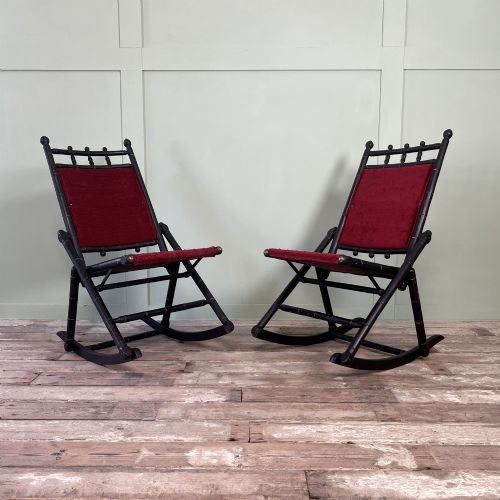
Aesthetic Movement seating typically displays ebonised wooden frames accented with subtle gilding, spindle turnings, or Japanned motifs. These pieces reject heavy Victorian clutter in favour of cleaner, linear profiles.
They often appear as low salon chairs, folding rocking chairs, or simplified armchairs associated with progressive design circles.
Can I use cast-iron chairs outdoors?
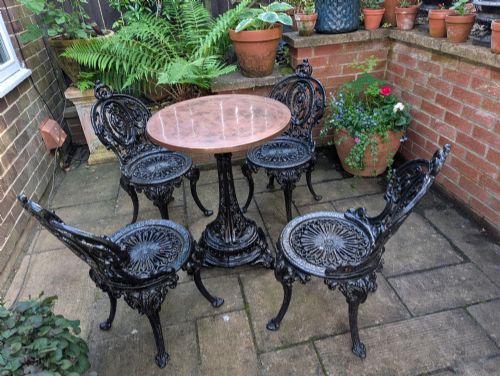
Heavy cast-iron garden chairs and bistro sets are engineered for exterior placement and withstand weathering when maintained properly. Their robust metal construction resists tipping and provides permanent garden seating.
Owners should monitor the painted or lacquered finish to prevent rust formation on exposed metal surfaces.
What is the difference between ebonised wood and solid ebony?
Ebonised wood consists of a lighter timber, such as beech or mahogany, stained or painted black to simulate the appearance of true ebony. Solid ebony is a dense, naturally black exotic hardwood used rarely and reserved for highly decorative elements.
Most nineteenth-century black chairs utilise ebonised finishes over native or common cabinet timbers.