


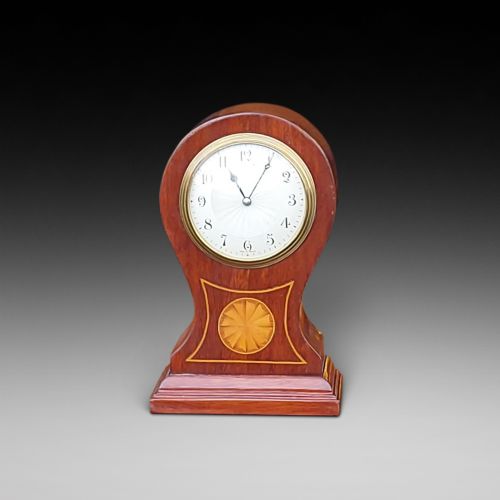


Antique Balloon Clock
An antique balloon clock brings the unmistakable curving silhouette of Georgian and Edwardian design to a mantelpiece.
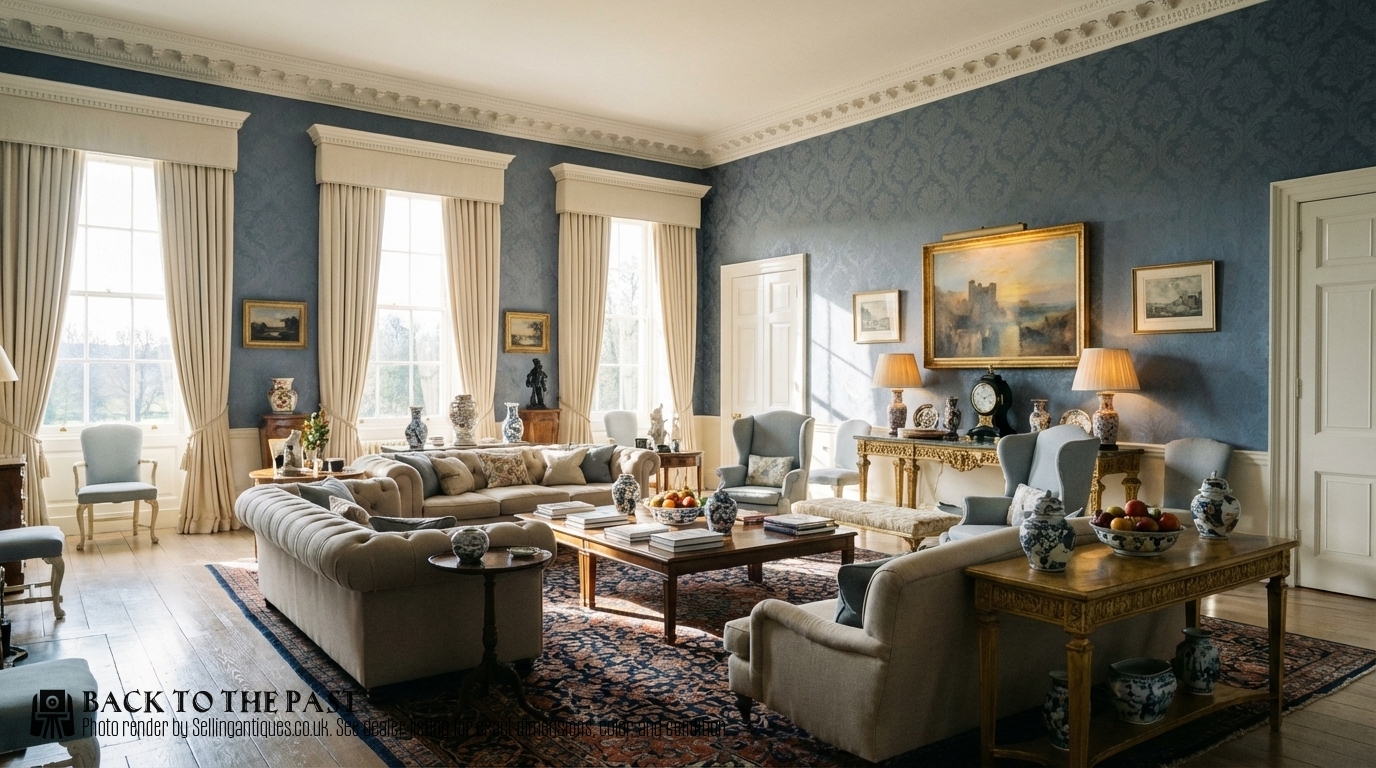
Antique Balloon Clock
An antique balloon clock takes its name from the distinctive bulbous case shape that swells at the base and tapers toward the top, mimicking early hot air balloons. Buyers searching this phrase encounter mantel and bracket clocks spanning from the mid-eighteenth century through the Edwardian era.
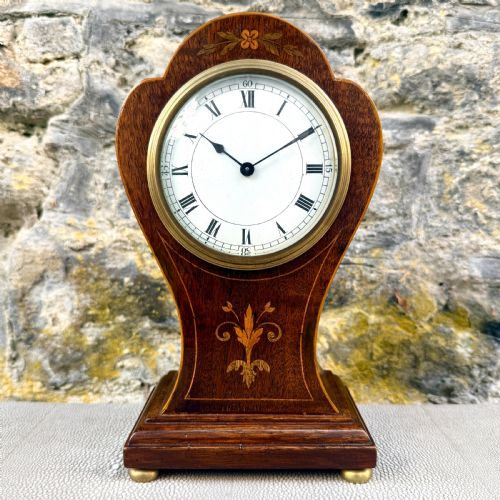
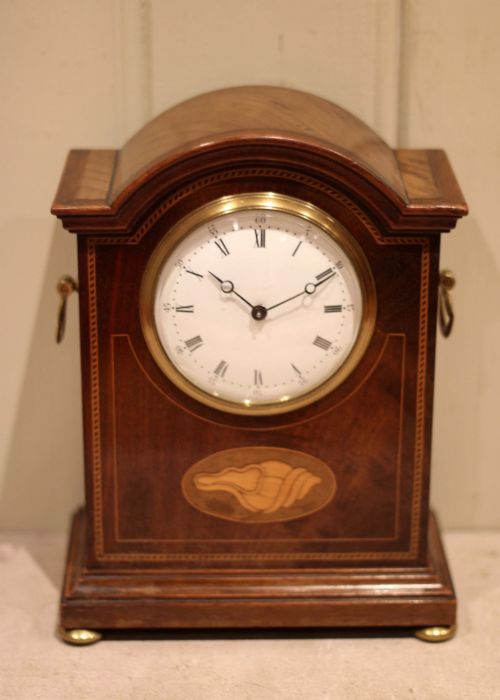
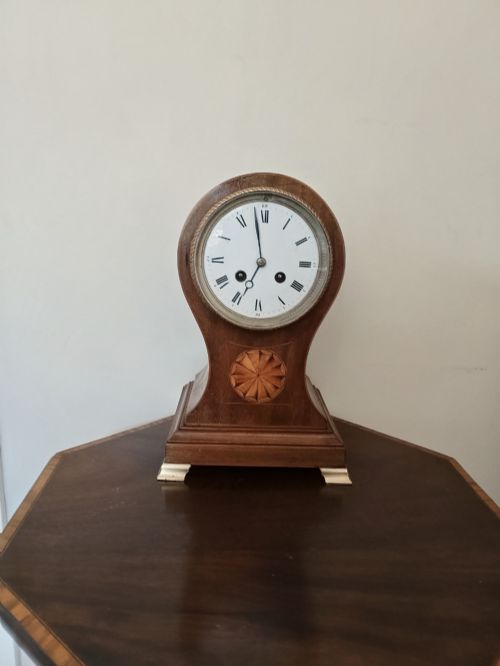
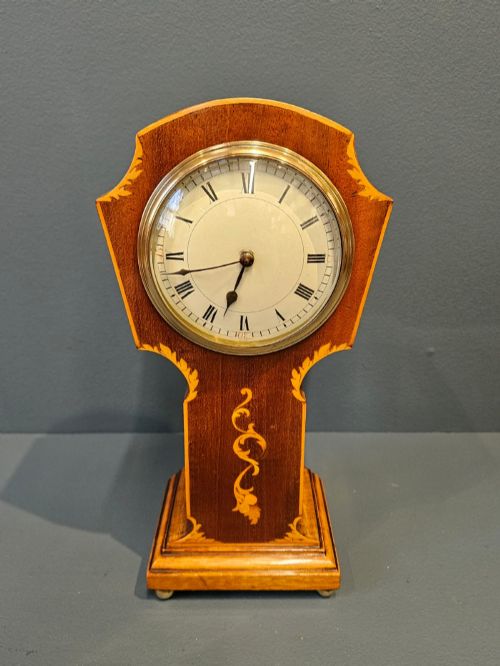
The most common examples on this page date from the Edwardian period and feature mahogany cases enriched with delicate satinwood or boxwood inlay. Alongside these domestic English pieces appear French bracket clocks and smaller French striking or timepiece movements.
Earlier pieces from the eighteenth and nineteenth centuries introduce sophisticated twin fusee movements alongside single fusee mechanisms. Formats range from miniature desk models to large monumental bracket clocks housed in rich timbers.

Materials and construction
Cabinetmakers constructed the swelling cases primarily from mahogany, often selecting figured grains for visual depth and complementing the timber with boxwood and satinwood inlay or fan marquetry. Oak and ebonised wood also appear among the listed pieces, providing robust alternatives to mahogany.
Clockmakers housed complex brass movements inside these timber housings, pairing mechanical reliability with silvered or enamel dials that display the time beneath protective glass bezels. Fine herringbone inlay and engraved movement details complete the construction of the higher-tier examples.
Antique Balloon Clock Retail Price Guide 2026
Typical asking prices for balloon clock among the pieces listed under this phrase on Sellingantiques today, from the lower quarter to the upper quarter. They describe what is for sale here now, not the wider market.
One Edwardian balloon clock comes complete with a painted Dutch girl peering out from the mahogany case.
Differentiating quality
Quality rests heavily on the sophistication of the internal movement, where single fusee mechanisms contrast with the greater complexity of twin fusee and striking or ting tang quarter strike systems. Maker attribution elevates a piece significantly, particularly when signed by established London makers.
Cabinetwork precision separates ordinary examples from superior ones, visible in the crispness of the herringbone or satinwood inlay, the harmonious proportions of the balloon case, and the clarity of the engraved brass or silvered dial.
Joseph Jump·John Leroux·William Smith·Percy Webster·Mappin & Webb·Brockbank & Atkins·Bolton Smith·Tomlin
The Antique Balloon Clock Glossary
- Fusee
- A conical pulley used in spring-driven clocks to equalise the torque of the mainspring as it unwinds. This mechanism ensures more consistent timekeeping throughout the power reserve.
- Marquetry
- Decorative veneer applied to furniture in geometrical patterns or pictorial designs. On these clocks, fan motifs and delicate stringing enhance the mahogany surfaces.
- Bracket clock
- A portable table clock originally designed to sit on a wall bracket. Many balloon-cased examples retain this terminology despite resting directly on mantelpieces.
- Silvered dial
- A brass dial treated with silver powder to create a matte, reflective finish. The numerals and markings are typically engraved and darkened for legibility.
- Timepiece
- A clock that indicates the time without striking hours or quarters. These simpler movements focus purely on sustained mechanical running.
Antique Balloon Clock: Frequently Asked Questions
How do single and twin fusee movements differ?
A single fusee movement powers the clock using a chain or cord connected to a conical pulley, maintaining steady tension for accurate timekeeping. A twin fusee movement adds a second train specifically to drive a striking mechanism.
Clocks featuring twin fusee movements are generally larger and more complex, requiring careful maintenance of both the timekeeping and striking trains.
Where should I place a balloon clock?
These clocks find their traditional home on a mantelpiece, sideboard, or sturdy table where the curved mahogany silhouette can be appreciated from multiple angles. Because many examples feature detailed inlay and polished wood, placement away from direct sunlight preserves the timber and finish.
Ensuring the surface is completely level helps the pendulum or balance wheel maintain a steady beat.
How do I date an antique balloon clock?
Dating relies on examining the timber, inlay style, dial materials, and signature signatures on the movement backplate. Edwardian pieces frequently feature lighter mahogany with delicate stringing, whereas eighteenth-century examples display heavier proportions and simpler, robust brass dials.
Maker signatures and movement signatures often provide a reliable window of active production.