

Antique Art Glass Vase
An antique art glass vase brings organic colour and fluid form into a room, capturing the experimental spirit of late nineteenth and early twentieth century design.
Antique Art Glass Vase
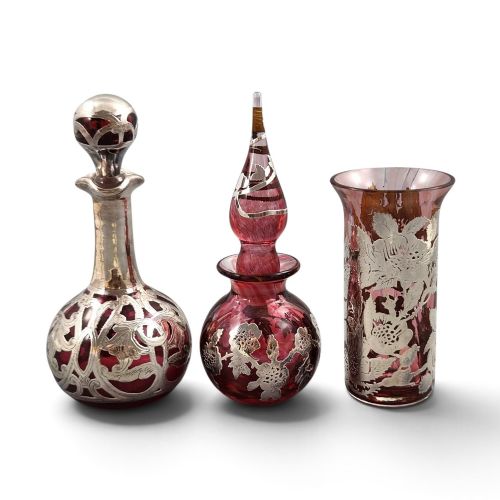
When you search for an antique art glass vase, you encounter vessels shaped by the major decorative movements of the Victorian era, Art Nouveau, and Art Deco. These pieces range from tall geometric cylinders to organic gourd shapes and slender lily forms.
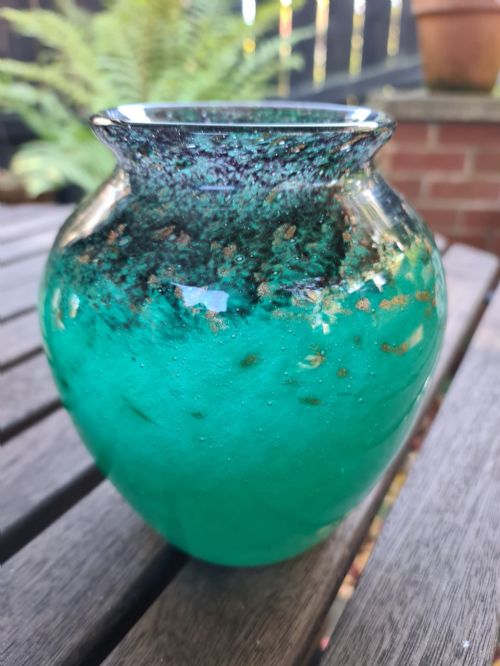
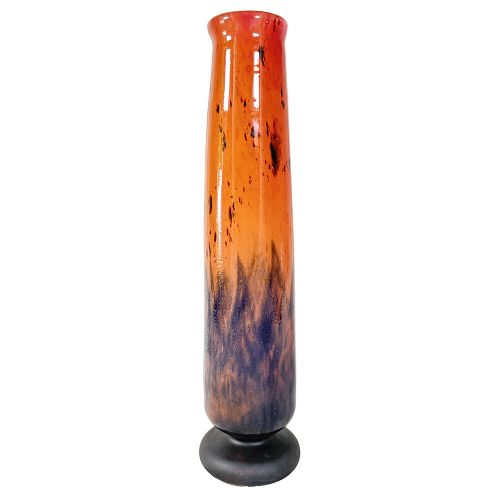
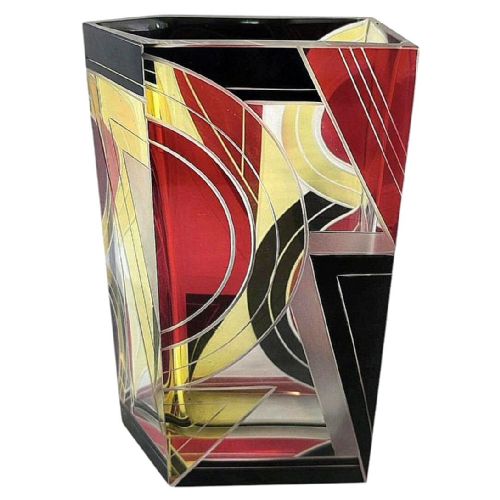
The most common examples on this page date from the early twentieth century, spanning the organic contours of Jugendstil and the sleek symmetries of the 1920s and 1930s. Makers utilised blown glass, cameo layering, and metallic inclusions to achieve striking visual depth.
Makers across Bohemia, France, and Britain produced these vessels using demanding techniques that altered the chemical composition of molten metal. Collectors find both cabinet miniatures and heavy floor-standing pieces.
Materials and technique
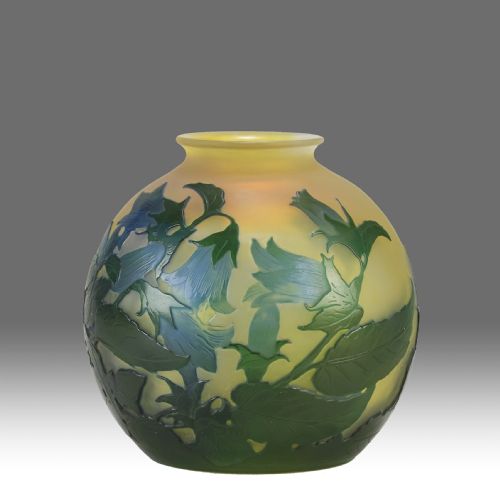
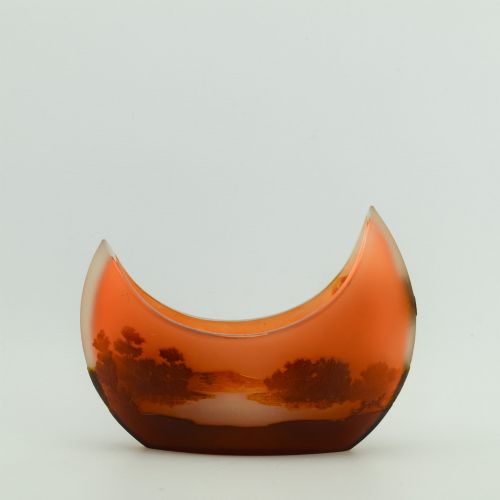
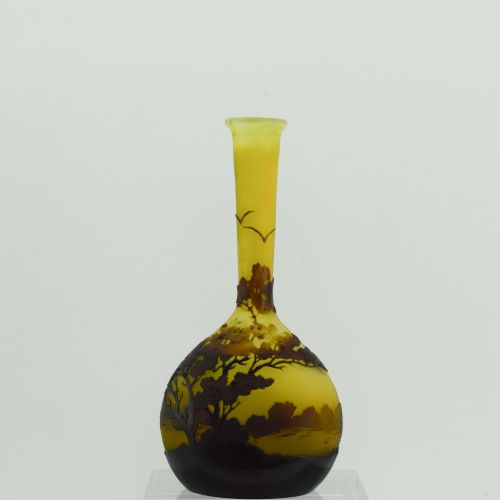
Makers formed cameo glass by fusing multiple layers of differently coloured glass before acid-etching or carving away the surface to reveal contrasting designs. This method demanded precise thermal control to prevent the vessel from cracking during cooling.
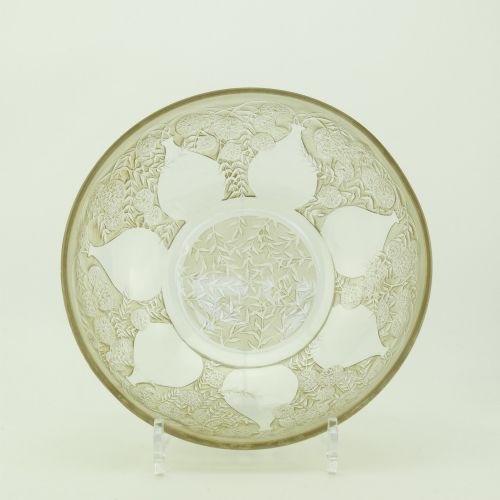
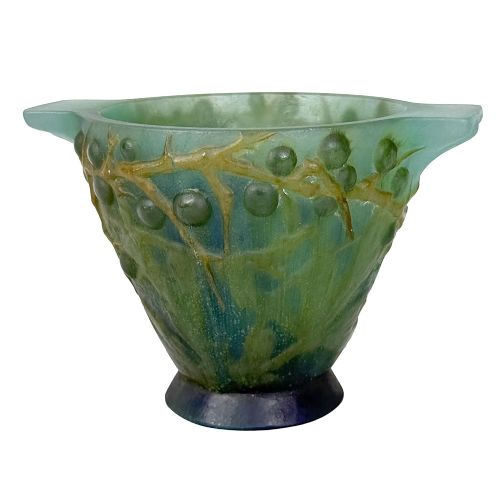
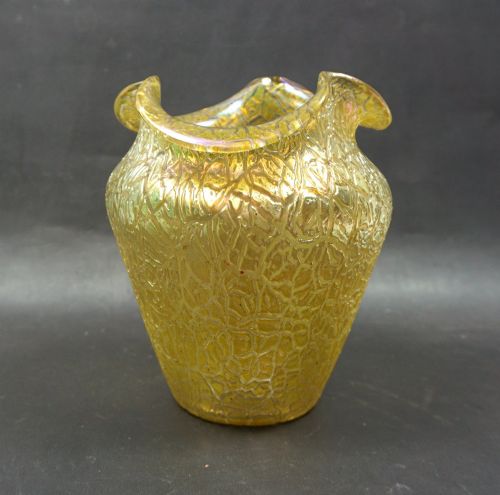
Iridescent and silvered effects rely on metallic vapours applied to the hot glass surface, creating shifting optical sheens reminiscent of oil on water. Techniques such as pate de verre involved packing powdered glass into a mould and firing it to achieve a textured, sugar-like opacity.
Enamel decoration and bronze mounts frequently supplemented the blown body, adding contrasting tactile dimensions to the finished piece. Artisans manipulated molten metal with oxides to produce uranium, vaseline, and cased variations.
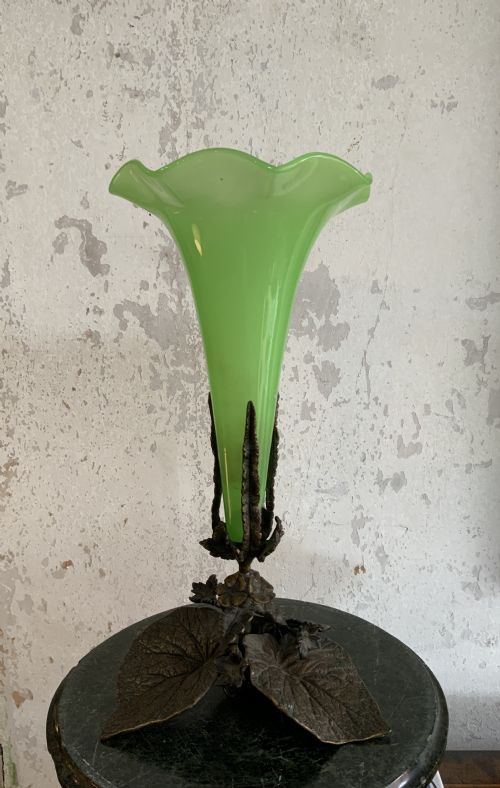
Some Victorian glass horns were whimsically twisted into the shape of a pulpit for reasons lost to time.
Assessing the execution
Quality rests upon the depth of the carving and the complexity of the glass layers within cameo and pte de verre examples. Master workshops maintained strict control over acid application, ensuring crisp boundaries between foreground motifs and background landscapes.
The sophistication of the optical effects dictates the standing of an iridescent or silvered piece. Subtle gradations of colour and complex surface phenomena distinguish the finest output of Bohemian and French houses from standard commercial production.
Rene Lalique·Emile Galle·Daum Freres·Loetz Witwe·Kralik Glass·Legras·Amalric Walter·James Powell
The Antique Art Glass Vase Glossary
- Cameo Glass
- Glass vessels formed with two or more distinct layers of colour fused together, allowing carvers to cut away the top stratum and expose the contrasting background. This technique requires considerable manual dexterity and patience.
- Pte de verre
- A glass-working method where finely crushed glass is mixed with a binding agent, packed into a mould, and kiln-fired to create a dense, translucent object with a characteristic granular texture.
- Iridescent Glass
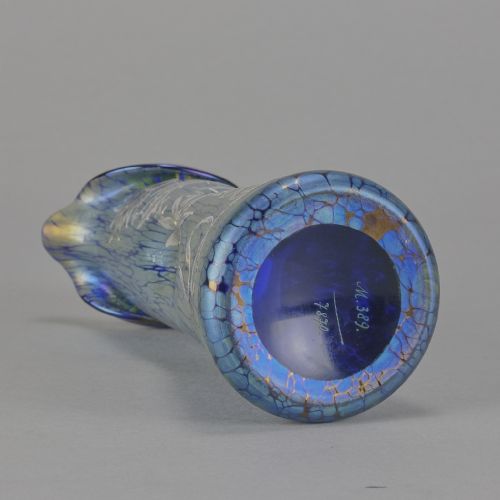
- Glass treated with metallic salts while hot to produce a rainbow-like sheen on the surface. Loetz and other Bohemian firms specialised in this shimmering treatment.
- Epergne
- A central ornamental centerpiece featuring multiple branching horns or small vases designed to hold flowers. They frequently combine blown art glass with metal or gilt bronze stands.
- Uranium Glass
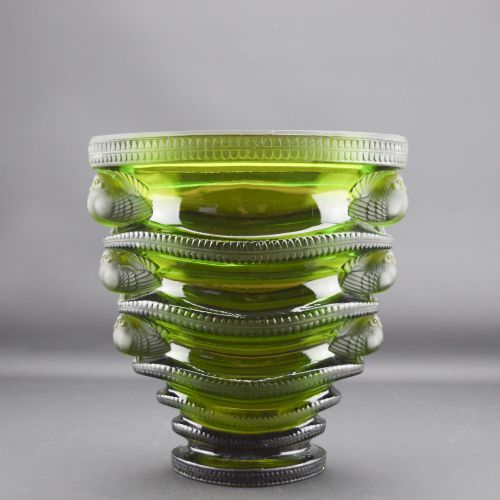
- Glass containing a small percentage of uranium dioxide, which causes the material to glow vividly under ultraviolet light. It appears in soft yellow or green shades under normal daylight.
Antique Art Glass Vase: Frequently Asked Questions
What is vaseline glass?
Vaseline glass is a transparent or translucent yellow-green glass that owes its characteristic colour to the addition of uranium oxide. In daylight, it displays a distinct yellow hue.
Under ultraviolet light, the material emits a bright green fluorescence. Collectors prize these pieces for their unusual optical properties and connection to nineteenth-century chemistry.
How should I display art glass?
Place art glass where natural light can pass through the body, as illumination reveals the layered colours and internal textures. Cabinets with glass shelves and interior lighting work well for smaller cabinet pieces.
Keep heavier vessels on sturdy, level surfaces away from high-traffic areas. Avoid direct, intense sunlight for prolonged periods to protect sensitive enamels.
Are these vases signed?
Many pieces carry signatures, either etched into the surface, cameo-carved into the design, or painted in enamel. Signatures range from simple initials to full studio names.
Unsigned pieces still occur, often identifiable through distinct manufacturing techniques, colour palettes, and glass formulations characteristic of specific workshops.