

Anglo Indian Wood Carving
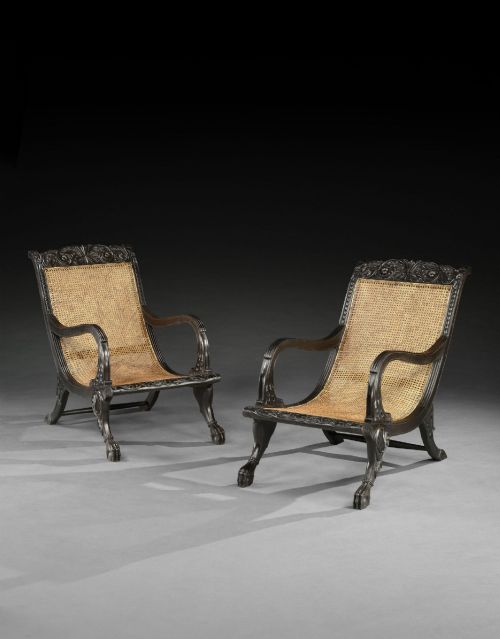
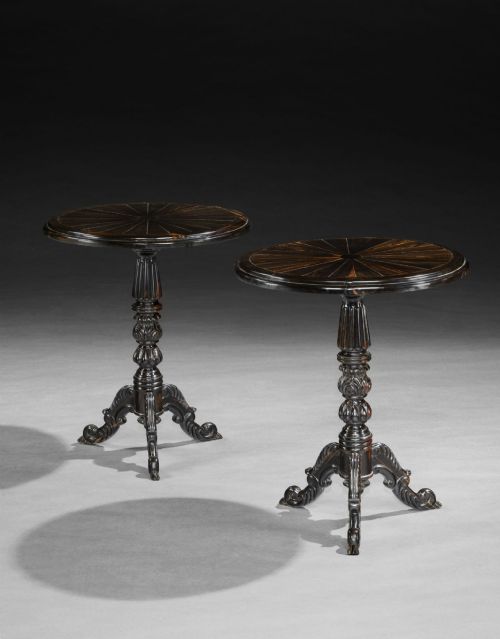
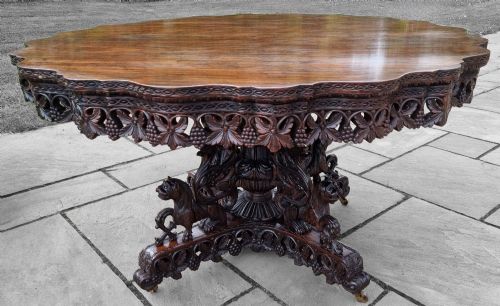
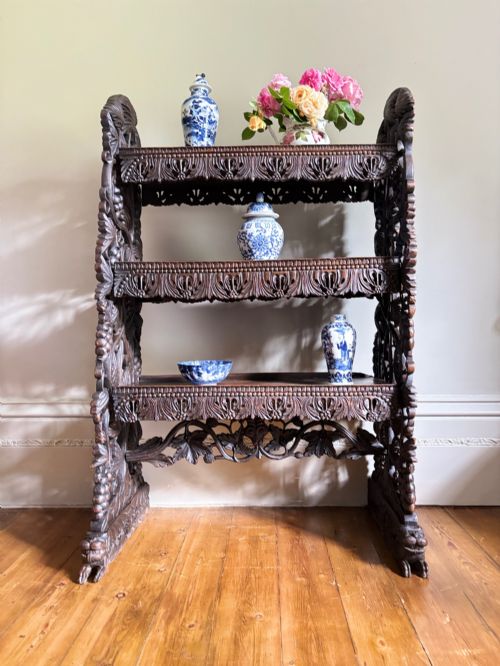
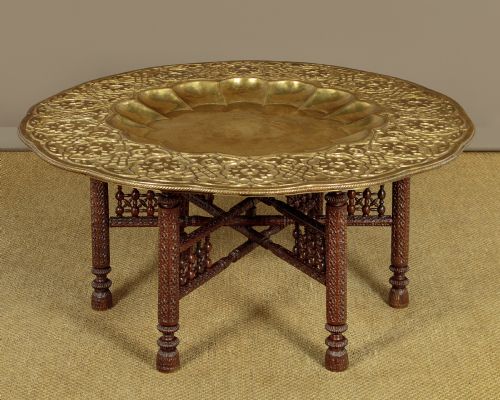
These pieces of anglo indian wood carving bring together dense traditional craftsmanship and colonial form, offering substantial tables and seating for a layered interior.
Anglo Indian Wood Carving
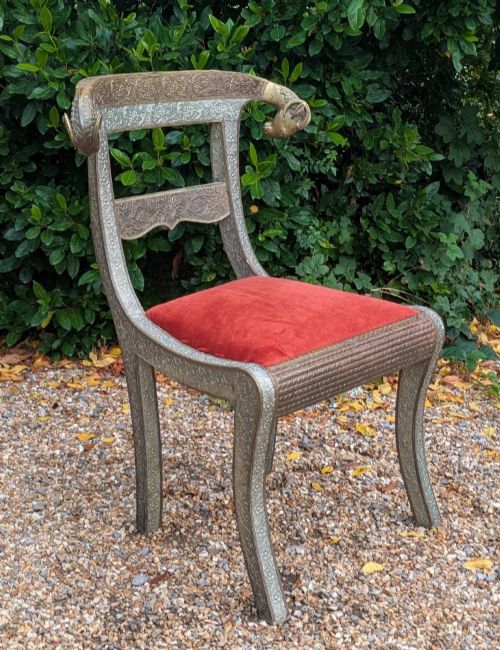
When you search for anglo indian wood carving, you encounter furniture and decorative objects created during the nineteenth and early twentieth centuries under British influence in the subcontinent. The selection spans utilitarian seating and occasional surfaces to elaborate display pieces.
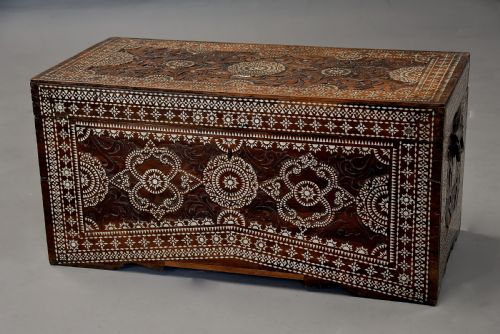
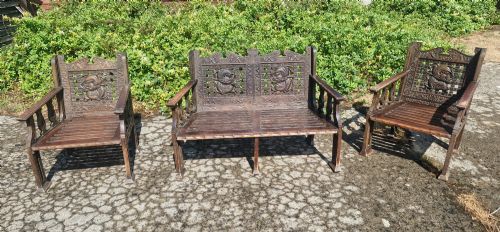
You are most likely to meet occasional tables, side tables, and armchairs alongside mirrors and small chests. These items display regional styles including Hoshiarpur, Kashmiri, and Ceylonese work.
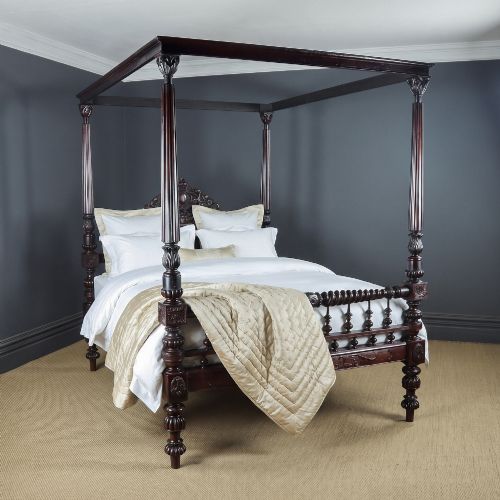
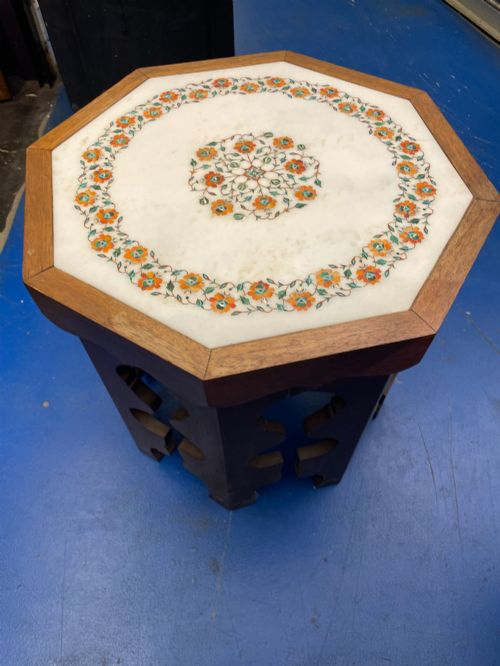
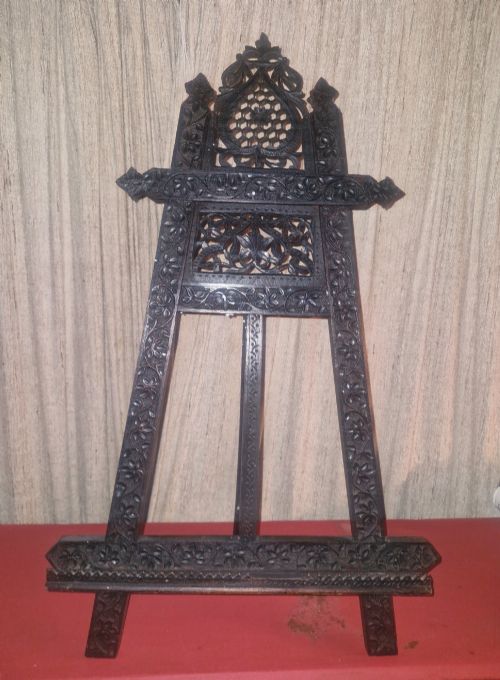
Forms range from octagonal tray tables and folding stands to massive four-poster beds and centre tables. They suit spaces that accommodate rich surface decoration and deep timber tones.
How they were made
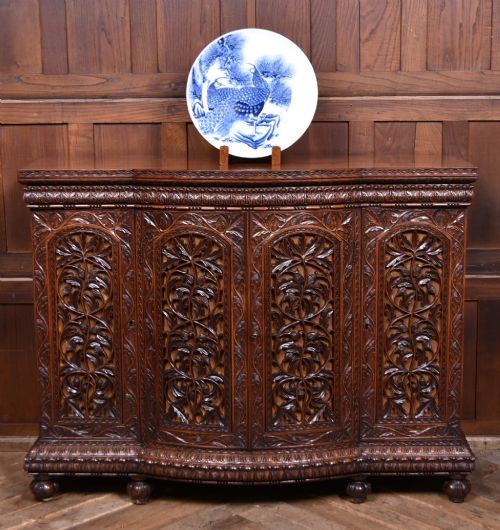
Workshops utilised dense timbers such as teak, rosewood, padouk, ebony, and sandalwood to support intricate hand-cut relief work. These woods provide the stable ground necessary for deep undercutting and pierced foliage patterns.
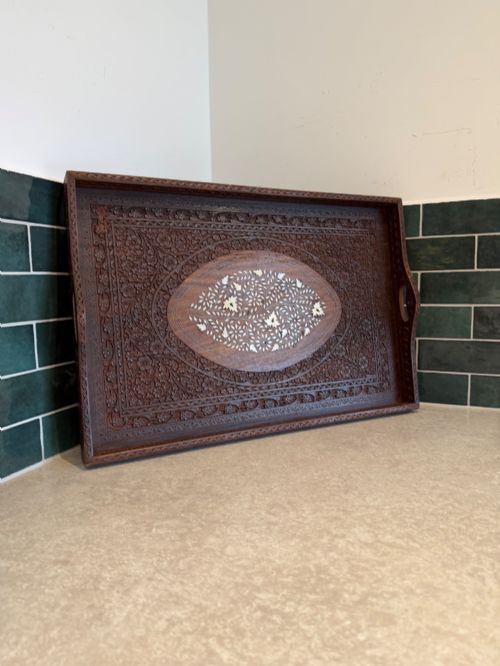
Inlayers combined brass, bone, and mother of pearl within geometric or floral compositions across table tops and cabinet doors. Such materials contrast sharply against dark grounds, requiring precise channel cutting and secure adhesives.
Turned elements appear alongside flat panels, particularly in folding tables and support frames. Joinery methods combined traditional pegged joints with colonial structural formats.
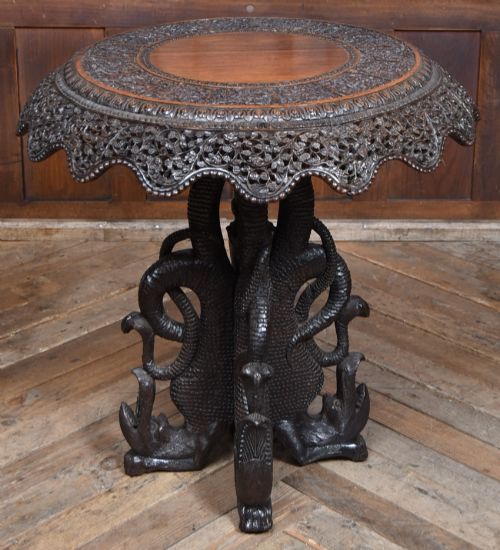
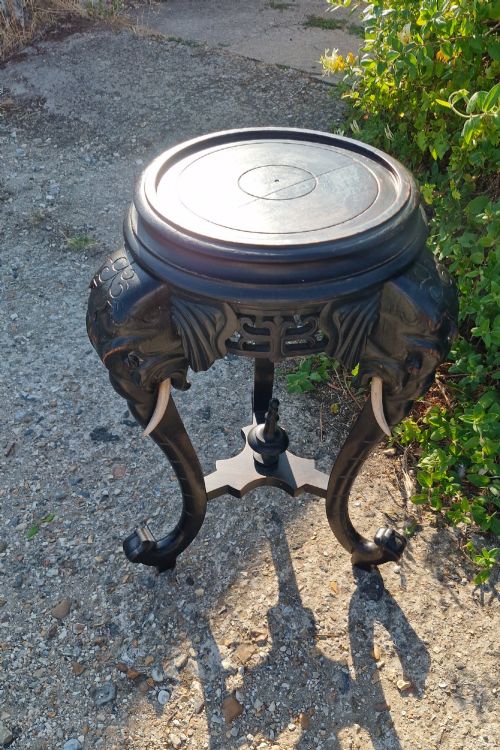
Several items include carved wooden tusks fitted to large elephant-form tables.
What varies in quality
Depth and clarity of the chisel work separate standard production from superior pieces. The finest examples maintain crisp edges in foliage and animal motifs without splintering the underlying timber.
Completeness of inlay work dictates overall integrity. Surfaces retain all original brass wire, bone sections, or mother of pearl elements rather than modern replacements.
Timber selection and grain matching influence the visual weight of each object. Dense, uniform woods like ebony and padouk command greater presence than softer regional hardwoods.
Liberty & Co
The Anglo Indian Wood Carving Glossary
- Hoshiarpur
- A region in Punjab known for intricate wood furniture inlaid with brass wire and shisham or other hardwoods. Pieces from this centre often feature dense geometric and floral patterns.
- Padouk
- A heavy, durable tropical timber with a reddish hue that darkens with age. It provides a stable base for deep carving.
- Sarcophagus-shaped
- A form tapering towards the base with a domed lid, commonly used for tea caddies and jewellery boxes. This silhouette derives from classical funerary monuments.
- Tilt top
- A table mechanism allowing the surface to pivot to a vertical position when not in use. This design originated in earlier English furniture styles adopted by colonial makers.
- Bone inlay
- Fragments of carved bone set into timber channels to create pale contrasting patterns. Artisans used this technique extensively in geometric borders.
Anglo Indian Wood Carving: Frequently Asked Questions
How do I identify Hoshiarpur pieces?
Hoshiarpur tables and frames display dense geometric or floral patterns executed in wood carving combined with fine brass wire inlay. The timber ground is typically completely covered in intricate motifs.
Makers in this Punjabi city produced folding tables, octagonal surfaces, and mirror frames for export to Britain during the late nineteenth and early twentieth centuries.
What timbers were commonly used?
Workshops employed heavy tropical hardwoods including teak, rosewood, padouk, ebony, and sandalwood. These dense materials accommodated the deep relief carving demanded by Victorian buyers.
Lighter woods like shisham also appear, often finished with dark stains to mimic more expensive timbers.
How do I care for inlaid surfaces?
Maintain inlaid tables and boxes by dusting with a dry, soft cloth and avoiding excessive moisture or direct sunlight. Changes in humidity can cause bone and brass inserts to expand at different rates than the surrounding wood.
Apply occasional appropriate wax sparingly to nourish the timber ground without loosening the fitted decorative elements.
Are these pieces purely decorative?
While the surface carving is elaborate, most forms served practical functions in nineteenth-century homes. Occasional tables, armchairs, bookcases, and sideboards were built for everyday domestic use.
Sturdier pieces like centre tables and coffee tables integrate easily into modern living spaces as functional furniture.