

Colonial Indian Wood Carving
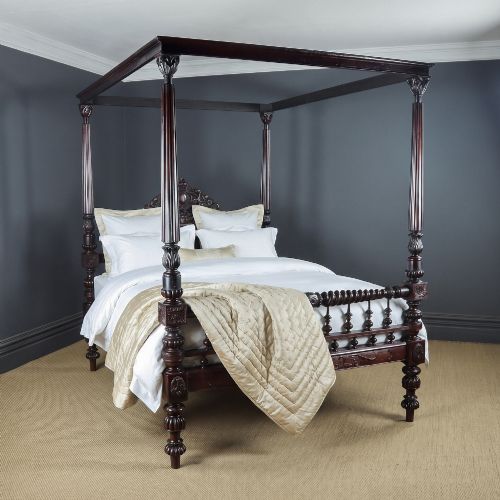
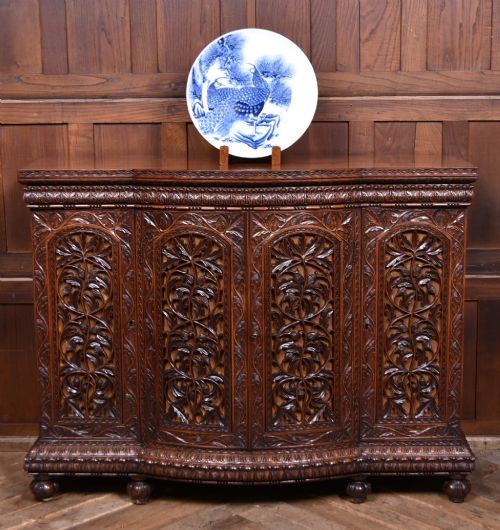
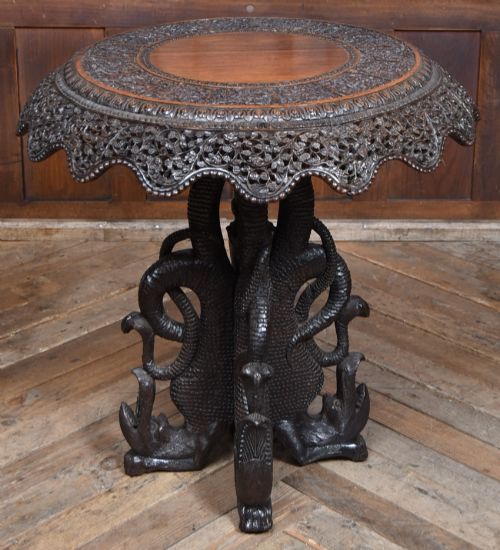
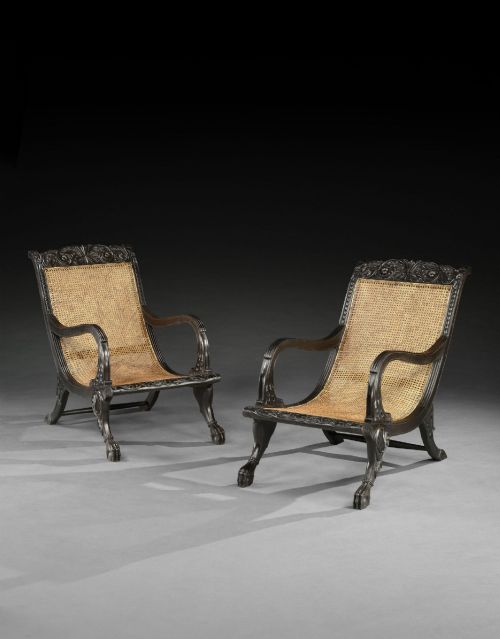
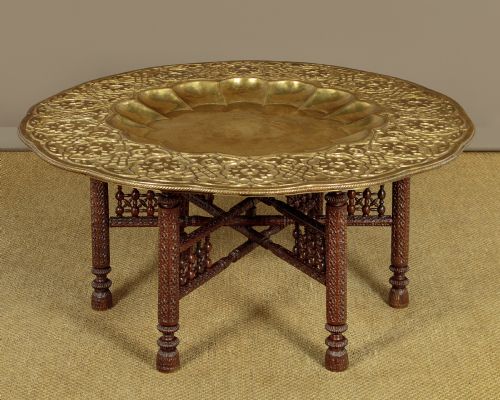
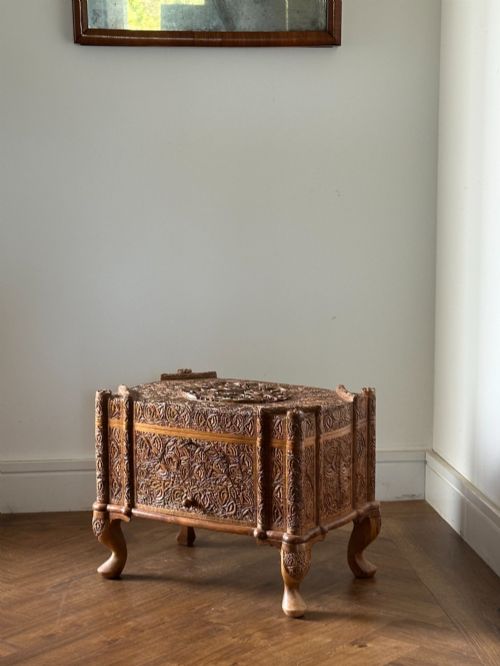
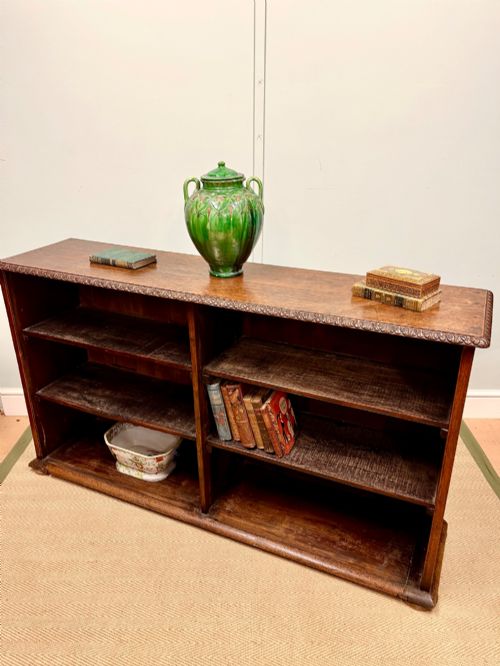
Colonial Indian wood carving brings together intricate oriental motifs and British domestic forms from the nineteenth and early twentieth centuries.
Colonial Indian Wood Carving
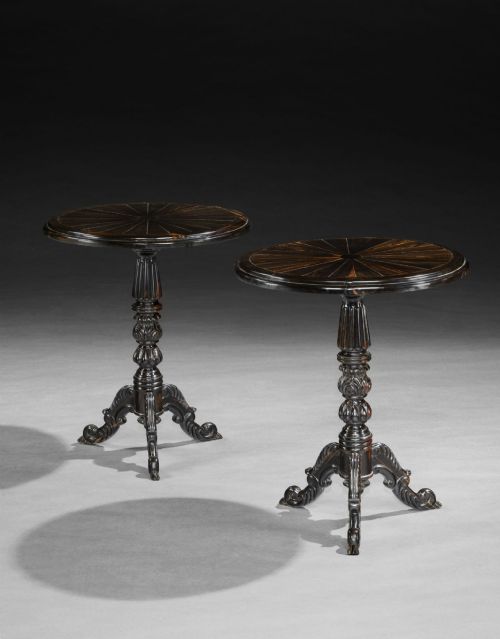
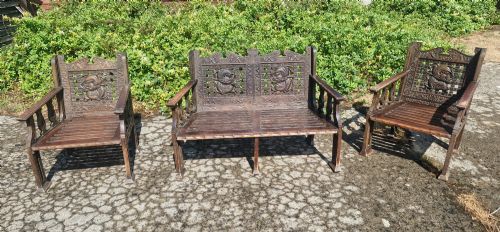
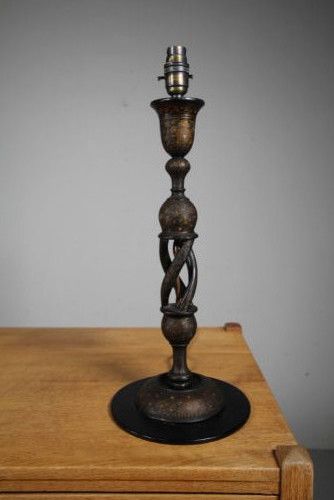
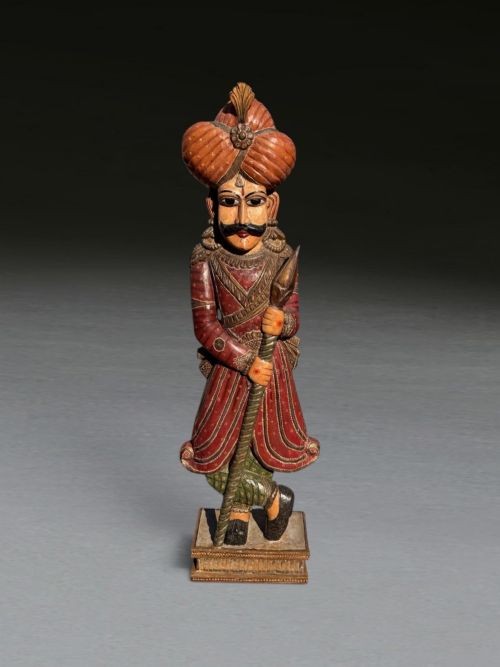
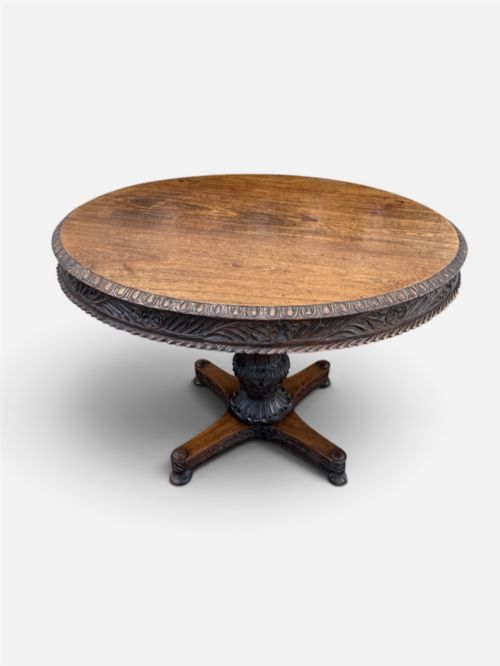
Colonial Indian wood carving encompasses a diverse range of furniture and decorative objects created during the nineteenth and early twentieth centuries. Buyers frequently encounter side tables, armchairs, and occasional tables reflecting Anglo-Indian and Burmese aesthetics.
Regional variations emerge through distinct workshop practices, visible in Hoshiarpur pieces and Ceylonese ebony productions. These works combine dense carving with varied structural forms suited to period interiors.
Materials and construction
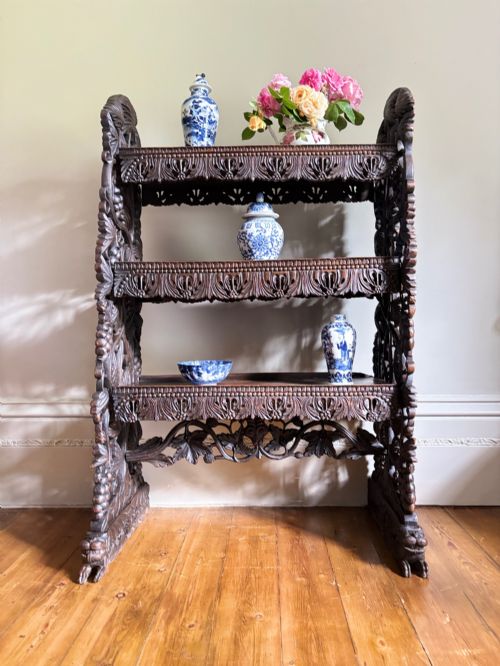
Articles are constructed from dense timbers suited to intricate hand-working, predominantly teak, padauk, rosewood, and solid ebony. These dark woods provide a stable ground for deeply undercut relief patterns depicting foliage, figures, and animals.
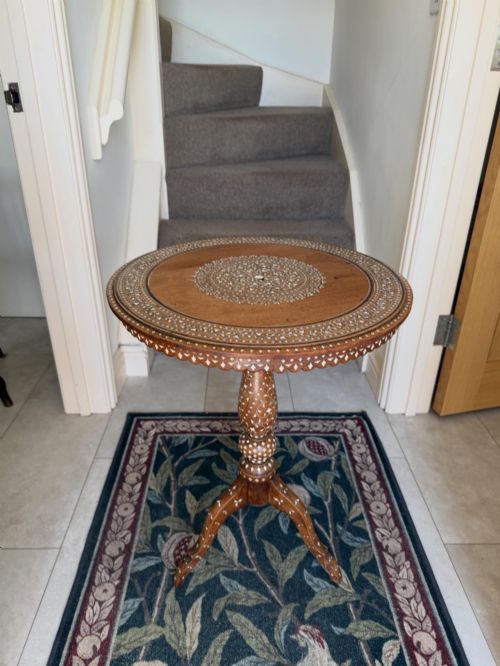
Secondary materials such as brass inlay, cane, and bone punctuate the dark wooden surfaces, particularly in geometric Hoshiarpur tables and inlaid trays. Construction often relies on traditional joinery adapted to accommodate heavy decorative carving.
Colonial Indian Wood Carving Retail Price Guide 2026
Typical asking prices for colonial indian wood carving among the pieces listed under this phrase on Sellingantiques today, from the lower quarter to the upper quarter. They describe what is for sale here now, not the wider market.
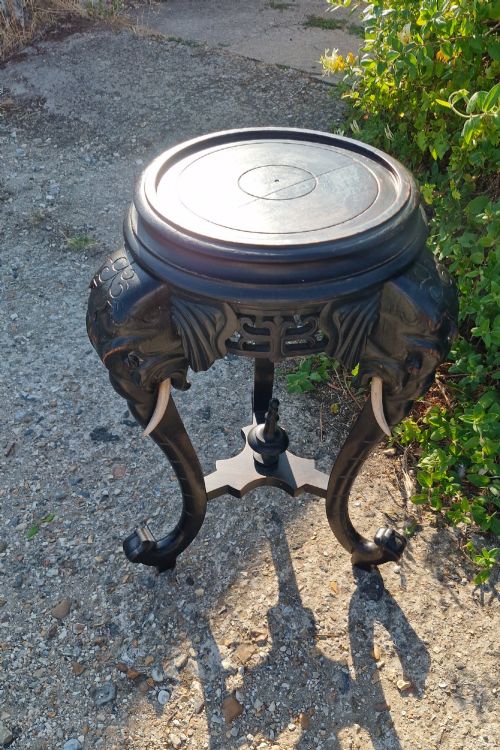
One late Victorian elephant table comes complete with painted wooden tusks.
Evaluating the work
Material selection significantly influences the character of each piece, with dense, unblemished ebony or padauk commanding attention through natural grain and weight. Proportion and the integration of decorative motifs into functional forms complete the standard of the execution.
The Colonial Indian Wood Carving Glossary
- Anglo-Indian
- A designation for furniture and decorative arts made in India during British rule, combining local craftsmanship with European forms.
- Padauk
- A heavy, durable tropical hardwood with a reddish-brown hue, frequently utilised in nineteenth-century colonial cabinet making.
- Hoshiarpur
- A style of woodwork originating from Punjab, characterised by intricate inlaid patterns using materials like brass and bone.
- Teapoy
- A small occasional table or stand, originally designed for holding tea caddies in nineteenth-century households.
- Tripod table
- A small freestanding table supported by a pillar above three spreading feet, common in ebony and padauk.
Colonial Indian Wood Carving: Frequently Asked Questions
What periods do these carvings date from?
The pieces span the nineteenth century through the early decades of the twentieth century, including Victorian and Raj period examples.
Dates are established through stylistic comparisons with documented furniture and the historical context of British rule in India.
How do I identify Hoshiarpur work?
Hoshiarpur pieces are recognised by their dense surface decoration created through minute wooden carving and geometric inlay.
Craftsmen in this region used contrasting materials like brass wire and bone to fill intricate floral and botanical patterns.
Where were these items used originally?
These furnishings were commissioned by British officials and affluent residents for colonial bungalows and transplanted into domestic drawing rooms back home.
Their varied forms served practical functions as writing surfaces, occasional tables, seating, and storage.
Are multiple wood types used together?
Primary structures rely on dense timbers such as teak, rosewood, and ebony, while secondary elements incorporate contrasting woods or inlaid metals.
Specimen wood tables specifically combine various regional timbers to showcase tonal differences within a single top.