


Antique Indian Elephant Sculpture
These antique Indian elephant sculptures carry the weight of nineteenth-century craftsmanship, offering rich carved woods and engraved bronzes that bring character to any room.
Antique Indian Elephant Sculpture
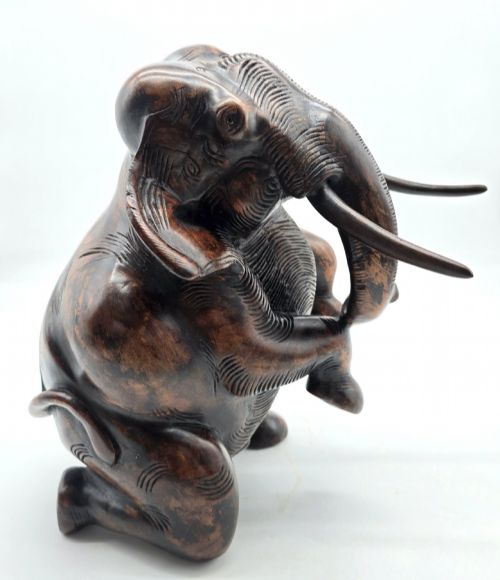
When you search for an antique Indian elephant sculpture, you encounter figures carved from dense hardwoods or cast in bronze, spanning the Victorian and Raj periods. Most examples on this page date from the late nineteenth century up to the early twentieth century, reflecting colonial trade and craftsmanship.
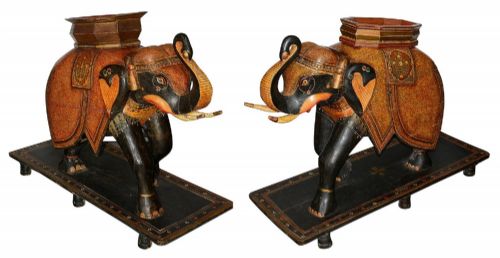
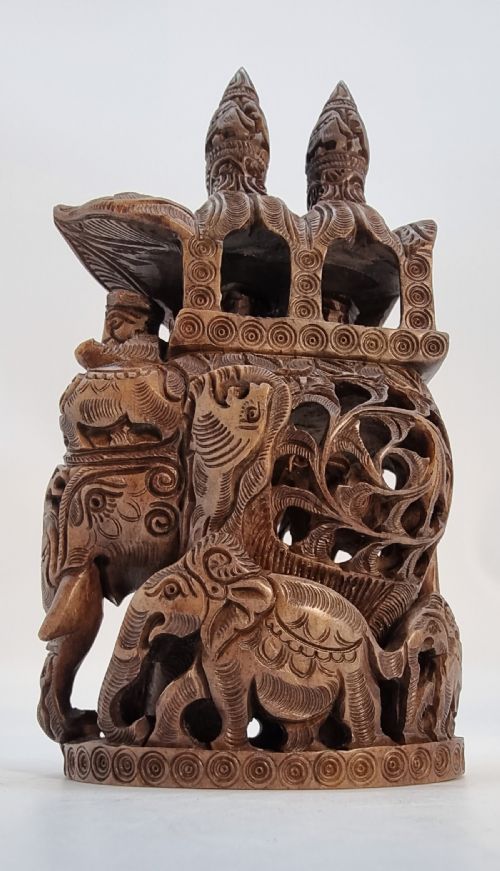
The forms range from single standing studies in ebony and teak to large pairs of ceremonial elephants with riders and keepers. You also find regional variations such as Kashmiri lacquered wood and soapstone studies, each capturing the animal in realistic or decorative poses.
How they were made
Carvers utilised hardwoods such as ebony, teak, and general carved wood, often working the material with considerable depth to define the skin folds and trappings. Other pieces employ bone, gesso, pigment, and lacquer to add surface detail and colour.
Bronzes rely on metal casting and engraving techniques to render the riders and ceremonial harness with crisp lines. Artisans combined these structural materials with applied pigments to create finished sculptures of varied scale.
Current listings feature pieces spanning from the eighteen-eighties to nineteen-twenty, encompassing Victorian, Raj, and Burmese styles in materials from bronze to soapstone.
What varies in quality
The distinction between ordinary and superior pieces lies in the precision of the carving and the fidelity of the anatomy. Sculptures that render the weight and movement of the animal with naturalistic accuracy command greater attention than rigid, simpler forms.
The choice of medium also dictates the character of the piece, with dense hardwoods like ebony allowing for sharper surface definition than softer woods or soapstone. Complete pairs and works retaining their original riders or lacquer finish show higher degrees of preservation.
The Antique Indian Elephant Sculpture Glossary
- Raj period
- The era of British crown rule in the Indian subcontinent, spanning from eighteen fifty-eight to nineteen forty-seven. Pieces from this time often reflect Anglo-Indian tastes.
- Anglo-Indian
- A style of decorative art produced in India during the colonial period for British and European markets. It combines traditional local craftsmanship with Western aesthetic preferences.
- Hardwood
- Dense, durable timber from broad-leaved trees such as teak and ebony. These woods resist warping and allow for intricate, lasting detail work.
- Gesso
- A plaster-like mixture applied to wood surfaces as a base for paint or lacquer. It provides a smooth ground for decorative pigments.
- Lacquer
- A clear or coloured varnish applied in thin coats to wood and dried to a hard, durable finish. Kashmiri makers utilised this technique for rich surface decoration.
Antique Indian Elephant Sculpture: Frequently Asked Questions
How old are these elephant sculptures?
Most pieces date from the nineteenth and early twentieth centuries, specifically between eighteen eighty and nineteen twenty. The periods span the Victorian era and the height of the Raj.
Craftsmen during this window produced works in bronze, teak, ebony, and soapstone for both local use and export to Britain.
What materials were used?
Carvers worked primarily in dense hardwoods like ebony and teak, alongside carved wood, soapstone, and bone. Some examples incorporate gesso, pigment, and lacquer for surface colour.
Metal sculptures are cast in bronze and finished with detailed engraving to show riders and ceremonial harness.
Where were these pieces made?
The sculptures originate from the Indian subcontinent, with specific regional variations including Kashmiri lacquered wood and Burmese bronze figures. Many fall under the Anglo-Indian or colonial Raj categories.
These pieces were often created specifically to appeal to British officers and travellers returning home.
How do I care for wooden sculptures?
Keep wooden and lacquered pieces away from direct sunlight and sudden temperature changes to prevent the material from drying out or splitting. Dust them gently with a dry, soft cloth.
Avoid using liquid polishes or harsh cleaning agents, particularly on surfaces finished with gesso, pigment, or lacquer.