


Carved Wooden Elephant Sculpture
A carved wooden elephant sculpture brings substantial historic character and regional artistry into a room, spanning Anglo-Indian, Qing Dynasty, and Burmese origins.
Carved Wooden Elephant Sculpture
When you search for a carved wooden elephant sculpture, you encounter a distinct variety of figures shaped from dense timbers, originating from periods such as the Victorian era, the eighteenth century, and the early twentieth century. The selection ranges from substantial pairs of performing beasts to singular studies and functional seating.
The objects frequently reflect specific regional traditions, including Anglo-Indian and Colonial Raj workshops, Qing Dynasty Chinese craftsmanship, and Burmese temple carving. You are most likely to meet hardwood examples dating from the late nineteenth century, often capturing ceremonial or naturalistic forms with notable attention to detail.
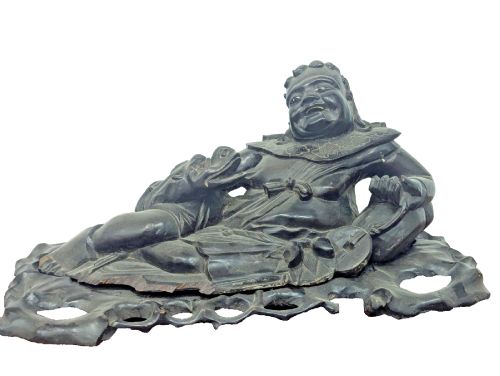
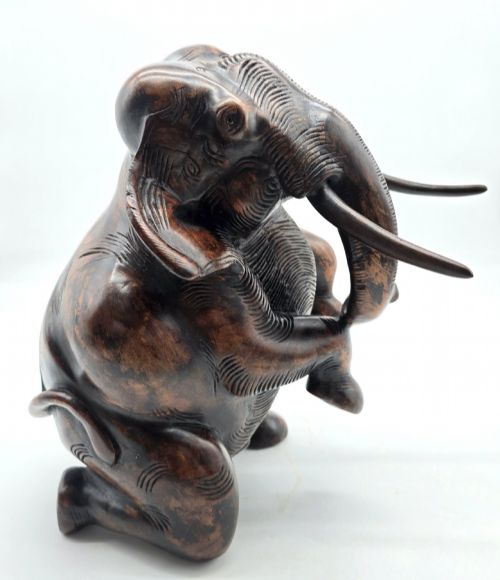
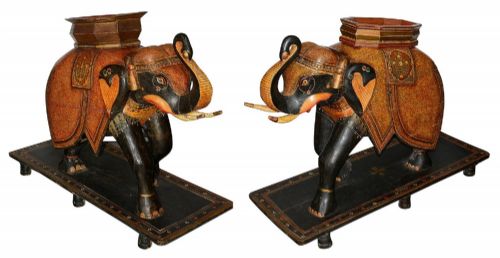
These sculptures take several sculptural formats, including decorative figures on stands, studies of seated or ceremonial beasts with keepers, and larger architectural or decorative seats. Their dimensions vary widely from compact desk studies to imposing pairs approaching a metre in height.
How they were made
Surface treatment often involves traditional finishing techniques, including hand application of lacquer, polychrome pigment, and subtle touches of gold leaf or gesso. Some pieces incorporate contrasting materials like bone for tusks, enhancing the sculptural depth of the work.
Listings feature hard woods like ebony and teak, alongside decorative additions of bone, gesso, and gold leaf.
What varies in quality
Condition and completeness also define the upper tier, especially where fragile elements like applied lacquer, gold leaf, pigment, or bone tusks survive intact. Original integrated wooden stands and matched pairs add significantly to the integrity of the piece.
The Carved Wooden Elephant Sculpture Glossary
- Anglo-Indian
- Descriptive of items produced in India during the British colonial period, combining local craftsmanship with British taste. These pieces often exhibit distinct regional decorative motifs.
- Raj period
- Pertaining to the era of British rule in the Indian subcontinent, spanning the nineteenth and early twentieth centuries. Furniture and sculpture from this time frequently utilise native hardwoods.
- Hardwood
- Timber derived from broad-leaved trees, noted for density and durability. Carvers selected these woods for detailed sculptural work that needed to withstand centuries without warping.
- Lacquer
- A protective and decorative finish applied in multiple layers and cured to a hard coating. It appears on Asian and colonial items to provide sheen and colour.
- Gesso
- A plaster-like mixture applied to wood surfaces as a base for paint or gilding. It allows for crisp surface detailing before the final decorative layer is added.
Carved Wooden Elephant Sculpture: Frequently Asked Questions
How do I date a wooden elephant?
Dating relies on examining the timber species, tool marks, and stylistic conventions associated with known periods like the Victorian era or the Qing Dynasty. Wear patterns on the base and the method of construction also provide reliable clues.
Secondary indicators include the presence of period finishes such as early lacquer, pigment, or bone elements. Comparing the carving depth to dated examples helps narrow down the origin.
Where were these sculptures made?
The evidence shows production primarily across the Indian subcontinent during the Raj period, alongside Chinese workshops from the Qing Dynasty and Burmese temple sites. Each region employed local timber and distinct sculptural styles.
Colonial trade routes distributed these carved animals to British and European markets, which explains their presence in nineteenth-century collections today.
How should I clean my sculpture?
Dust the surface regularly with a soft, dry brush to prevent particulate buildup in the carved recesses of the wood. Avoid using commercial polishes or damp cloths that might damage aged lacquer or gesso.
Keep the piece away from direct sunlight and strong heat sources to prevent the timber and applied finishes from drying out or splitting.
What is the difference between pairs and singles?
Pairs of carved elephants were typically created by the same workshop hand as symmetrical decorative items for mantelpieces or entrances. Surviving matched pairs retain a higher level of compositional balance.
Single figures function independently as studies or architectural elements, often showing more varied poses such as seated postures or ceremonial processions with keepers.