




Anglo Indian Carved Figure
These pieces of anglo indian carved figure encompass hardwood animals, figures, and occasional furniture from nineteenth-century colonial workshops.
Anglo Indian Carved Figure
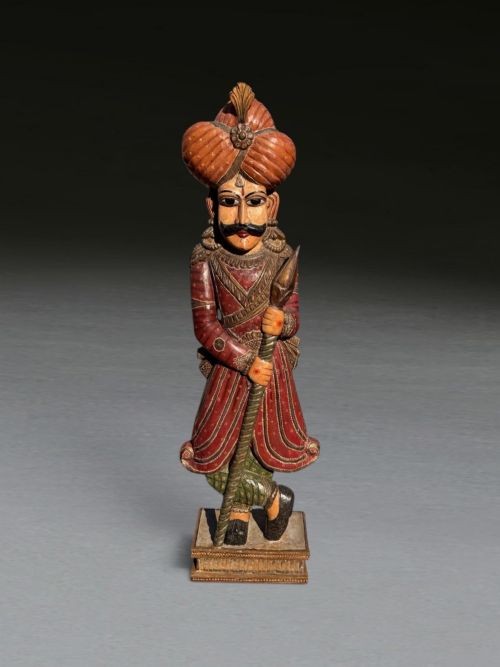
When you search for an anglo indian carved figure, you encounter sculptural works produced during the colonial period, most frequently taking the form of elephants, soldiers, goats, and stags. These pieces capture the intersection of traditional South Asian carving techniques and British domestic tastes of the Victorian era.
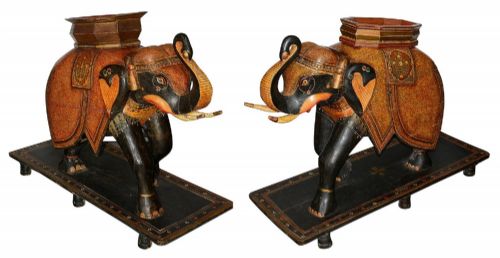
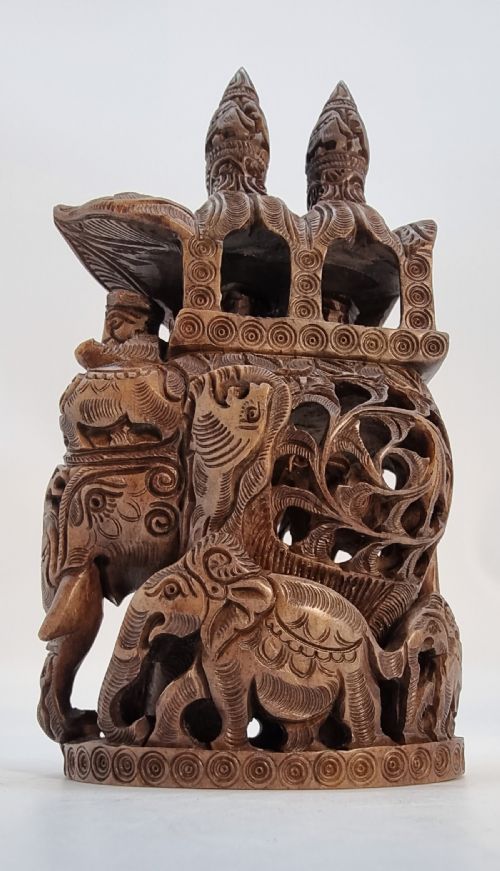
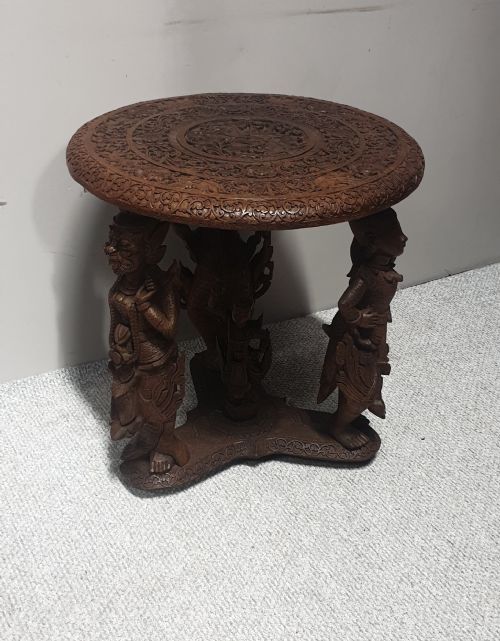
The selections available here lean heavily toward depictions of elephants, rendered either as standalone studies, bookends, or ceremonial pairs, alongside occasional side tables and human figures. Originating across different regions such as Kashmir and the Coromandel coast, these works demonstrate the diverse output of nineteenth-century artisans.
Most items date from the nineteenth century and the early twentieth century, spanning periods like the Raj and the Victorian era. They function primarily as decorative sculptures and functional library accessories rather than everyday utilities.
Materials and construction
Artisans utilised dense timbers such as teak, ebony, and hard wood to carve these sculptures, often achieving remarkable detail in the folds of skin and harness decorations. Softer materials like soapstone, steatite, bone, and staghorn also appear, handled with the same dedication to sculptural depth.
Surface treatment frequently involves applied pigment, gesso, and lacquer, particularly on Kashmiri works which incorporate colour alongside carved wood. These layered techniques required skilled handwork to seal and finish the organic substrates.
A life-size carved Indian goat stands ready to graze forever in your hallway.
Evaluating the work
Quality rests upon the crispness of the hand carving and the naturalism achieved in the anatomy of the animal or figure. Finer examples display deep undercut details in the tusks, trappings, and musculature without relying on heavy surface finishes to obscure clumsy tool marks.
The choice of raw material alters the character of the object, with dense tropical hardwoods like ebony commanding attention for their weight and fine grain. Matched pairs and complete groupings show superior initial design intent compared to isolated or heavily modified remnants.
The Anglo Indian Carved Figure Glossary
- Ebony
- A dense, dark hardwood valued for its weight and smooth finish. It permits very fine carving without splintering, making it ideal for detailed animal studies.
- Soapstone
- A soft, talc-based metamorphic rock easily carved into smooth, tactile sculptures. It takes a subtle polish and shows gentle tonal variations.
- Raj period
- The era of British crown rule in the Indian subcontinent, spanning from eighteen fifty-eight to nineteen forty-seven. Pieces from this time often reflect Anglo-Indian artistic synthesis.
- Coromandel
- The southeastern coastal region of India associated with distinct cabinet-making and carving traditions. Items from here often utilise rich local timbers.
Anglo Indian Carved Figure: Frequently Asked Questions
What are anglo indian carved figures?
These are decorative sculptures and bookends created in South Asia during the colonial period for British and international markets.
They primarily depict animals such as elephants and stags, alongside human figures and functional items like bookends and tables.
How were these figures used?
They served as ornamental objects in nineteenth-century British libraries, studies, and drawing rooms, often reflecting colonial experiences.
Pairs of elephant figures frequently doubled as heavy bookends to support leather-bound volumes on open shelves.
How do I care for hardwood sculptures?
Keep them away from direct heat sources and sudden humidity changes to prevent the timber from splitting. Dust gently with a dry, soft cloth rather than using liquid polishes.
How are different periods identified?
Dating relies on timber selection, tool marks, style of ornamentation, and documentary evidence where available. Victorian and Raj period items often exhibit specific motifs tied to nineteenth-century trade.