


Colonial Indian Wooden Statue
A colonial indian wooden statue brings the grand narrative of the British Raj and regional craftsmanship straight into a room.
Colonial Indian Wooden Statue
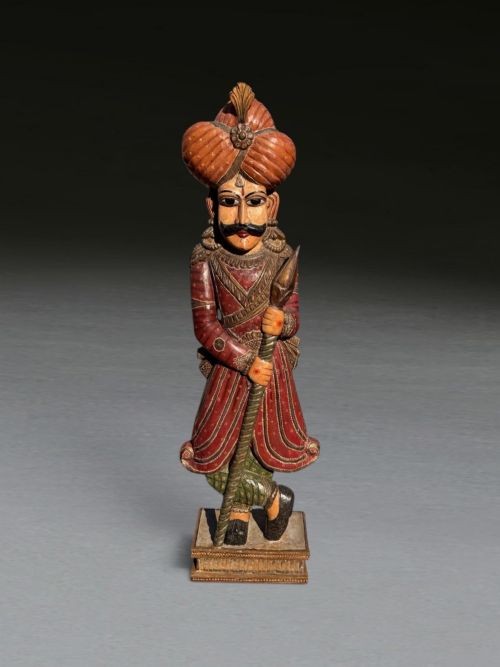
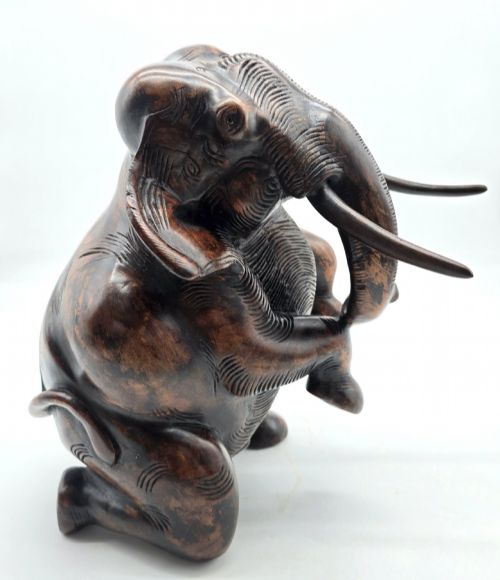
A colonial indian wooden statue encompasses figural carvings, animals, and bookends originating from the nineteenth and early twentieth centuries. Buyers searching for a colonial indian wooden statue will mostly encounter depictions of elephants, horses, soldiers, and deities created during the Raj period. These sculptures capture the intersection of traditional Indian folk art and British colonial taste.
The objects take several distinct forms, ranging from single decorative figures of soldiers and Hindu deities like Parvati to pairs of performing elephants and functional bookends. Many pieces portray ceremonial subjects, local fauna, and figures from regional folklore carved with expressive detail. They serve as striking decorative sculptures that anchor a mantelpiece or desk.
How they were made
Artisans fashioned these sculptures from dense regional timbers such as teak wood, ebony, and various unspecified hardwoods. These durable materials allowed carvers to execute intricate details on subjects like caparisoned elephants and uniformed figures.
Current listings span the nineteenth century and early twentieth century, featuring works in ebony, teak wood, and painted hardwood.
What varies in quality
The retention of original paint and pigment significantly elevates a piece, as does the choice of dense, highly polished timbers like ebony. Paired objects also achieve greater desirability when both items maintain balanced proportions and matching execution.
The Colonial Indian Wooden Statue Glossary
- Raj period
- The period of direct British rule over the Indian subcontinent, lasting from 1858 until 1947. Objects from this era often reflect an aesthetic exchange between British commissioners and Indian craftsmen.
- Anglo-Indian
- A term describing objects, architecture, or design that blends British and Indian cultural traditions. These pieces were frequently commissioned or collected by Britons living in India.
- Hardwood
- Wood from angiosperm trees that is generally denser and heavier than softwood. Carvers utilised teak and ebony to achieve durable, sharply defined sculptural details.
- Pigment
- A coloured powder mixed with a liquid binder to apply surface colour to sculptures. Artisans used pigments to decorate wooden horses, soldiers, and religious figures.
Colonial Indian Wooden Statue: Frequently Asked Questions
Which woods were used?
Carvers utilised dense regional timbers including teak wood, ebony, and general hardwood. These materials provided the necessary strength for intricate, detailed sculptural work.
Selected pieces also incorporate applied paint and pigment to accent specific details on figures and animals.
How do I date these carvings?
Most surviving examples date from the nineteenth century through the early twentieth century, spanning the Raj period. Stylistic cues and material choices help situate pieces within this broad era.
Makers combined traditional regional motifs with Western decorative demands typical of the late nineteenth century.
Where should I place them?
These sculptures suit tabletops, mantelpieces, and bookshelves, where their detailed carvings remain visible. Paired items like bookends serve a dual decorative and functional purpose in a study.
Their varied sizes allow them to sit comfortably alongside books and other nineteenth-century decorative objects.