
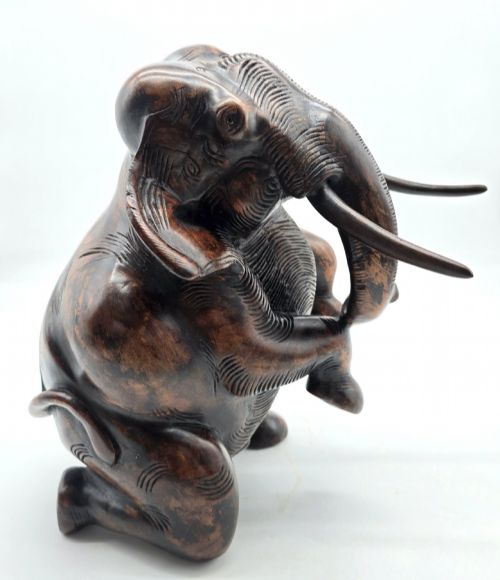
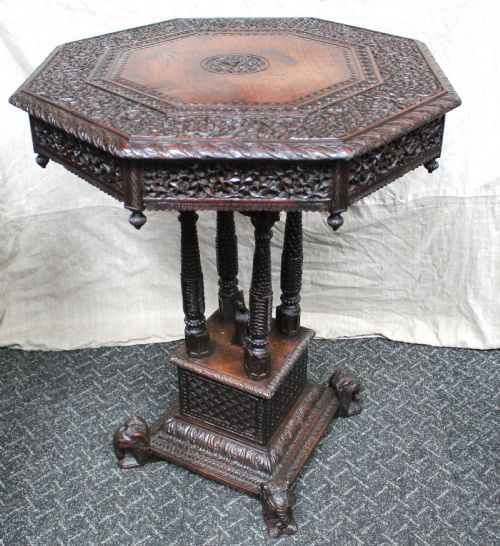


Carved Teak Elephant
These carved teak elephant pieces combine utilitarian furniture with intricate animal forms, originating primarily from the late nineteenth and early twentieth centuries.
Carved Teak Elephant
A carved teak elephant search brings together regional tables, seating and sculptural studies made during the nineteenth and early twentieth centuries. These objects reflect Anglo-Indian, Burmese and colonial tastes, often taking the form of occasional tables supported by carved figures or seating incorporating animal motifs.
The most common formats on this page are occasional and side tables where elephants form the structural legs or central supports. Alongside these, buyers encounter armchairs, benches, occasional stands and standalone sculptural figures produced across various colonial workshops.
How they were made
Makers utilised dense timbers such as teak and rosewood, carving the material by hand to achieve deep relief work and distinct animal anatomy. Construction frequently incorporated traditional joinery alongside applied elements like bone inlay and brass detailing.
Surface finishing relied on hand-applied wax or polish to highlight the grain of the hardwood and the precise chisel marks of the artisan. Tables often integrated complex geometric or floral patterns surrounding the central elephant figures.
One recorded Burmese temple carving pairs a monkey and an elephant together in polychrome.
What varies in quality
Quality rests on the depth and definition of the carving, distinguishing crisp anatomical detailing in the animal figures from softer, flatter execution. The choice of timber grain and the complexity of the surrounding geometric or foliate work also mark out superior items.
Structural integrity differentiates standard production pieces from finer examples, particularly where legs formed of elephant trunks or tusks meet heavy table tops. The inclusion of supplementary materials like bone inlay or brass accents adds another tier of craftsmanship.
The Carved Teak Elephant Glossary
- Anglo-Indian
- A style of furniture produced in India during the British colonial period, combining local craftsmanship with European forms. It frequently incorporates dense carving and regional hardwoods.
- Raj period
- The era of British crown rule in the Indian subcontinent spanning from 1858 to 1947. Furniture from this period often reflects syncretic design influences.
- Hoshiarpur
- A North Indian city renowned for intricate woodwork, particularly pieces featuring detailed micro-mosaic bone inlay on teak or shisham wood. Items from this region often include floral and animal motifs.
- Bombay Presidency
- A major administrative subdivision of British India that became a prominent centre for distinctive carved furniture production. Tables from this region often feature octagonal or circular tops supported by carved animal figures.
- Occasional table
- A small, portable table designed for specific, intermittent uses within a room. In this context, they frequently feature structural elephant supports.
Carved Teak Elephant: Frequently Asked Questions
How do I date an elephant table?
Dating relies on stylistic markers, construction methods, and materials associated with the nineteenth century through the Art Deco period. Pieces from the Victorian and Raj periods typically exhibit hand-carved detailing and traditional joinery.
Later items from the early twentieth century may show different finishing techniques or streamlined forms while retaining the characteristic animal motifs.
Where were these pieces made?
Production centred primarily on workshops in the Indian subcontinent, particularly within the Bombay Presidency, as well as in Burma. Artisans in these regions produced furniture for both local use and the export market.
British colonial demand heavily influenced the forms, adapting traditional craftsmanship into Western furniture types like side tables and armchairs.
How do I care for teak furniture?
Maintain the wood by dusting regularly with a dry cloth and avoiding placement near direct heat sources or strong sunlight. Occasional application of a suitable wax helps preserve the finish of the carved hardwood.
Protect the surface from moisture by using coasters and mats to prevent staining on the polished timber.