


Anglo Indian Carved Tray
An anglo indian carved tray brings intricate craftsmanship and exotic timbers into a room, offering both functional service and striking decorative presence.
Anglo Indian Carved Tray
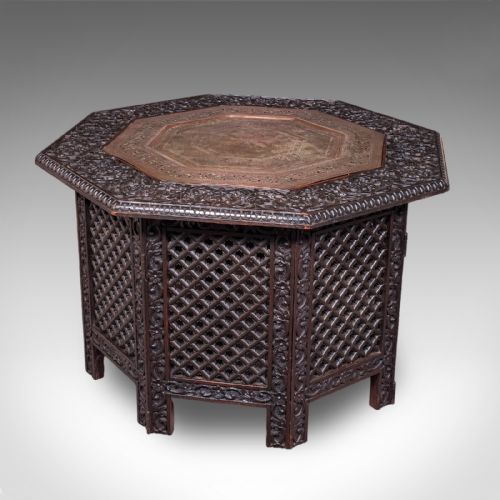
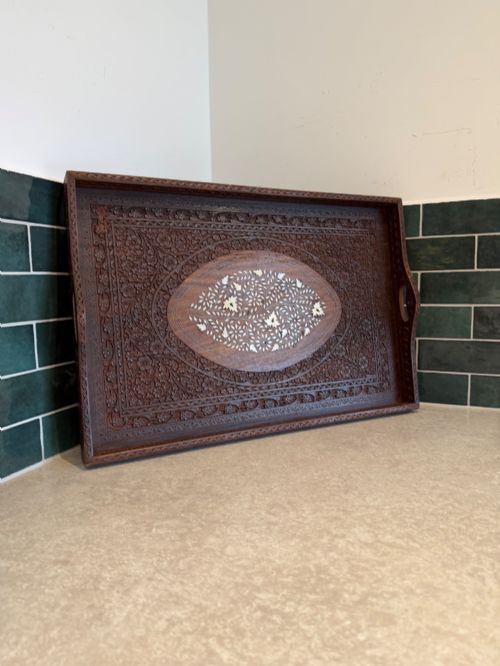
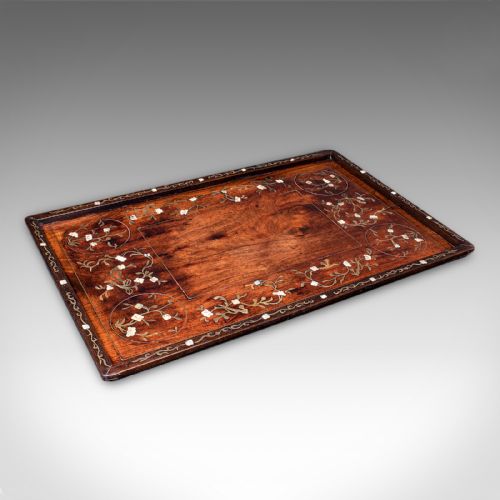
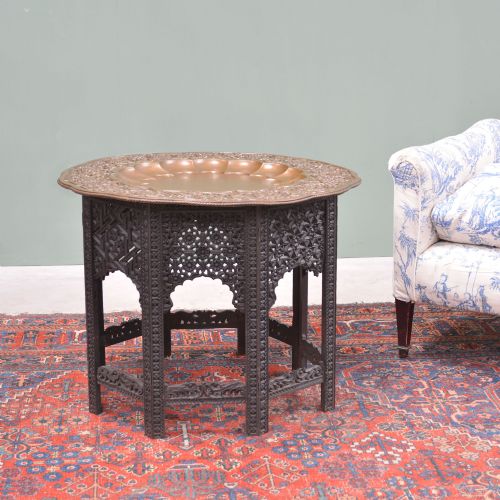
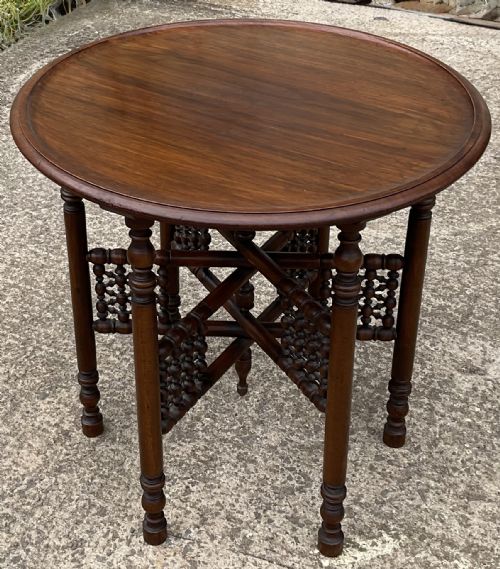
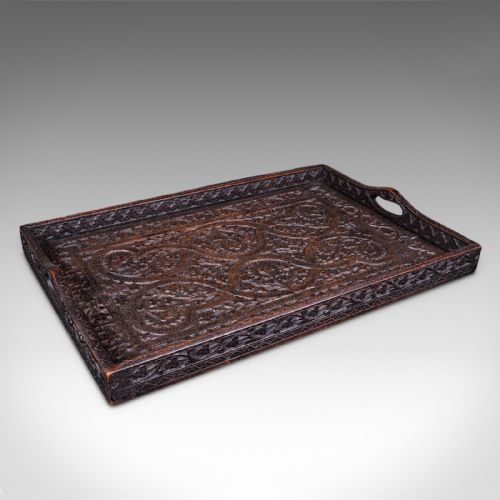
When you search for an anglo indian carved tray, you encounter decorative serving pieces, afternoon tea platters, and table tops produced during the nineteenth and early twentieth centuries. These objects combine traditional regional woodworking and metalwork methods with forms suited to British colonial life. The selection here spans portable serving trays and wall chargers alongside folding occasional tables fitted with removable trays.
The materials and styles reflect a rich cultural exchange between British patrons and local artisans working across the Indian subcontinent. You find pieces fashioned from dense tropical hardwoods alongside those featuring elaborate brass or copper insets and pierced decoration. The forms range from simple octagonal tea platters to large coffee tables designed to sit centrally in a reception room.
How they were made
Maker workshops utilised dense regional timbers such as teak and walnut, carving deep relief foliage, geometric patterns, and figurative motifs across the surface. These hardwoods provided a stable base that could withstand intricate chisel work without splitting along the grain. Artisans frequently integrated bone inlay to create striking tonal contrasts against the dark timber.
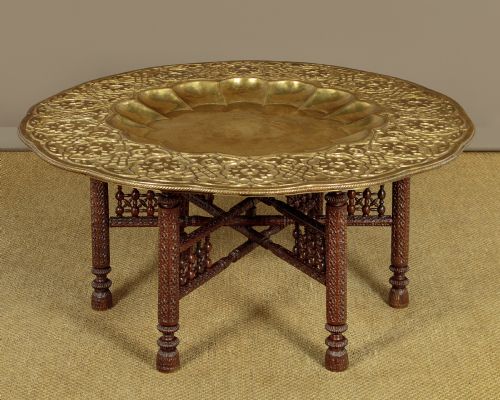
Metal components involved hammering and piercing sheet brass and copper to form removable trays and inset table tops. Craftsmen chased detailed borders, animal figures, and zodiac signs directly into the metal surface before mounting the panels onto folding wooden stands.
Several folding tables include complete brass tea services, ready for an impromptu colonial gathering.
What varies in quality
Depth and crispness of the chisel work distinguish superior examples from ordinary production. Finely executed pieces display sharp undercut foliage and secure, flush bone inlay without gaps in the joinery. Weaker items often exhibit shallow stamping and coarse surface finishing that lacks definition.
The weight and gauge of the metal insets dictate the structural integrity of brass and copper top pieces. Thicker sheet metal holds intricate hand-pierced piercing cleanly without distortion, whereas thin plates bend easily under daily use.
The Anglo Indian Carved Tray Glossary
- Anglo-Indian
- Describing objects created in the Indian subcontinent during the period of British rule, combining local craftsmanship with European domestic forms. These pieces often merge traditional regional carving techniques with furniture types like tea tables and side desks.
- Hoshiarpur
- A northern town renowned for intricate wood carving and delicate bone inlay work. Items from this region typically feature dense geometric patterns covering every visible surface.
- Tray table
- A versatile furniture form comprising a removable serving platter resting on a collapsible wooden folding stand. This design allowed for easy storage and transport in colonial homes.
- Wall charger
- A large ornamental metal plate intended for display on a wall rather than for dining use. These pieces showcase elaborate hand-hammered and pierced decoration across the central field and rim.
Anglo Indian Carved Tray: Frequently Asked Questions
Are folding tables structurally stable?
The folding mechanism relies on interlocking wooden slats that secure the removable tray firmly on top. When fully expanded, the joints distribute weight evenly across the base.
Over decades of use, the hinge pins may loosen slightly, so check that the intersecting legs lock securely into position before placing heavy items on the surface.
How do I identify a Kashmiri piece?
Kashmiri items frequently utilise walnut timber and feature fluid, naturalistic floral carvings that cover the entire upper surface. The grain is typically finer and darker than standard tropical hardwoods.
These pieces often lack bone inlay, relying entirely on deep relief woodwork to create texture and visual depth.
Can I use these trays for serving food?
While originally designed for afternoon tea and hospitality, antique trays require careful handling today. Use them primarily for display or light service to protect the historic finish from moisture and staining.
Teak and hardwood surfaces benefit from periodic treatment with appropriate wood balms to maintain the natural oils in the timber.