


Antique Kashmiri Wood Carving
Antique kashmiri wood carving brings intricate relief work and domestic craft into a room, offering functional objects formed from dense timber.
Antique Kashmiri Wood Carving
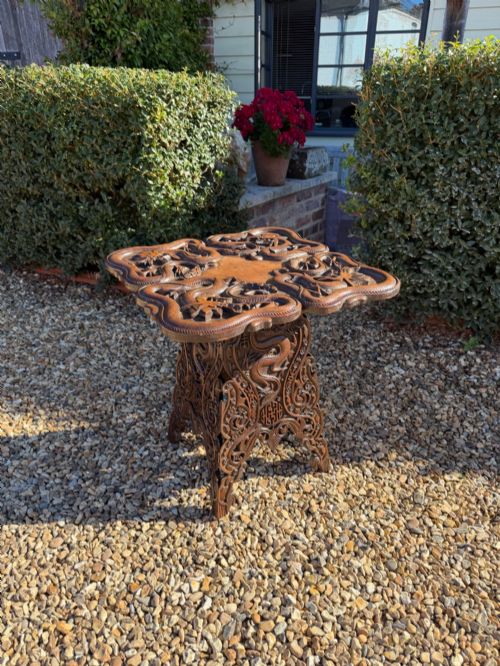
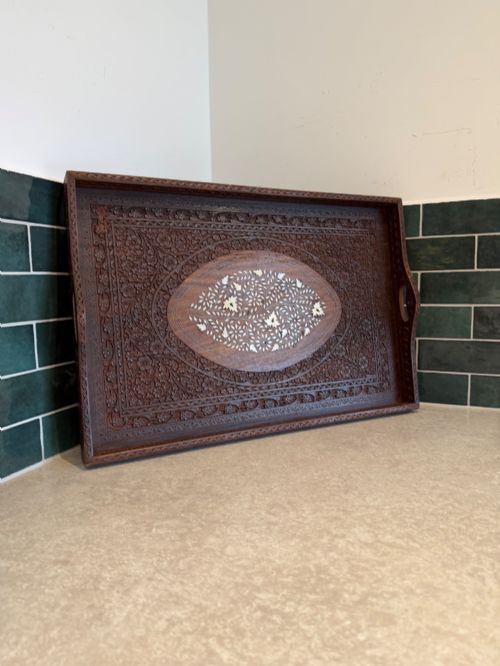
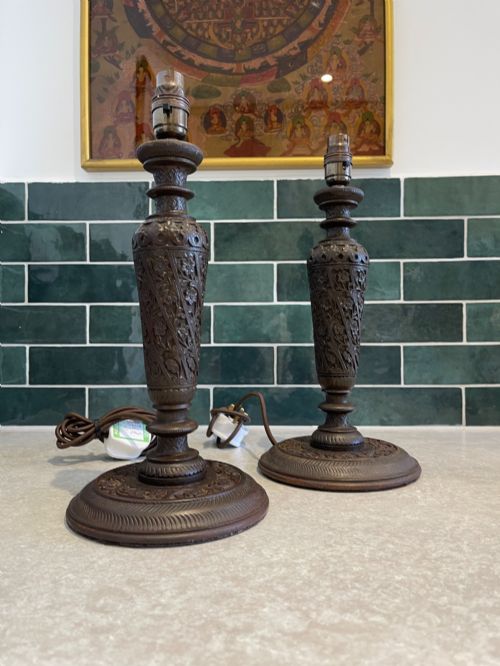
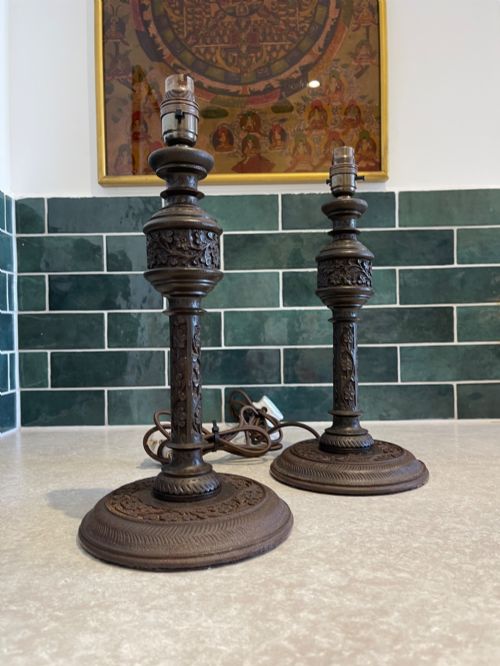
An antique kashmiri wood carving purchase involves items intended for everyday utility and display within nineteenth and early twentieth century homes. Buyers encounter walnut tables, trays, picture frames, and lamp bases showing deep floral relief work.
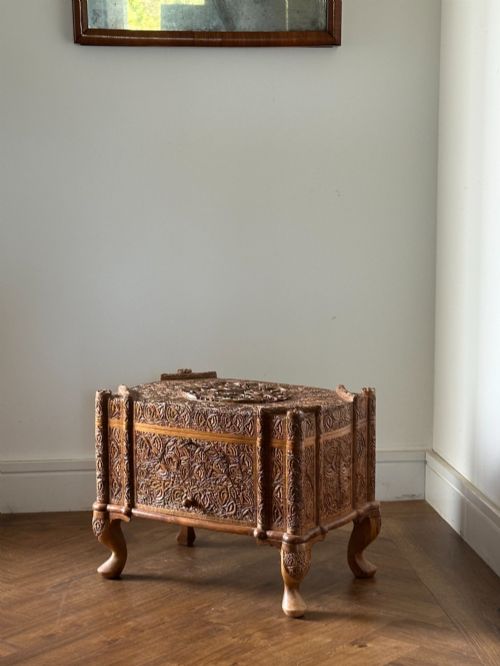
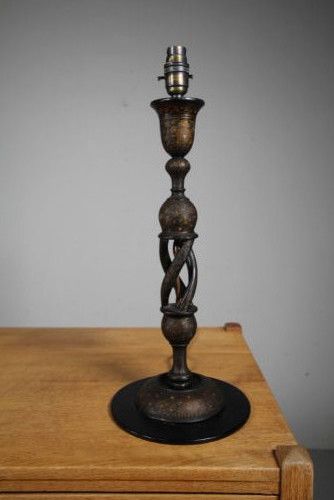
The objects span domestic accessories and occasional furniture produced across the Victorian era and the early decades of the twentieth century. Serving trays, jewellery caskets, book slides, and nests of tables appear alongside table lamps and standard lamps.
Origins tie these pieces to Kashmiri workshops working within regional aesthetic traditions that also connect to Anglo-Indian styles. Walnut remains the principal medium, often supplemented by hardwood, brass inlay, and carved wood elements.
How they were made
Local artisans shaped these objects using dense walnut and other hardwoods, applying hand-chiselled relief carving to surfaces of furniture, frames, and trays. This carving frequently covers every available inch with dense foliage, floral motifs, and geometric borders.
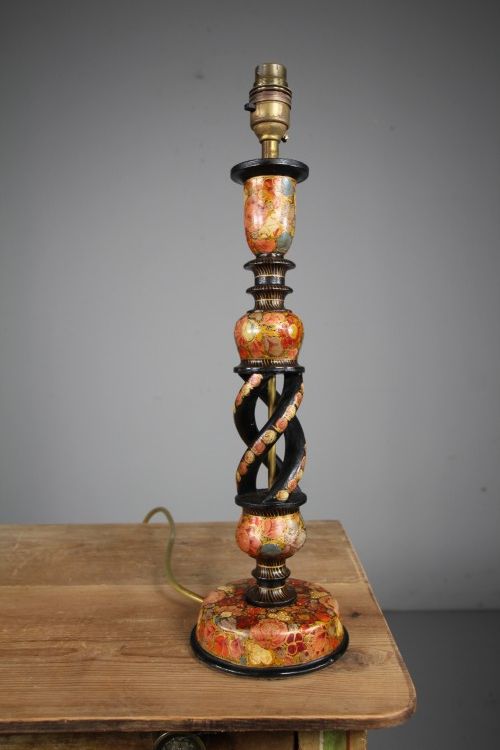
Certain pieces incorporate contrasting materials such as brass inlay, bone inlay, and painted lacquer finishes over carved wood or papier-mache structures. Joinery methods suit the domestic function of each item, from nested tables to lidded caskets.
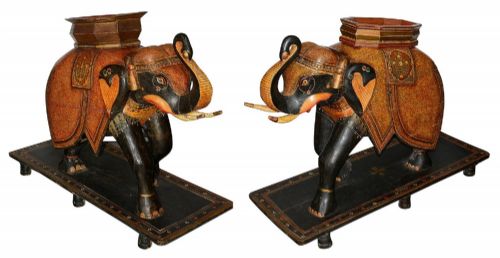
Nineteenth-century Kashmiri artisans carved monumental wooden elephants standing nearly a metre tall, complete with lacquer finishes.
What varies in quality
The depth and clarity of the chisel work define the visual strength of each carved surface, separating master execution from routine production. Crisp undercut foliage maintains its definition across walnut trays and lamp bases.
Proportion and the integrity of the timber structure determine the long-term character of tables, frames, and caskets. Well-chosen walnut sections resist warping and provide a stable ground for complex carved decoration.
The Antique Kashmiri Wood Carving Glossary
- Walnut
- A dense, dark timber favoured by Kashmiri carvers for its ability to hold sharp, intricate relief details without splintering. It forms the primary material for many trays, tables, and frames.
- Lacquer
- A decorative surface coating applied over wooden or papier-mache cores to add colour and sheen. It appears on sculptural animal figures and decorative objects.
- Anglo-Indian
- A design style resulting from the cultural exchange between British taste and Indian craftsmanship during the nineteenth century. It heavily influences the decorative vocabulary of these carvings.
- Pierced edge
- An openwork technique where sections of the timber are cut entirely through to create a lace-like border. This detail frequently appears on trays and mirrors.
- Book slide
- An adjustable desktop rack designed to hold volumes upright between two decorative ends. These often feature carved walnut panels.
Antique Kashmiri Wood Carving: Frequently Asked Questions
How do I date a piece of kashmiri wood carving?
Dating relies on stylistic clues, construction methods, and materials recorded across the Victorian period and the early twentieth century.
Items range from mid-nineteenth-century walnut pieces to 1920s lighting and occasional furniture.
Which woods were used for these carvings?
Walnut is the predominant timber found in these listings, valued for its deep grain and suitability for intricate relief work.
Other items utilise general hardwoods, carved wood structures, and occasional papier-mache or brass elements.
How do I care for antique kashmiri carved wood?
Maintain the timber by keeping pieces away from direct heat sources and sudden humidity changes that affect dry wood.
Dust intricate relief carvings gently with a soft brush to prevent accumulation in the recesses.