


Vintage Indian Wood Tray
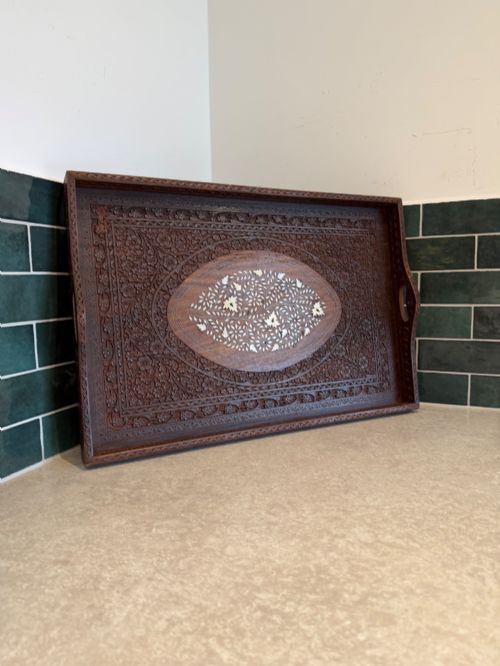
These vintage indian wood tray pieces combine carved timber and metal inlay to bring enduring utility and distinct regional character into a room.
Vintage Indian Wood Tray
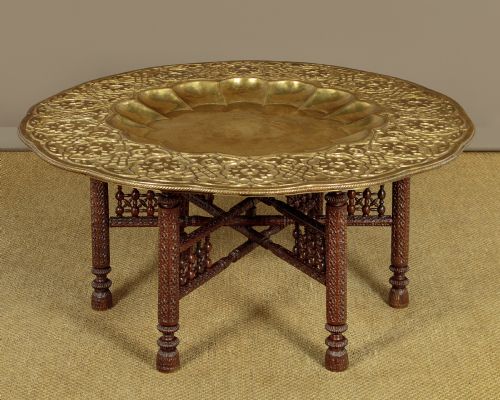
When you search for vintage indian wood tray options, you encounter a focused selection of serving platters, decorative platters, and occasional tables designed with traditional regional motifs. The forms range from portable trays intended for afternoon tea to larger folding table tops supported by collapsible bases.
The assortment includes specific regional interpretations such as Kashmiri walnut work alongside Anglo-Indian and Persian influenced designs. Each item serves a practical function while displaying the distinctive hand-carved ornamentation typical of its provenance.
Materials and construction methods
The construction relies heavily on dense regional hardwoods including teak, shisham, and walnut, chosen for their stability and grain. Artisans shape these timbers through detailed carving, often creating intricate borders and relief patterns across the surface.
Many examples incorporate sheet brass or copper tops fitted directly to the wooden structure or serving as removable trays. Bone inlay is also utilised to form contrasting geometric and floral details embedded into the timber base.
Listings span from the nineteenth century through the 1930s, incorporating teak, walnut, shisham wood, brass, copper, and bone inlay.
Distinctions in quality and execution
The quality of a piece is determined by the depth and precision of the carved detail within the timber. Superior examples exhibit crisp lines and balanced symmetry across floral or geometric motifs without losing definition.
Material selection and integration also separate finer items from standard production, particularly in the snugness of bone inlay and the weight of the brass or copper top. Well-preserved joinery on collapsible tables ensures stability when the piece is assembled.
The Vintage Indian Wood Tray Glossary
- Anglo-Indian
- A style describing items produced during the British period in India that blend British furniture forms with traditional Indian craftsmanship. This fusion creates distinct hybrid objects like carved tea trays mounted on folding stands.
- Kashmiri
- Pertaining to decorative work originating from the Kashmir region, particularly fine walnut woodcarving. Artisans in this area are noted for intricate floral and foliage patterns.
- Shisham wood
- A durable Indian hardwood derived from the rosewood family, frequently utilised for traditional carving. It provides a rich grain and robust foundation for serving platters and tables.
- Bone inlay
- A decorative technique where small pieces of bone are set into recesses carved into wood. This method produces high-contrast geometric and botanical patterns across the surface.
Vintage Indian Wood Tray: Frequently Asked Questions
How were these wooden trays originally used?
These items functioned primarily for serving tea or displaying goods within domestic settings. Many were portable platters designed to rest on collapsible stands when needed.
Over time, several formats evolved into permanent occasional furniture pieces while retaining their removable tray tops.
How do I care for a brass top table?
Maintenance involves gentle cleaning with a soft cloth to preserve the finish on both the metal top and the wooden base. Avoid harsh abrasives that might damage the etched surface or the timber grain beneath.
Regular dusting keeps the carved details clear of debris and maintains the natural lustre of the materials.
Are the table bases usually collapsible?
Many examples feature folding or collapsible wooden bases designed for easy storage and transport. This construction allowed the top and support structure to separate when not in use.
Checking the joints ensures the folding mechanism remains stable and supports the weight of the metal top securely.
What is the difference between Kashmiri and Anglo-Indian pieces?
Kashmiri pieces frequently highlight detailed walnut carving featuring local botanical motifs. These items tend to focus purely on woodwork executed by regional artisans.
Anglo-Indian pieces often combine traditional Indian carving techniques with Western furniture shapes, such as coffee tables or occasional stands incorporating metal tops.