



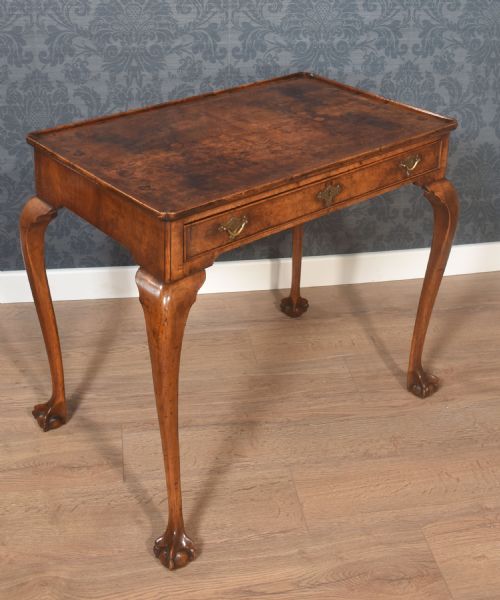


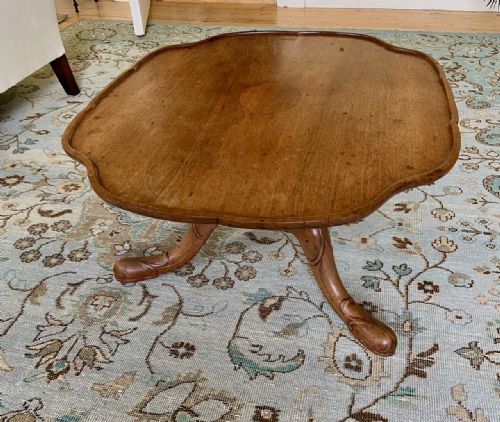

Carved Walnut Tray
A carved walnut tray brings rich grain and deep relief carving to a room, functioning as both a portable server and a resting surface on a stand.
Carved Walnut Tray
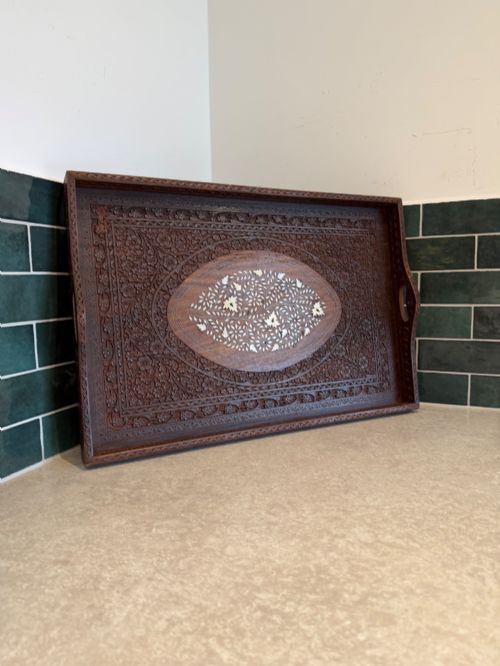
When you search for a carved walnut tray, you meet pieces ranging from standalone serving surfaces to folding table tops and tea trays originating from the nineteenth century through the nineteen-thirties. Edwardian and Victorian examples dominate, alongside regional styles such as Kashmiri and Anglo-Indian work.
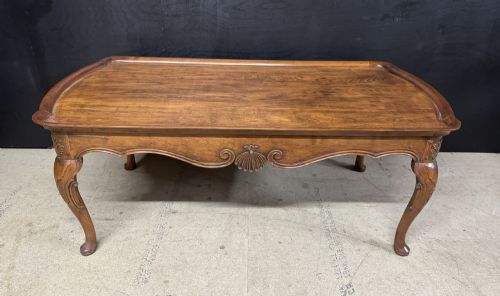
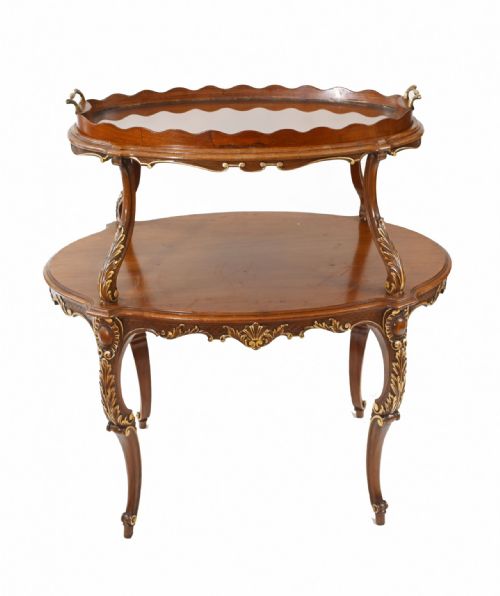
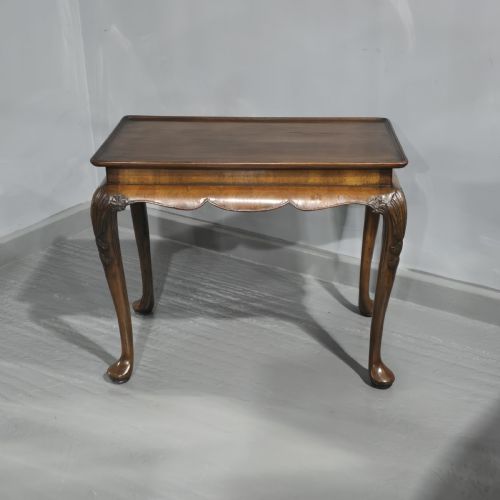
The form splits broadly between serving trays meant for handling and tray-topped tables where the removable surface sits on a dedicated stand. You encounter coffee tables, silver tables, and occasional tea tables configured around this same recessed timber top.
Makers utilised burr walnut, figured walnut, and standard walnut timber, often embellishing the borders with boxwood, bone inlay, or brass mountings. The depth and subject of the carving define the character of each piece, shifting from floral motifs to figurative elements.
How they were made
Craftsmen selected walnut and burr walnut for stability and rich figuring, shaping the timber panels by hand before applying surface finishes. Trays designed for folding stands required precise joinery to ensure the rim and corners endured repeated lifting.
Carving was executed directly into the solid timber or onto applied panels, utilising gouges and chisels to create deep relief foliage or geometric patterns. Inlaid elements like boxwood, bone, or brass were channeled into the wood grain to contrast against the dark brown walnut ground.
Current listings feature carved walnut trays and tables spanning the nineteenth century through the nineteen-thirties, incorporating brass, bone inlay, and boxwood.
What varies in quality
The distinction between standard production and superior work lies in the selection of the timber grain and the crispness of the hand carving. Burr walnut yields complex, swirling patterns that elevate the visual weight of a tray compared to plain flat-sawn timber.
Construction details reveal the standard of manufacture, particularly in how the corners of the tray are joined and whether the handles or galleries are integrated from solid blocks rather than pinned on separately. Relief carving that retains sharp undercuts and defined edges indicates a more skilled hand than shallow, softened stamping.
Whytock and Reid
The Carved Walnut Tray Glossary
- Burr walnut
- A veneer or timber taken from the growth deformity on a walnut tree, showing highly swirled, knotty grain patterns. It provides a decorative surface favoured for high-status furniture and tabletop panels.
- Tray top table
- A piece of furniture where the upper surface is constructed as a removable or recessed tray resting within a fixed or folding stand. This form served multipurpose functions in drawing rooms for tea or drinks.
- Boxwood inlay
- The practice of inserting contrasting pale boxwood strips into recesses cut into darker walnut timber. This technique creates geometric borders and linear stringing details along tray edges.
- Bone inlay
- Decorative sections of carved animal bone set flush into the timber surface to form intricate patterns. It appears frequently on pieces influenced by regional colonial traditions.
Carved Walnut Tray: Frequently Asked Questions
What is a tray top table?
A tray top table combines a removable or fitted serving tray with a supporting stand, functioning as a low occasional table. These pieces allow the upper surface to be lifted off for serving.
They appear in various heights from the nineteenth and early twentieth centuries, operating as coffee tables, tea tables, or display surfaces in reception rooms.
How do I date a carved walnut tray?
Dating relies on stylistic markers, construction methods, and the specific type of walnut timber used in the construction. Victorian and Edwardian examples often display distinct floral carving styles or regional motifs.
Examining the underside, corner joints, and any associated stands helps place the piece within the nineteenth or early twentieth-century timeline.
Are these trays meant for serving?
Many trays were built for functional use in serving tea or drinks, while others were intended primarily as display pieces on stands. The presence of sturdy handles and protective edge lips indicates active utility.
Using older wooden pieces requires care regarding moisture and heat, so modern use often leans towards display or gentle service.
What distinguishes Kashmiri walnut trays?
Kashmiri trays feature dense, intricate overall relief carving depicting local flora and fauna across the entire timber surface. Artisans in the region utilised the native walnut to create deeply textured decorative objects.
These pieces often show distinct regional carving styles that set them apart from standard European Victorian production.