


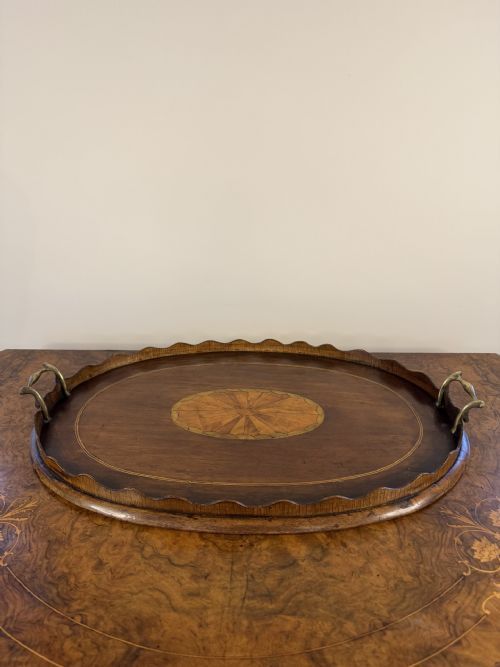


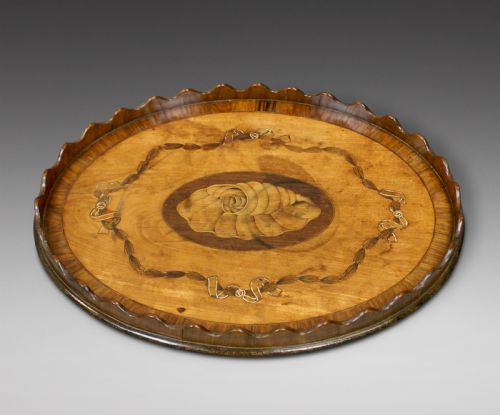


Scalloped Edge Wood Tray
These scalloped edge wood tray pieces bring hand-shaped timber and raised borders together for serving or display, making them a practical addition to any period interior.
Scalloped Edge Wood Tray
A scalloped edge wood tray serves as both a functional container and a decorative table accessory, appearing across several distinct historical periods on this page. Buyers searching this phrase encounter serving trays, platters, and occasional tables featuring curved, lobed borders carved or cut into the wood.
The selection ranges from Georgian and George III examples to Victorian, Edwardian, and later twentieth-century pieces. Common forms include oval and rectangular boards, often fitted with brass handles or gallery rails to secure glassware and china.
Origins span British cabinetmaking traditions as well as regional variations like Kashmiri walnut work and Venetian painted surfaces. Walnut, mahogany, and satinwood dominate the construction, frequently enhanced with marquetry inlay or ebonised finishes.
How they were made
Cabinetmakers shaped these trays using solid timbers such as mahogany and walnut, often applying decorative veneers like oyster cut pieces across the surface. Marquetry inlay added contrasting botanical or geometric patterns into the primary wood.
Edges were painstakingly sawn, carved, or moulded into the characteristic scalloped profile by hand. Metal elements such as brass handles and silver-plated galleries were then screw-fitted or pinned to secure the perimeter.
Listings feature mahogany, walnut, and satinwood across eighteenth, nineteenth, and early twentieth-century periods.
What varies in quality
The refinement of the timber selection and the crispness of the scalloped carving dictate the upper tier of these pieces. Dense grain patterns in walnut and finely figured mahogany distinguish superior examples from standard utility items.
Detailing in the marquetry inlay and the integration of secondary materials like brass or silver plate signal workshop proficiency. Pieces that retain their original polished finish and structural integrity command closer attention from collectors.
The Scalloped Edge Wood Tray Glossary
- Marquetry inlay
- Decorative patterns formed by fitting small pieces of contrasting veneer into a prepared wooden ground. This technique often depicts floral or geometric motifs across the tray surface.
- Oyster veneer
- Circular or oval cross-sections of smaller branches sliced to resemble oyster shells. It creates a distinctive repeating grain pattern across nineteenth-century wooden surfaces.
- Gallery tray
- A serving tray featuring a raised pierced metal or wooden border around the perimeter. This rim prevents items from sliding off during transport.
- Ebonised wood
- Timber treated with chemical stains or black paint to imitate expensive ebony. It provides a dark, uniform background often paired with metal mounts.
- George III period
- The stylistic era spanning the reign of King George III, noted for refined proportions and classical mahogany furniture design. Pieces from this era show restraint and balanced ornament.
Scalloped Edge Wood Tray: Frequently Asked Questions
What were these trays used for?
These trays served primarily for carrying tea sets, decanters, and glassware across period drawing rooms and dining spaces. They also functioned as decorative display bases on side tables.
Larger versions handled frequent hospitality duties, while smaller or miniature formats often stayed static as decorative objects within a room scheme.
How do I identify a Victorian tray?
Victorian examples frequently combine rich mahogany timbers with intricate marquetry inlay or applied brass handles. They reflect the period's taste for eclectic revival styles and heavier, more ornate construction.
Comparing the secondary woods on the underside and the style of the joinery helps confirm this nineteenth-century attribution.
Are these trays suitable for daily use?
Most antique wooden trays benefit from careful handling rather than heavy everyday service. Placing protective mats underneath hot cups or moisture helps preserve the historic polish and veneer.
Gentle dusting and occasional wax maintenance keep the timber stable in modern heated environments.
What is oyster veneering?
Oyster veneering involves slicing small branches diagonally to produce small, rounded pieces of wood grain that resemble oyster shells. Craftsmen arranged these closely together to cover entire tray surfaces in decorative patterns.
This technique requires considerable skill to fit each piece tightly without gaps.