


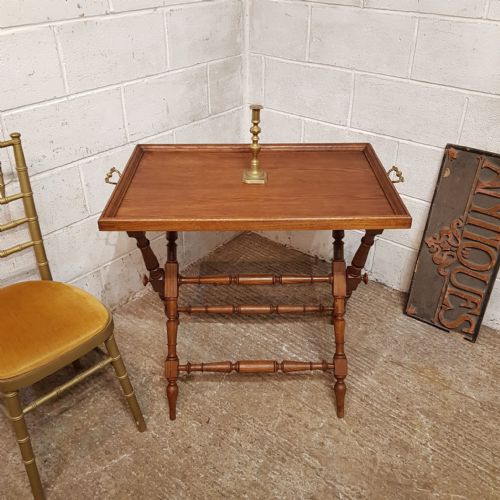


Vintage Carved Table Tray
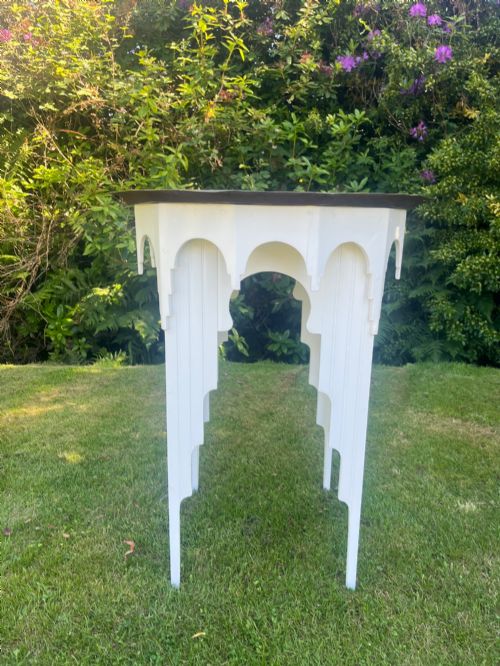
A vintage carved table tray brings functional portability and rich texture into a room, uniting a removable surface with a sturdy stand.
Vintage Carved Table Tray
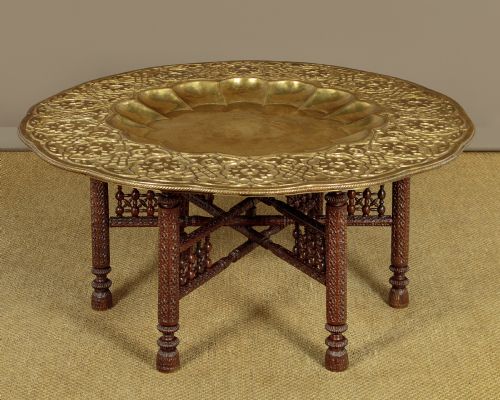
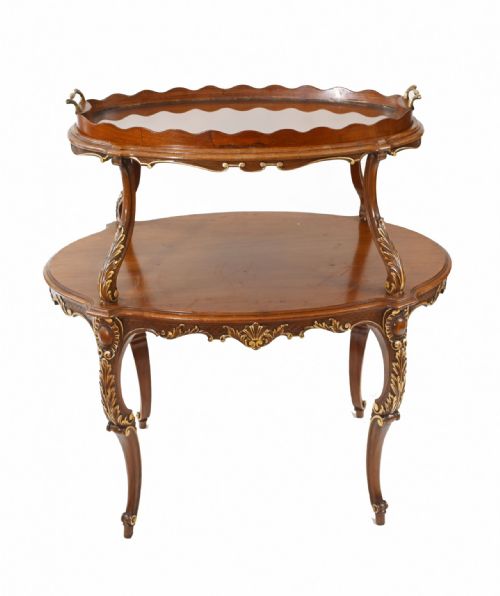
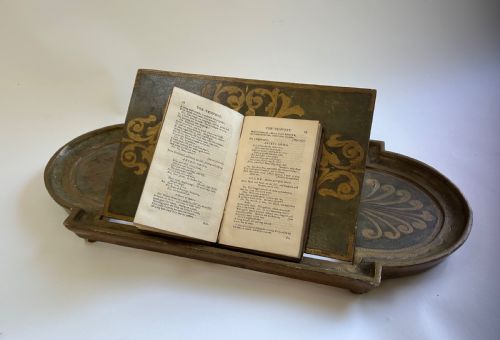
When you search for a vintage carved table tray, you encounter pieces designed for serving or display that double as occasional furniture. These items range from sturdy folding stands holding removable wooden surfaces to elaborate tables featuring inset brass tops.
Many of these objects combine utilitarian origins with decorative carving, originating from workshops in Britain, India, and continental Europe. They function easily as coffee tables, side tables, or tea trolleys within a modern interior.
How they were made
Cabinetmakers utilised dense hardwoods such as oak, walnut, and mahogany, shaping them through traditional joinery and turning. Surfaces often display intricate relief carving, marquetry inlay, or figured grain patterns.
Metal components appear frequently, notably hammered brass and copper tops adorned with regional motifs or zodiac signs. Pewter and sterling silver elements also emerge in specialised serving trays and display dishes.
Listings feature woods such as mahogany, oak, walnut, and hardwood, alongside brass, copper, and pewter.
What varies in quality
Quality rests in the crispness of the hand-carved detail and the selection of timber figures, such as burr walnut or figured mahogany. Superior examples maintain tight joints between the folding stand and the resting tray.
The origin of the metalwork also distinguishes pieces, with deeply chased brass or copper showing superior artisan execution compared to mass-produced stamped alternatives. Original patination and intact hinges elevate the standing of any piece.
Orivit·Tiffany and Co
The Vintage Carved Table Tray Glossary
- Butler's tray
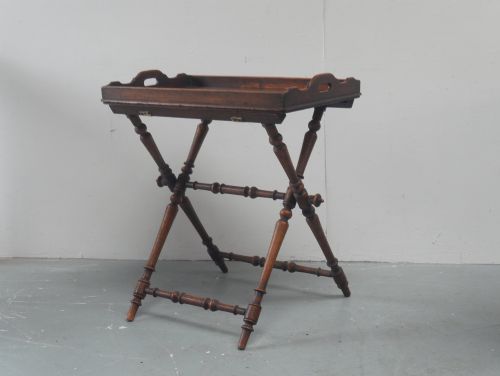
- A rectangular wooden tray with hinged or panelled sides designed to lift off its folding wooden stand. It originated as a portable dining accessory in large nineteenth-century households.
- Anglo-Indian
- A descriptive term for nineteenth and early twentieth-century furniture manufactured in India for British colonial residents. These pieces typically feature dense overall carving and folding bases.
- Marquetry
- The art of applying small pieces of veneer to a structure to form decorative patterns or pictures. Craftsmen utilise various coloured woods to achieve contrast on table tops.
- Lazy Susan
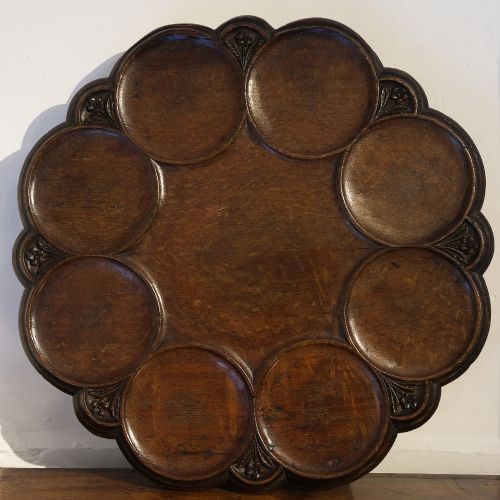
- A rotating tray placed on a table to assist in moving food or items between guests. Rotating wooden versions appear frequently in nineteenth-century contexts.
- Silver table
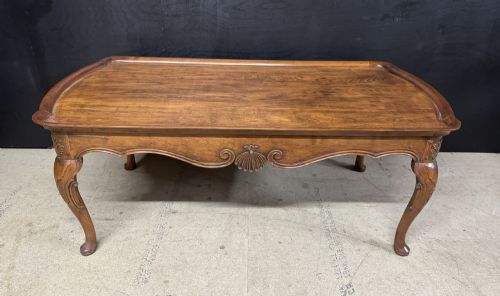
- An occasional table with a raised gallery edge designed for displaying silver or serving tea. They often incorporate Georgian revival styling from the Edwardian period.
Vintage Carved Table Tray: Frequently Asked Questions
How were butler's trays used historically?
These trays served to transport food and dining utensils from the kitchens to the dining room or drawing room. Once positioned on their folding X-frames, they acted as temporary side tables during meals.
Servants later removed the tray entirely to clear dishes or reset the service elsewhere in the house. This dual functionality made them indispensable in nineteenth-century domestic life.
Are tray tops removable on these tables?
Many traditional butler's trays and folding stands feature lift-off surfaces designed to detach completely. This allows the wooden tray to function independently from its base.
Other variations secure the tray directly to the frame or utilise hinged mechanisms that collapse flat for storage. Checking the specific construction reveals whether the piece was built for portability.
How do I care for a carved wooden tray?
Maintain the timber by applying a microcrystalline wax periodically to nourish the grain and protect against moisture. Avoid placing hot or wet items directly onto antique polished surfaces without protective coasters.
Dust intricate carvings gently with a soft bristle brush to prevent dust accumulation in the recesses. Keeping pieces away from direct heat sources prevents the wood from warping or splitting.
What is the difference between an occasional table and a tea trolley?
Occasional tables are stationary or folding pieces intended for flexible placement in a room to hold lamps or books. They rely on fixed frames or collapsible X-stands.
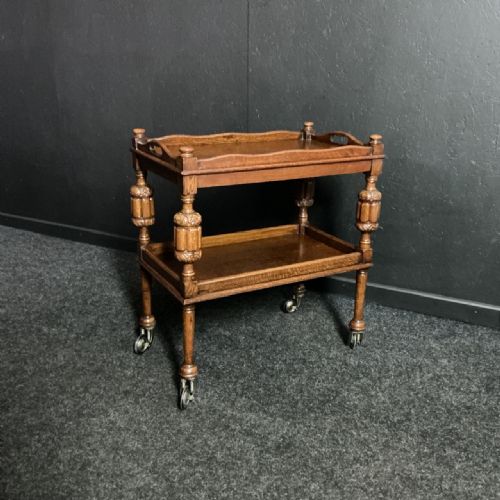
Tea trolleys incorporate wheels and frequently feature multiple tiers or removable trays for transporting refreshments. These mobile units became popular in the early twentieth century for domestic entertaining.