




Carved Wood Tea Tray
These carved wood tea tray pieces bring intricate craft and rich timber into daily service, offering a solid surface for afternoon hospitality.
Carved Wood Tea Tray
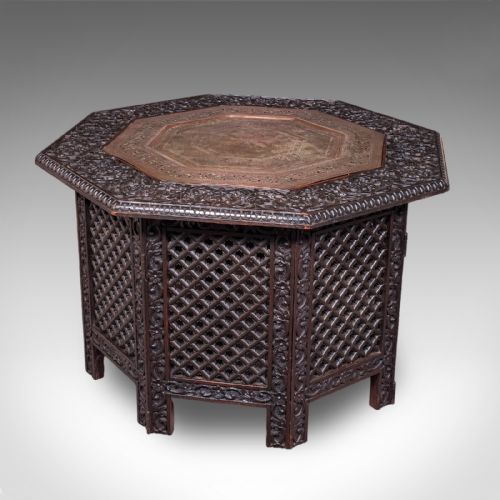
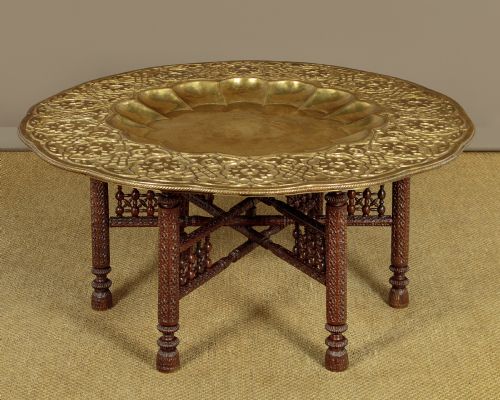
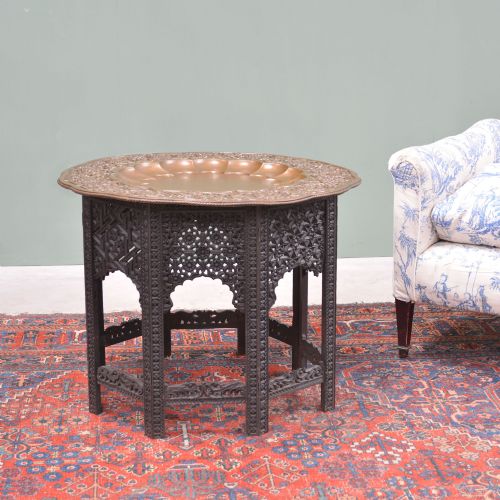
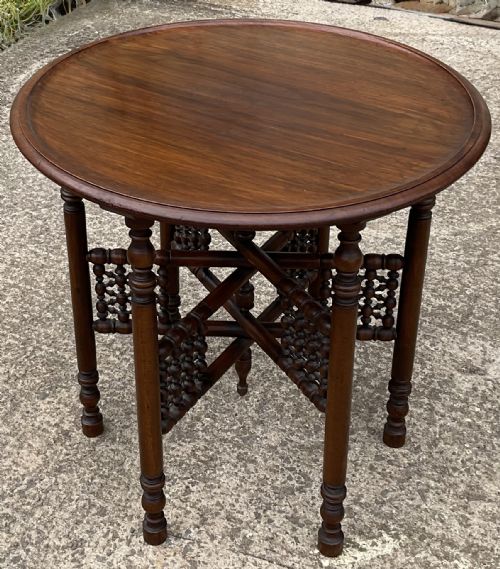
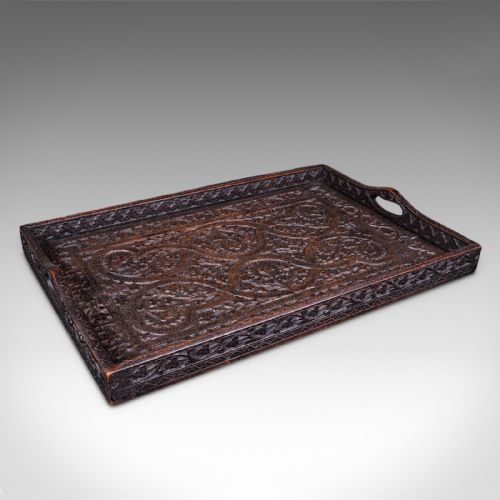
A carved wood tea tray selection includes items designed for serving or mounted upon folding stands to function as occasional tables. The pieces span Georgian mahogany galleried forms through to intricate Anglo-Indian and Kashmiri wood carving.
Buyers meet variations ranging from late Victorian teak afternoon tea platters to early 20th century walnut tray top side tables and Chinese folding examples. These objects merge utilitarian serving functions with decorative carving traditions from multiple regions.
Materials and construction methods
The construction relies heavily on dense timbers such as mahogany, walnut, teak and hardwood, often shaped with raised rims or scalloped edging. Artisans employed detailed chiselling directly into the timber surface to create relief patterns, flora and geometric motifs.
Metal elements occasionally appear alongside the timber, including brass or copper tops and brass fittings on folding table stands. Joinery methods range from traditional British cabinet making to colonial and eastern folding frame designs.
Period origins range across the 18th Century, Victorian era, Georgian, Edwardian and early 20th century decades.
Factors influencing quality
Depth and crispness of the chisel work distinguish superior carved pieces from simpler production, as does the choice of timber figure, such as burr walnut or dense mahogany. The integrity of the raised gallery edge and the fit of the tray to its folding or fixed base determine structural success.
Regional provenance and period adherence also shift standing, with authenticated Georgian cabinet work or skilled Anglo-Indian Hoshiarpur execution carrying distinct artisan credentials compared to later revived styles.
Gillows
The Carved Wood Tea Tray Glossary
- Gallery
- A raised wooden border surrounding the edge of a tray or table top to prevent items from sliding off. This feature is frequently pierced or fretted in Georgian and Victorian pieces.
- Tray top table
- A piece of furniture featuring a removable or fixed serving tray resting upon a folding or rigid support stand. These versatile items served for drinks or afternoon refreshments.
- Anglo-Indian
- A term describing furniture and decorative objects made in India during the British colonial period, typically combining British furniture forms with local deep relief carving.
- Silver table
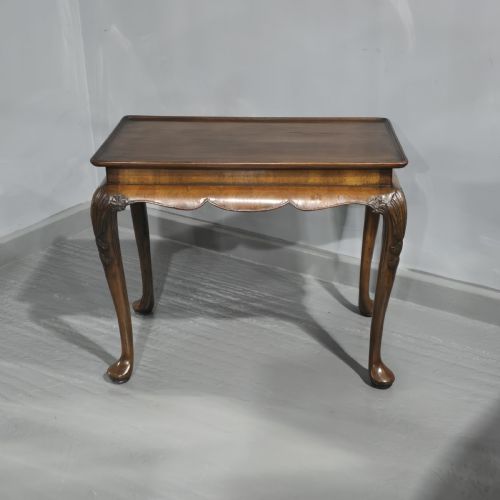
- A specific form of small display or serving table, often mahogany, dating from the eighteenth century onwards. They were historically utilised for holding silver tea services.
- Hongmu
- A category of dense, dark hardwood used in traditional Chinese furniture making. It provides a heavy, durable base for intricate carving.
Carved Wood Tea Tray: Frequently Asked Questions
What is a carved wood tea tray table?
A carved wood tea tray table combines a portable serving surface with a folding or fixed wooden stand. These dual-purpose pieces allowed households to move refreshment settings easily between rooms.
Many examples feature raised gallery edges and detailed surface carving originating from British cabinet makers or colonial workshops. They function today as coffee tables or occasional display surfaces.
How do I identify a Georgian style tray?
Georgian and Georgian revival trays typically utilise solid mahogany with precise edge mouldings and traditional galleried borders. The timber grain and proportion follow classic eighteenth-century cabinet making rules.
Later revival pieces from the early twentieth century often emulate these proportions but can be distinguished by secondary wood choices and mechanical saw marks.
Are these trays suitable for daily use?
Most antique carved trays and tray tables accommodate light daily use if handled with care regarding moisture and heat. Solid mahogany and walnut provide durable surfaces for modern living spaces.
Consider placing protective glass over deeply carved wooden surfaces if utilising them actively for drinks to prevent liquid pooling in the recesses.