


Anglo Indian Carved Box
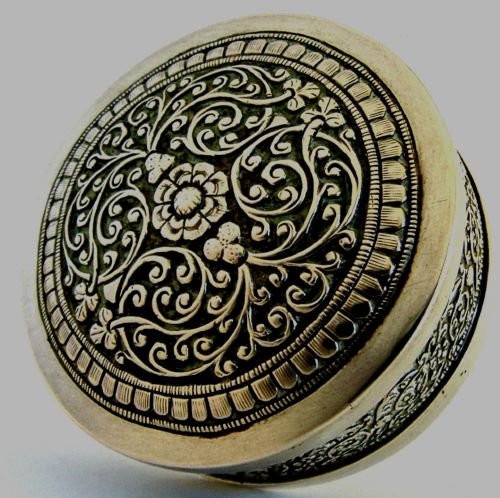
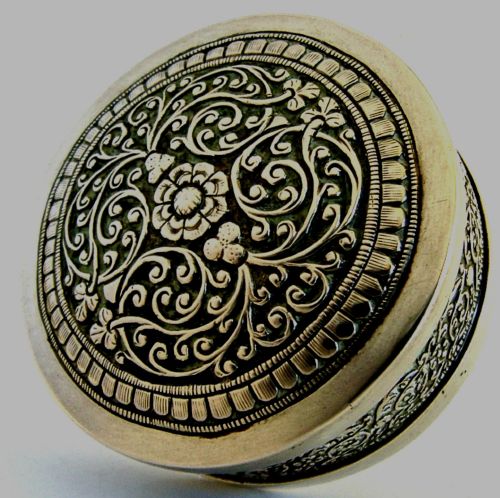
An anglo indian carved box brings together intricate craftsmanship and exotic timbers, offering collectors a tangible piece of colonial history for storage or display.

Anglo Indian Carved Box
An anglo indian carved box spans domestic containers from small trinket caskets and stationery holders to large writing slopes and blanket chests, largely originating across the nineteenth and early twentieth centuries.
The objects frequently combine traditional South Asian carving techniques with British furniture forms, resulting in distinctive pieces intended for both utility and display.
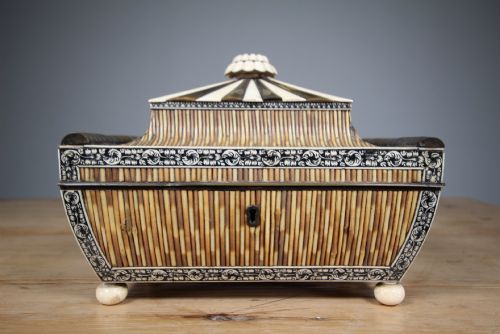
Smaller items like jewellery boxes and cigar containers appear alongside larger storage chests, reflecting the diverse output of regional workshops under British influence.
Materials and construction methods
Craftsmen utilised dense exotic timbers such as teak, sandalwood, ebony, and padouk, often selecting woods native to specific regions like Ceylon or Zanzibar.
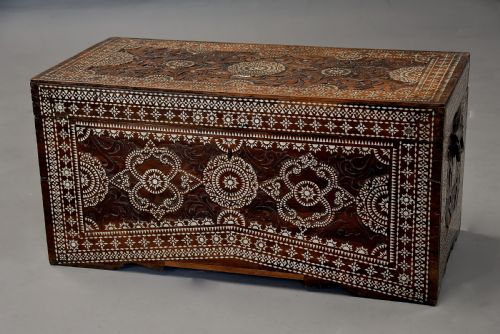
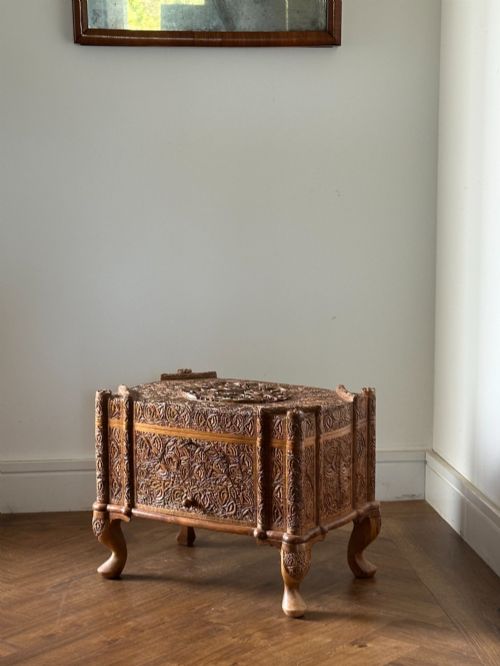
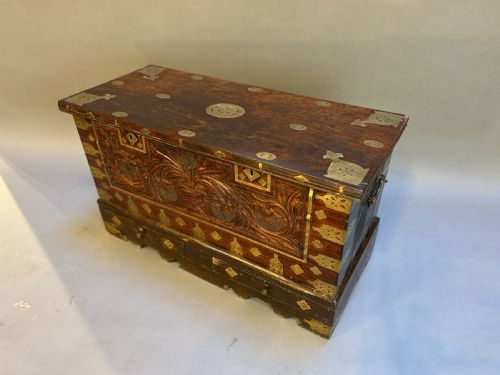
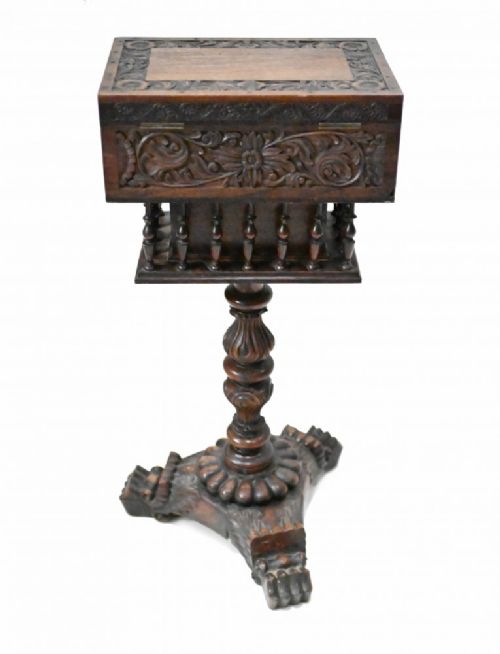
Surfaces received intricate relief carving depicting foliage and figures, frequently supplemented by contrasting inlay work using bone, mother of pearl, or contrasting woods.
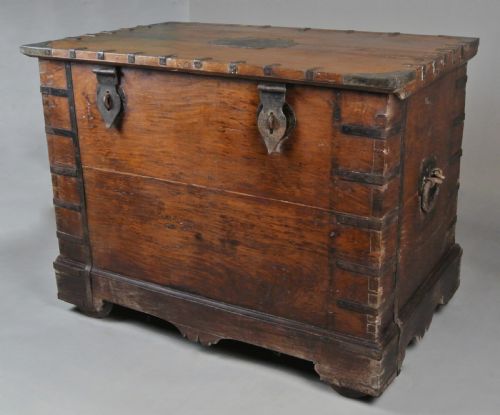
Many larger trunks and chests incorporate functional metal mounts in brass or iron, securing the heavy wooden panels together for long-distance transport.
Anglo Indian Carved Box Retail Price Guide 2026
Typical asking prices for anglo indian carved box among the pieces listed under this phrase on Sellingantiques today, from the lower quarter to the upper quarter. They describe what is for sale here now, not the wider market.
Listings feature teak, ebony, sandalwood, and brass across nineteenth-century writing boxes, stationery holders, and dowry chests.
Distinctions in craftsmanship
The depth and clarity of the relief carving determine the standard of the piece, with finer examples displaying crisp undercut details rather than shallow, uniform stamping.
Material selection dictates value, as solid ebony, coromandel, and aromatic sandalwood command greater attention than standard secondary hardwoods.
The integrity of internal fittings, such as original writing slopes, secret compartments, and fitted velvet trays, elevates the standing of surviving containers.
The Anglo Indian Carved Box Glossary
- Sandalwood
- A dense, highly aromatic timber prized for its pale colour and suitability for intricate relief carving.
- Zanzibar chest
- A heavy wooden storage trunk reinforced with brass or iron studs, associated with East African and Indian trade routes.
- Writing slope
- A portable slant-topped desk containing compartments for ink, pens, and correspondence papers.
- Sedeli
- A form of micro-mosaic inlay utilising geometric patterns of bone, wire, and dark woods common in South Asian decorative arts.
- Trinket box
- A small lidded container designed to hold jewellery, coins, or small personal accessories.
Anglo Indian Carved Box: Frequently Asked Questions
How do I date an anglo indian carved box?
Dating relies on timber choice, construction methods, and stylistic cues recorded across the nineteenth century. Regency and early Victorian pieces often feature specific architectural proportions.
Secondary evidence like brass hardware, paper linings, and fastener types help narrow the decade of production. Examining the wear patterns on the underside provides further clues to age.
What woods were commonly used?
Makers utilised a variety of dense tropical hardwoods depending on local availability and regional workshops. Sandalwood, ebony, teak, and padouk appear frequently in surviving examples.
Lighter woods like satinwood and camphor wood were also utilised, sometimes paired with contrasting dark inlay materials such as bone or mother of pearl.
Where were these boxes manufactured?
Production centred on various regions under British colonial administration, notably different parts of the Indian subcontinent and Ceylon. Specific ports like Zanzibar also served as major hubs for trade and manufacture.
Local artisans adapted indigenous woodworking traditions to suit European tastes, creating hybrid furniture styles for colonial officers and export markets.
How should I care for sandalwood boxes?
Sandalwood requires stable environmental conditions away from direct sunlight and extreme humidity fluctuations to prevent splitting. Natural aromatic oils within the timber should be preserved without applying heavy polishes.
Dusting with a dry, soft cloth is sufficient for routine maintenance. Allowing the wood to breathe maintains its characteristic scent over time.