
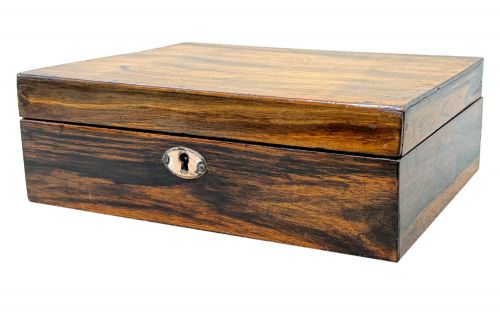

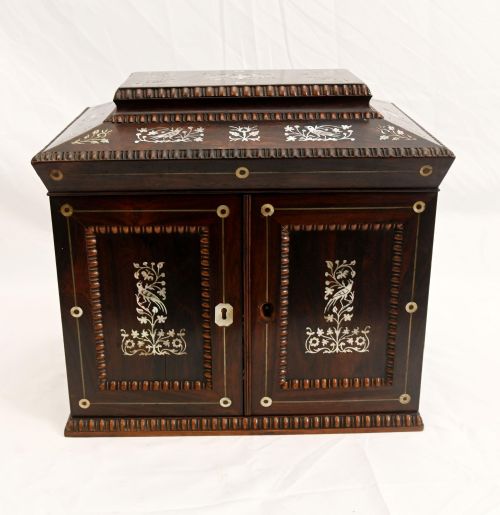


Carved Wood Jewellery Box
These carved wood jewellery box items range from nineteenth-century Black Forest caskets to Anglo-Indian sandalwood workboxes, offering a tactile receptacle for small valuables.
Carved Wood Jewellery Box
A carved wood jewellery box typically takes the form of a tabletop casket, sarcophagus-shaped chest, or small cabinet intended for keeping trinkets and personal effects. The selection spans centuries of global craftsmanship, from seventeenth-century Welsh oak chip-carved boxes to twentieth-century oriental designs.
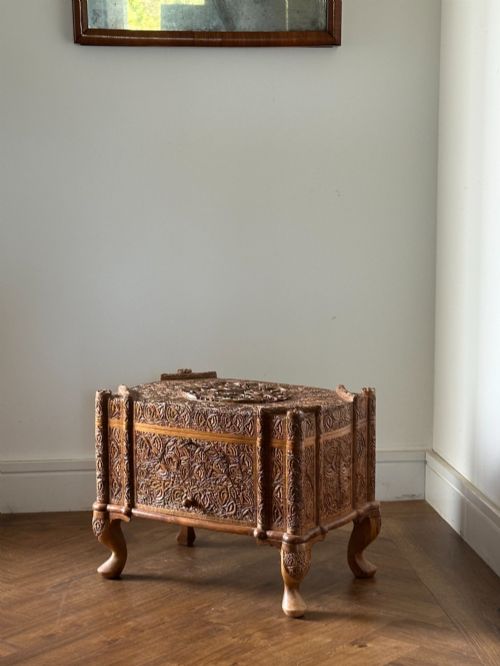
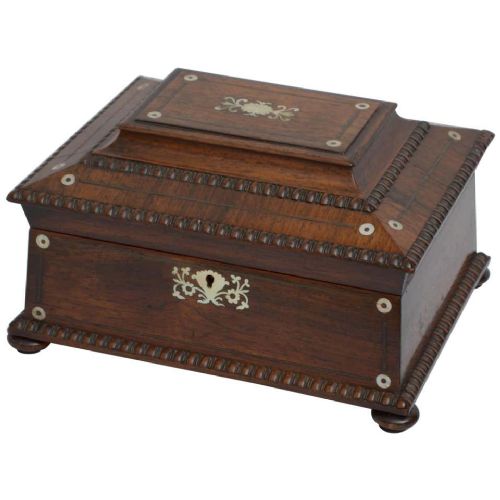
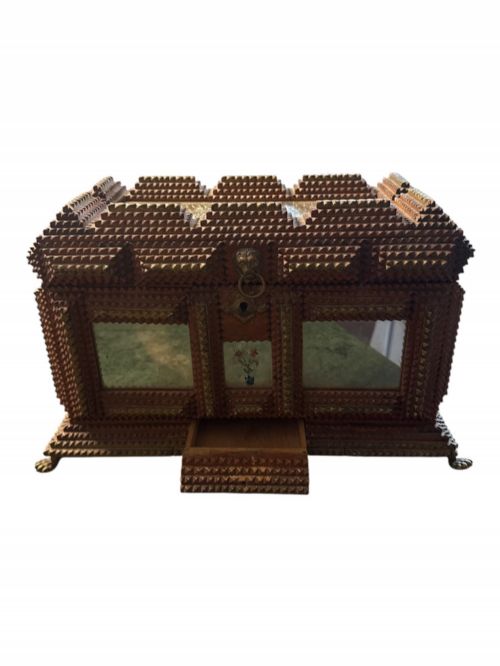
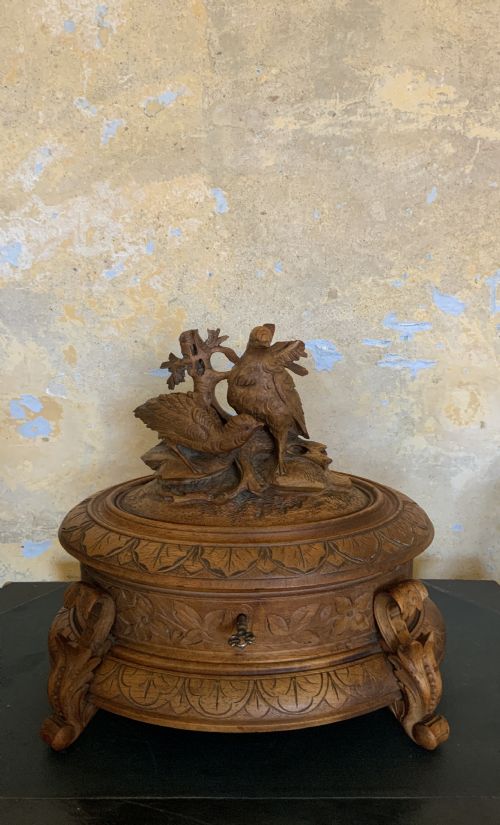
Buyers frequently encounter Victorian examples in walnut, rosewood, or coromandel, often fitted with compartments or mother-of-pearl inlay. Regional traditions also appear strongly, including Swiss and German Black Forest carvings, intricate Anglo-Indian sandalwood or ebony pieces, and geometric tramp art constructions.
Formats vary from dome-topped caskets and rectangular workboxes to miniature chests of drawers and wall cabinets. Each object serves both a functional storage purpose and a decorative role on a dressing table or desk.
Materials and construction
Cabinetmakers utilised both native timbers like oak, walnut, and mahogany alongside exotic imported hardwoods including ebony, coromandel, and sandalwood. Surfaces were frequently embellished through chip carving, relief work, or turning.
Decoration relied heavily on contrasting inlays such as mother-of-pearl, brass, and porcupine quill, alongside mosaic work like Tunbridge Ware or micro-mosaic Sorrento olive wood. Joints were typically hand-dovetailed or secured with pegged construction on earlier seventeenth-century examples.
Tortoises, tortoiseshell substitutes, and porcupine quills all make physical appearances guarding your smallest keepsakes.
Determinants of quality
The distinction between standard and superior pieces rests on the depth and crispness of the carving, the selection of timber grain, and the precision of internal fittings. Master carvers achieved remarkable dimensionality in foliage and animal figures, particularly within Black Forest and Anglo-Indian workshops.
Internal condition and the survival of original silk linings, velvet pads, or compartmentalised trays heavily influence standing. Superior examples maintain intact inlays and functional locks with original keys, whilst lesser items show clumsy timber replacements or degraded adhesives.
The Carved Wood Jewellery Box Glossary
- Sarcophagus
- A box shape featuring a sloping, stepped lid rising to a flat top, mimicking ancient stone tombs. This silhouette was particularly popular for rosewood and mahogany workboxes during the Regency and Victorian periods.
- Tramp art
- A form of folk art where practitioners notched, chipped, and layered discarded cigar boxes and packing crates into geometric, tiered relief patterns. These items were predominantly whittled using pocket knives.
- Marquetry
- The art of applying thin veneers of different coloured woods, metals, or shells onto a structural carcass to form pictorial or floral patterns. It requires immense precision to fit the pieces flush.
- Tunbridge Ware
- A specialised form of mosaic woodwork originating in Kent, created by gluing together thousands of differently coloured wood blocks into geometric or floral tesserae slices. These thin slices were then applied as veneer.
- Sadeli work
- An intricate form of micro-mosaic craft originating in India, utilising tiny geometric rods of horn, bone, ivory, and metal assembled into complex linear bands for box decoration.
Carved Wood Jewellery Box: Frequently Asked Questions
How do I date a wooden jewellery box?
Dating relies on examining the construction methods, timber choices, and secondary woods used inside the carcass. Hand-cut dovetails, original paper linings, and specific decorative motifs like Gothic revival brasswork or Aesthetic movement inlays point towards particular decades.
Changes in hinge types and lock mechanisms also provide clues, as machine-screw fixings typically indicate a date after the mid-nineteenth century. Comparing the style to dated examples helps narrow down the period of manufacture.
Were these boxes only used for jewellery?
Many containers designated as jewellery boxes were originally built as workboxes, sewing chests, or general receptacles for letters and calling cards. Interiors often feature removable trays with shallow compartments tailored for bobbins, thimbles, and writing implements rather than rings.
Owners adapted these versatile wooden caskets to suit their changing needs over generations, meaning a nineteenth-century correspondence box frequently holds modern trinkets today.
How should I clean a carved wooden surface?
Dusting with a soft, dry natural bristle brush is the safest method to clear debris from deep crevices in relief carvings without damaging the aged patina. Avoid modern liquid polishes or silicone sprays, which accumulate in the grain and darken the timber over time.
If necessary, a microcrystalline wax can be applied sparingly to nourish dry hardwood, provided the finish is stable and unpolished.