
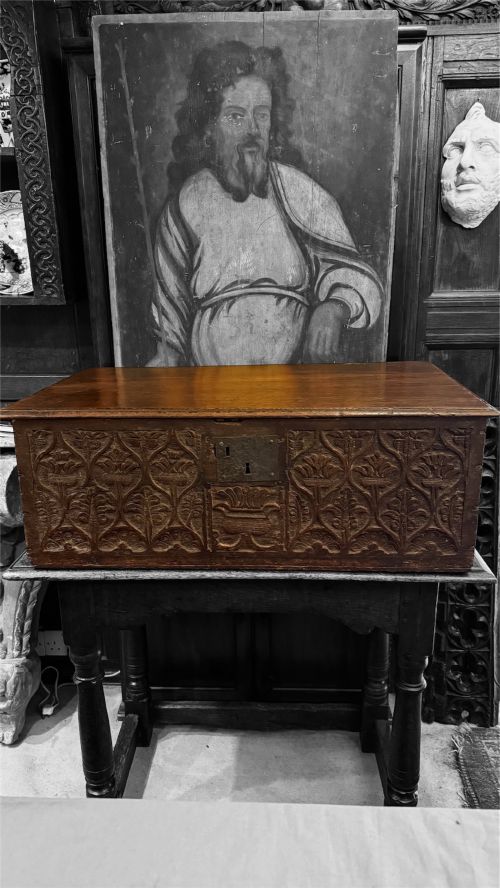
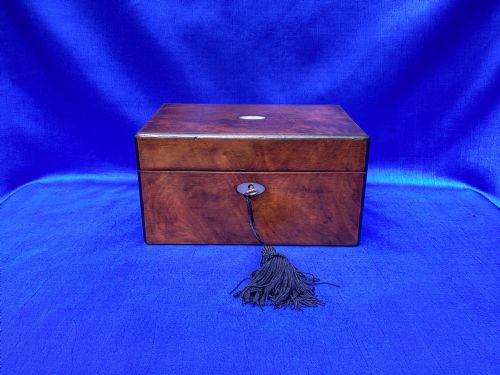
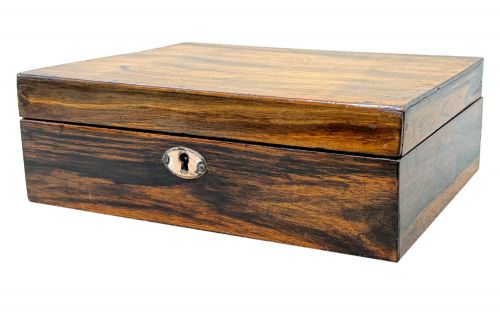
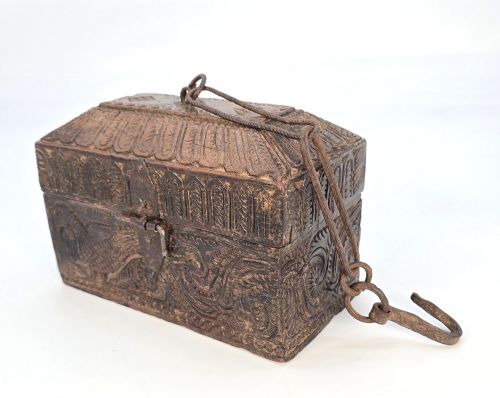


Vintage Carved Wooden Casket
A vintage carved wooden casket is a small vessel carved from timber, serving to store documents, jewels, or personal items.
Vintage Carved Wooden Casket
A vintage carved wooden casket encompasses a broad selection of vessels fashioned from timber across multiple centuries, serving domestic and personal storage needs. When searching for a vintage carved wooden casket, buyers encounter forms ranging from jewellery chests and document boxes to stationery holders and spice containers.
The inventory spans diverse origins and stylistic traditions, including Anglo-Indian, Victorian, 17th-century English, and Middle Eastern workshops. Pieces emerge in hardwoods like oak, mahogany, walnut, and teak, frequently augmented by bone, mother-of-pearl, or brass details.
How they were made
Craftsmen shaped these caskets using solid timbers such as oak, walnut, mahogany, teak, ebony, and olive wood, often joined with traditional corner construction methods. Surfaces received intricate surface ornamentation through chip carving, relief work, floral marquetry, and mosaic inlay.
Selected examples incorporate supplementary materials embedded into the timber base, utilising brass hardware, bone, mother-of-pearl, and porcupine quill. French polishing, wax finishes, or plain oiled treatments sealed the wooden surfaces depending on the period and origin.
Materials documented across the collection include hardwoods like teak, walnut, oak, mahogany, ebony, and olive wood, alongside brass and bone.
What varies in quality
The depth and crispness of the timber carving set standard work apart from simpler production, distinguishing sharp chisel marks from softened or machine-milled details. Superior examples display careful timber selection, such as pollard oak, figured mahogany, or dense sandalwood, matched across the lid and sides.
Internal arrangement and secondary materials dictate refinement levels, with velvet linings, fitted compartments, and intricate bone or mother-of-pearl inlay elevating a piece. The integration of functional hardware, such as working locks and brass hinges, reflects the original maker's investment in utility and longevity.
Gillows of Lancaster
The Vintage Carved Wooden Casket Glossary
- Cellarette
- A lockable container designed for holding bottles of wine or spirits, often fitted with internal partitions. These appear in Georgian and early 19th-century mahogany forms.
- Marquetry
- The art of applying small pieces of veneer to a structure to form decorative patterns or pictures. 17th-century examples often feature floral designs executed in this technique.
- Tunbridge Ware
- A type of decorative woodwork produced in Kent, characterised by mosaic patterns formed from thousands of tiny tinted wood blocks. Pieces date prominently to the mid-19th century.
- Tramp art
- A form of woodwork created by self-taught makers utilising discarded timber, such as cigar boxes, shaped with pocket knives. These items typically exhibit layered chip-carved geometric patterns.
- Porcupine quill box
- A decorative container surfaced with alternating sections of porcupine quills and ebony banding. These originate primarily from 19th-century workshops in South Asia.
Vintage Carved Wooden Casket: Frequently Asked Questions
What were wooden caskets originally used for?
These vessels served to safeguard valuables, documents, letters, sewing implements, or spices. Different internal layouts matched the specific domestic duty assigned to each box.
Smaller variants held rings and trinkets on dressing tables, whilst robust oak or walnut examples secured legal papers and household records.
How do I date an antique wooden box?
Dating relies on observing timber choices, construction techniques, and decorative styles characteristic of specific periods like the 17th century or the Victorian era. Tool marks, hinge types, and lock mechanisms also offer clues to the decade of manufacture.
Reference markers such as Regency styling or specific regional carving traditions help narrow the origin time frame.
Are these caskets made from solid wood?
The inventory records pieces fashioned from solid timbers including oak, mahogany, walnut, teak, ebony, and olive wood. Some examples incorporate decorative veneers applied to a foundational carcass.
Inlay materials like bone, mother-of-pearl, and porcupine quill appear embedded directly into the wooden surfaces.
How should I care for a wooden box?
Maintain stable indoor humidity levels and keep wooden caskets away from direct heat sources to prevent timber splitting or warping. Occasional light application of appropriate wax feeds the finish without building up heavy residues.
Handle internal velvet or paper linings gently to preserve their historical integrity.