





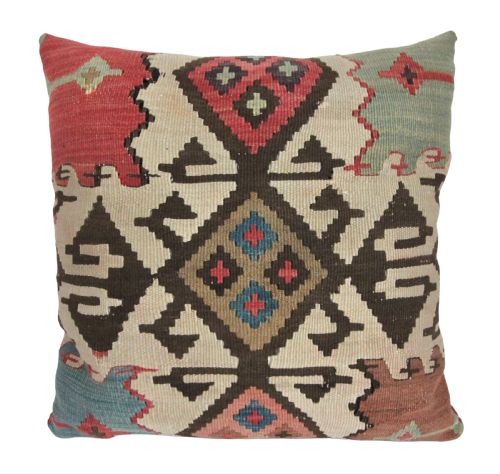
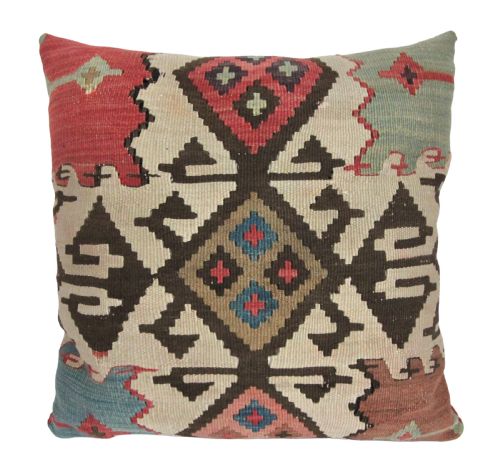

Anatolian Tribal Cushion
An anatolian tribal cushion brings warmth and texture to a room, formed from historical woven textiles that add genuine nomadic character to modern interiors.
Anatolian Tribal Cushion
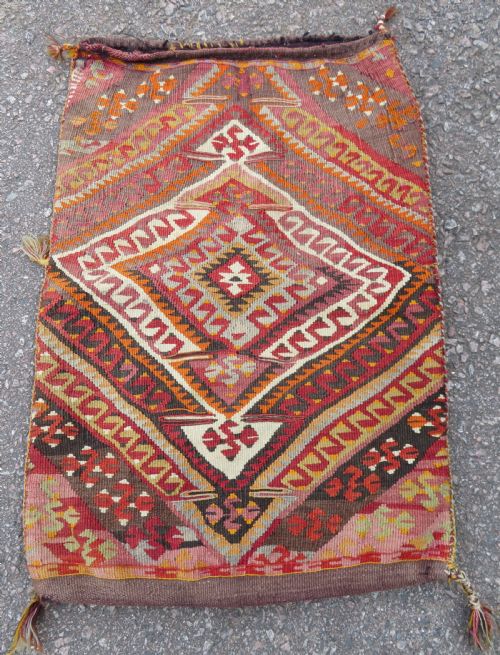
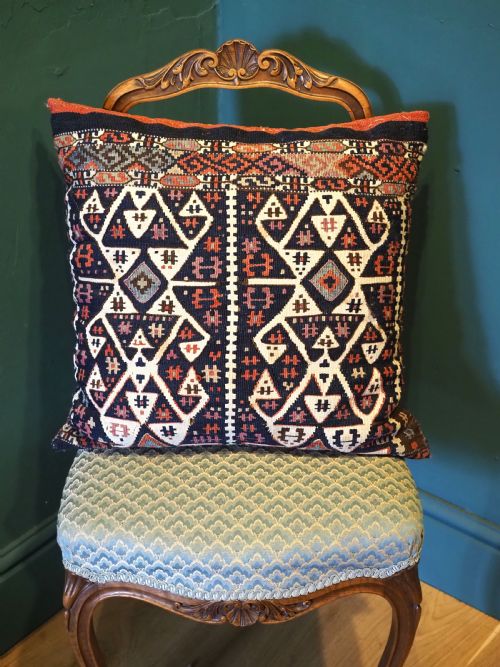
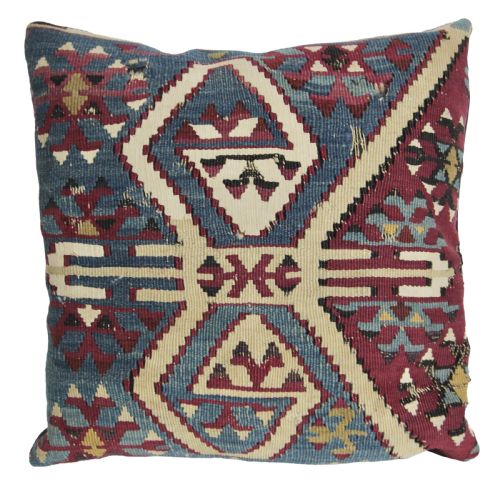
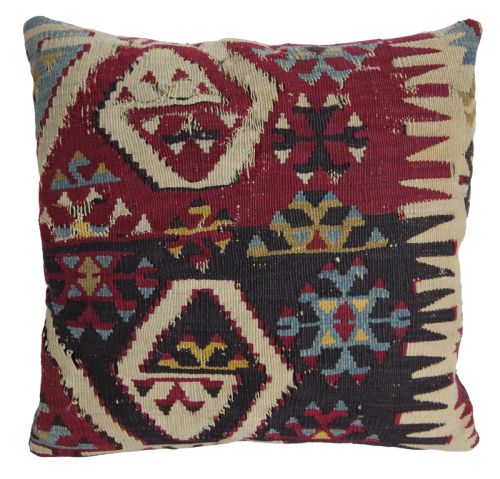
When you search for an anatolian tribal cushion, you are looking at decorative soft furnishings fashioned from older flat-woven carpets, saddle bags, and yastic covers. These pieces repurpose traditional nomadic textiles into accessible home accessories while preserving their original character.
The versions you are most likely to meet on this page span the nineteenth and early twentieth centuries, drawing on traditional Anatolian designs. They frequently utilise fragments of older kilims, bag faces, and rugs to create distinct throw cushions and pillows.
Makers shaped these textiles using regional weaving traditions tied to specific Anatolian groups, including Kurdish and Konya examples. Each cushion reflects the utilitarian origins of the parent textile, whether it began life as a utilitarian saddle bag or a sleeping bolster.
How they were made
These items are constructed primarily from hand-woven wool and cotton components derived from older carpets and kilims. Artisans utilised traditional flat-weaving and bag-face techniques to create the durable textiles that form the front panels of these cushions.
The underlying structure relies on the integration of sturdy cotton backings and closures paired with the historical woven wool surface. This combination ensures that delicate nomadic woolwork is adequately supported for modern decorative use.
Listings span from the early nineteenth century through to the nineteen-twenties, featuring wool and cotton materials across traditional Anatolian styles.
What varies in quality
The distinction between tiers of quality rests upon the integrity of the original weave and the condition of the wool surface. Stronger, tighter flat-woven structures with well-preserved geometric motifs command greater attention from those who value authentic nomadic craftsmanship.
Quality also depends on the historical significance of the source textile, such as an early nineteenth century Konya yastic or a carefully preserved Malatya saddle bag kilim. Pieces retaining their original bag-face composition demonstrate superior fidelity to the maker's initial intent.
The Anatolian Tribal Cushion Glossary
- Kilim
- A flat-woven carpet or rug produced in countries of the former Ottoman Empire, Persia and Central Asia. These textiles are made by tightly interweaving the warp and weft strands without creating a pile.
- Yastic
- A traditional Turkish pillow or small bolster used for sitting or leaning against in nomadic and village settings. They often feature dense geometric or tribal patterns characteristic of their region of origin.
- Juval
- A large tent bag used by nomadic tribes for storage, featuring decorative face weaving that is frequently repurposed into cushions. These panels display intricate tribal iconography executed in wool.
- Bag Face
- The decorative front portion of a nomadic storage sack or saddle bag. This section typically received the most elaborate weaving and design work.
Anatolian Tribal Cushion: Frequently Asked Questions
What is an anatolian tribal cushion?
An anatolian tribal cushion is a decorative soft furnishing created by repurposing historical woven items like kilims, saddle bags, and yastic covers.
These items transform nineteenth and early twentieth-century nomadic textiles into practical accessories for contemporary living spaces while retaining their original woven artistry.
How were these cushions used originally?
The textiles that form these cushions originally served as utilitarian objects in nomadic and village households across Anatolia. They functioned as storage sacks, animal transport bags, and sleeping bolsters.
Over time, collectors and dealers adapted these durable fragments into decorative throw cushions to preserve the woven artistry.
How do I care for a wool cushion?
These items require gentle treatment due to their historical wool and cotton construction. Regular light vacuuming with a low suction attachment helps remove dust without disturbing the fibres.
Professional specialist cleaning is recommended for any deeper maintenance to protect the integrity of the antique weave.
How can I tell the age of a cushion?
Age is determined by evaluating the types of wool, the natural dye palette, and the specific weaving techniques employed in the source textile. Pieces dating back to the nineteenth century often exhibit distinct regional motifs and hand-spun wool characteristics.
Comparing the style to known historical examples helps establish whether a cushion originates from the eighteen-hundreds or the early twentieth century.