
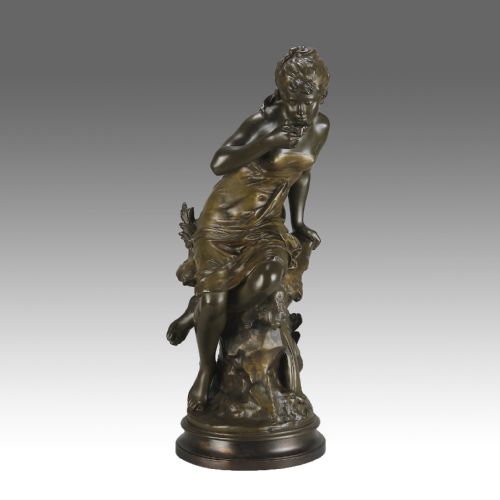





Allegorical Bronze Statue
An allegorical bronze statue is a cast figure embodying an abstract concept, offering nineteenth-century French foundry artistry and classical symbolism for your interior.
Allegorical Bronze Statue
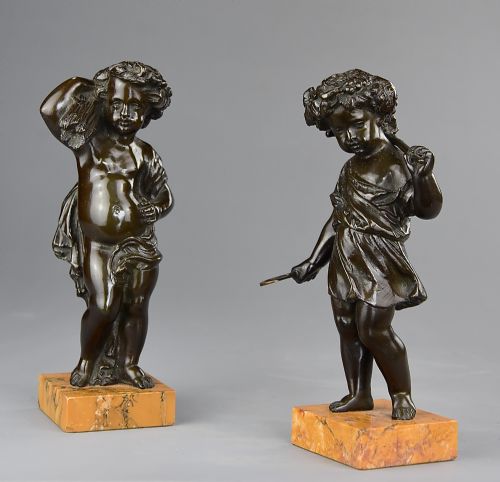
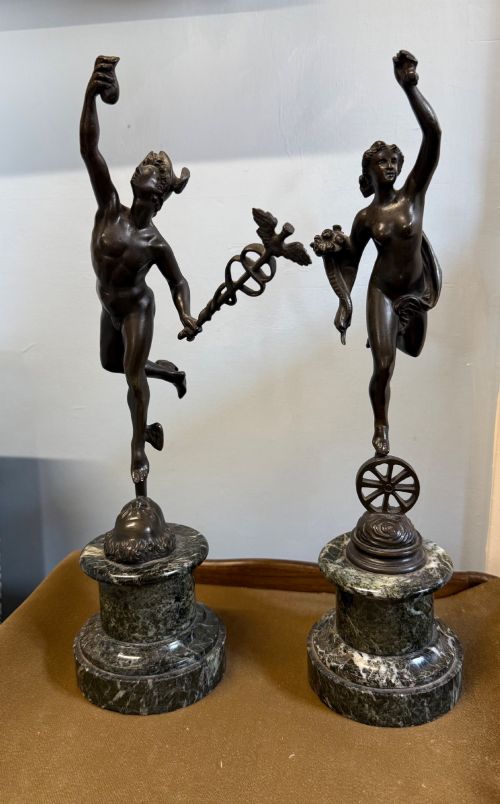
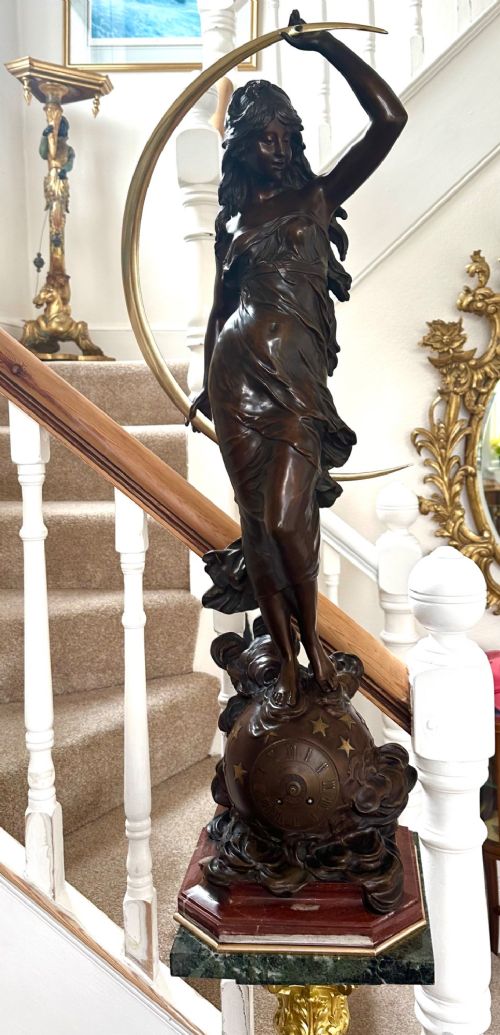
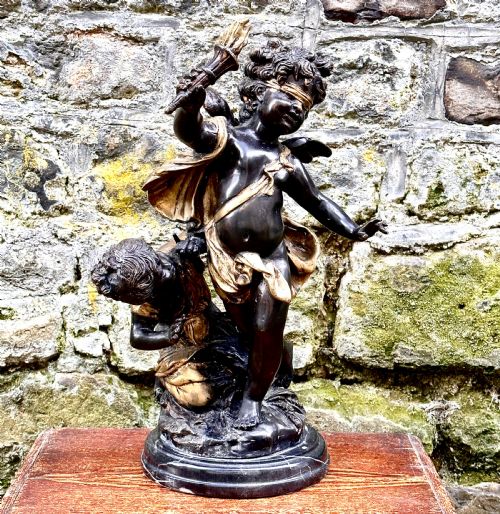
When you search for an allegorical bronze statue, you encounter nineteenth-century French figural works depicting mythological, seasonal or conceptual themes such as harvest, spring, peace and labour. The examples available range from cabinet-size classical figures and putti to large table lamps and mantle clocks mounted on marble bases.
You are most likely to meet pieces produced during the Victorian era and the Art Nouveau period, often cast in France and styled after academic or neoclassical sculptors. The subjects frequently personify natural forces and human virtues through youthful figures, dancers and allegorical maidens.
These works function as decorative sculptures and figural lampbases, combining metal casting with marble plinths, gilt highlights and occasionally glass elements. They reflect the nineteenth-century interest in allegorical narrative and domestic ornamental art.
Materials and casting methods
The primary material is bronze, alongside related metal alloys such as spelter and cast metal, frequently finished with patination or gilt. Foundry work from the nineteenth century utilised traditional casting methods to capture fine drapery, hair and facial expressions.
Many sculptures incorporate bases and plinths made from various forms of marble or wood, providing weight and contrast to the cast metal figures. Some items integrate functional elements such as lamp fittings or clock movements within the sculptural composition.
Listings feature works from the nineteenth century, including the Victorian era, spanning styles from French Rococo Revival and Neoclassical to Art Nouveau.
Quality factors in casting and mounting
The integrity of the structural materials also defines the piece, seen in the selection and polish of the marble plinths and the firmness of the attachment between the figure and its base. Signed works associated with known nineteenth-century bronze-makers demonstrate superior artistic execution and foundry attribution.
Claude Michael Clodion·August Moreau·Emile Louis Picault·Mathurin Moreau·Ernst Barrias·Barbedienne·Jean-Jules Cambos
The Allegorical Bronze Statue Glossary
- Patina
- The surface coloration and sheen developed naturally over time or applied chemically to bronze sculpture. It protects the metal and defines the visual tone.
- Spelter
- A zinc alloy used as a less expensive alternative to bronze in nineteenth-century figural casting. It is softer and typically carries a painted or faux bronze finish.
- Putti
- Representations of chubby male infants, often winged, appearing frequently in classical and nineteenth-century art to symbolise love, spirits or seasonal harvest.
- Plinth
- The solid base or block upon which a statue or lamp figure stands. In these listings, they are frequently fashioned from green marble or dark stone.
- Neoclassical
- An artistic style drawing inspiration from the classical art and culture of ancient Greece and Rome. It informs the balanced composition and draped garments of many figures.
Allegorical Bronze Statue: Frequently Asked Questions
What is an allegorical bronze statue?
An allegorical bronze statue is a nineteenth-century cast metal sculpture that personifies an abstract idea, season, or virtue, such as dawn, peace, or spring, using human or mythological figures.
These pieces were produced primarily in France during the Victorian and Art Nouveau periods, serving both as pure decorative sculptures and as functional lamp bases or clock components.
How were these statues displayed originally?
In nineteenth-century interiors, these figures stood on mantlepieces, side tables, and pedestals as symbols of classical learning, refinement, and aesthetic taste.
They were often paired symmetrically as harvest dancers or putti, or utilised singly as dramatic centrepieces mounted on marble plinths.
How do I distinguish bronze from spelter?
Bronze is a heavier, copper-based alloy that accepts a rich patination and shows cold metal if scratched gently beneath the finish. Spelter is a softer zinc alloy that feels lighter and often reveals a greyish metal underneath worn paint.
Foundry marks and the crispness of fine details like hair and fingers also help separate higher-grade bronze castings from commercial spelter figures.
How do I care for a bronze statue?
Care involves gentle dusting with a soft, dry cloth to prevent the accumulation of grime on the patinated surface or marble base. Avoid chemical cleaners, polishes, or abrasive cloths, as these can strip the historical patina or damage the metal.