
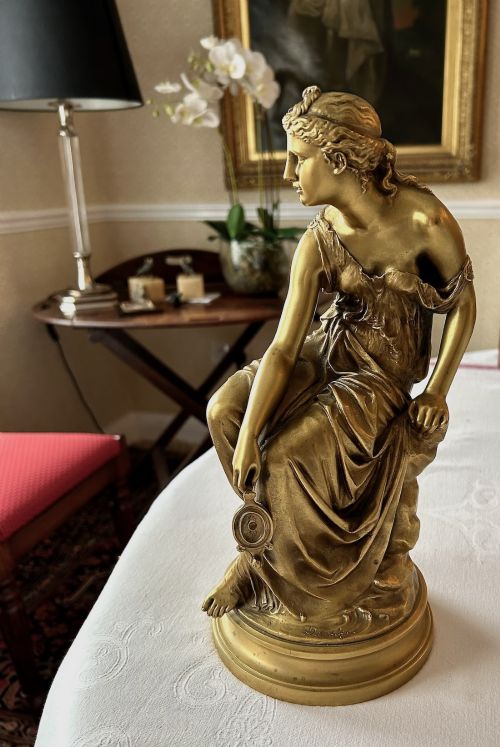


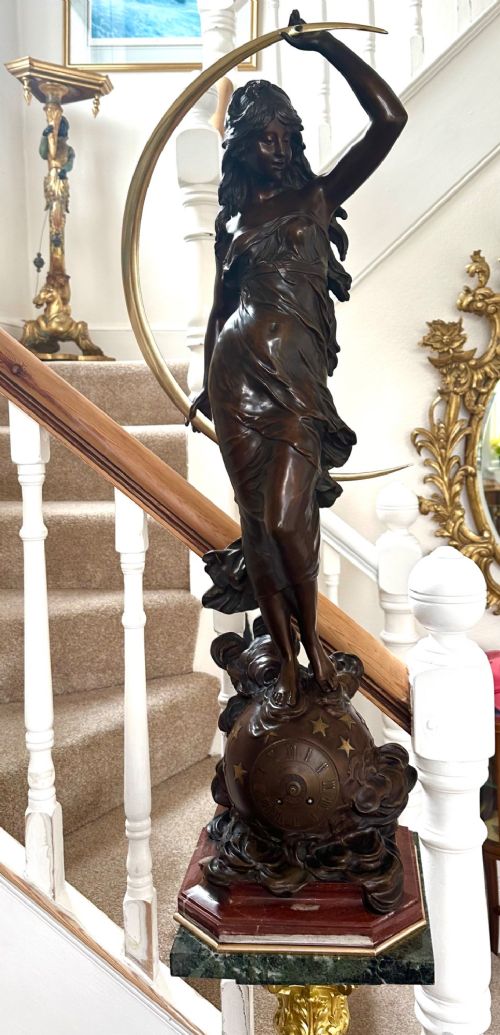
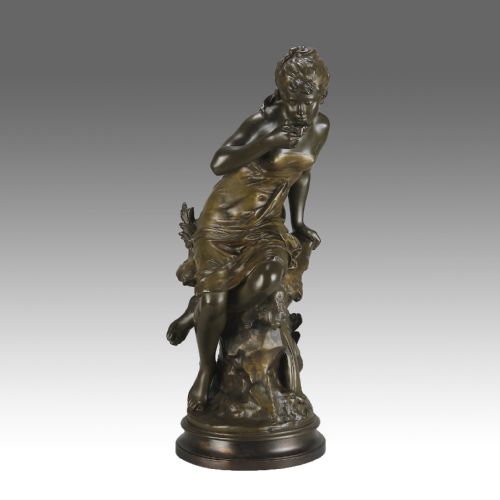

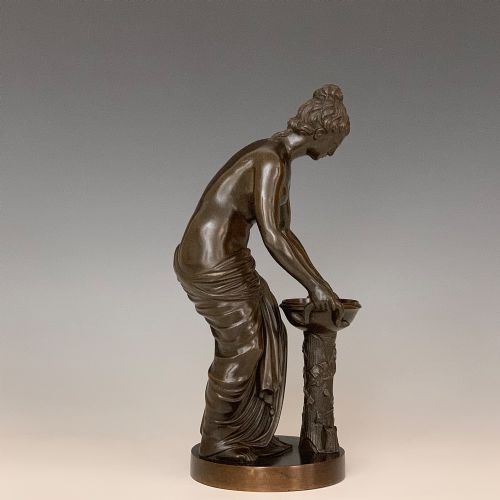


Classical Maiden Bronze
A classical maiden bronze brings neoclassical grace and mythological poise into a room, cast in heavy metal during the nineteenth and early twentieth centuries.

Classical Maiden Bronze
A classical maiden bronze represents female figures from mythology, history and allegory, modelled as standing statues, dancers, water carriers and robed ladies. When searching for a classical maiden bronze, buyers encounter French nineteenth-century foundry works, clock garnitures, table lamps and Grand Tour souvenirs from periods spanning the Victorian era to the Art Nouveau movement. These pieces range from cabinet-sized busts to large mantel sculptures, cast in patinated and gilt bronze or finished with related materials.
French workshops and named sculptors dominate the selection, producing figures that translate ancient ideals into domestic nineteenth-century art. Neoclassical and Art Nouveau stylistic influences appear most frequently, showing figures draped in flowing garments, holding water pitchers or caught mid-dance. The variety encompasses single figures, pairs of lamp bearers and multi-figure groups incorporating putti or architectural elements.
How They Were Made
Foundries utilised the lost-wax method or sand casting to produce these metal figures, capturing intricate details in the drapery, hair braids and facial expressions. Molten bronze was poured into moulds, then finished by hand with chisels and files to sharpen the contours of the subject. A chemical patination or mercury gilding was applied to the surface, yielding deep brown, green or lustrous gold finishes.
Some works incorporate multi-media elements, combining cast metal with carved marble bases, brass fittings, terracotta or earthenware bodies. Clock garnitures and figural lamps integrate the bronze maiden directly into functional objects, mounting the metal figures onto stone plinths or incorporating lighting arms.
Several classical maidens are depicted being bitten by snakes or carrying water, proving that mythological heroines endured quite busy afternoons.
What Varies in Quality
The reputation of the foundry and the clarity of the signature or foundry mark distinguish exceptional studio casts from commercial reproductions. Heavier gauge metal, well-fitted marble bases and sophisticated multi-part construction separate the finest nineteenth-century salon pieces from standard decorative castings.
Etienne-Henri Dumaige·Moreau Family·August Moreau·Mathurin Moreau·C J R Colinet·S. Kinsburger·Clodion·Hans Müller·Maurice Bouval·H. Moreau·Houdebine·Jean Jacques Pradier·Victor Paillard·Emmanuel Villanis·Devaulx·Henri Honore Ple·Hans Schork·A. Gaudez·Henri Plé·Leon Pilet
The Classical Maiden Bronze Glossary
- Patination
- The chemical treatment or natural ageing applied to the surface of the bronze to create colour and tone. This layer protects the metal and adds depth to the sculptural details.
- Grand Tour
- A nineteenth-century tradition of travel through Europe, where wealthy collectors acquired small bronzes and classical replicas as souvenirs. These pieces often depicted famous ancient statues or mythological subjects.
- Gilt Bronze
- Bronze that has been coated with a layer of gold leaf or treated with mercury gilding to produce a brilliant metallic shine. Also known by the French term ormolu.
- Clock Garniture
- A matching set consisting of a mantel clock flanked by companion pieces such as candelabras or sculptural vases. These sets frequently incorporated classical maiden bronzes into their design.
- Spelter
- An alloy of zinc and lead cast as a lower-cost alternative to bronze during the nineteenth and early twentieth centuries. It is lighter in weight and often painted to imitate bronze.
Classical Maiden Bronze: Frequently Asked Questions
How do I clean a bronze sculpture?
Dust the surface gently with a soft, dry brush to prevent the accumulation of grit in the crevices. Avoid using water, soap or commercial metal polishes, which can strip away the historic patination.
Apply a very thin coat of microcrystalline wax periodically if the metal appears dry, buffing it gently with a soft cloth. This protects the bronze from atmospheric moisture without altering its finish.
What is the difference between bronze and spelter?
Bronze is a durable alloy of copper and tin that takes fine detail and develops a rich patination over time. Spelter is a softer, zinc-based metal utilised for more affordable decorative figures.
Spelter is noticeably lighter in weight than bronze and often feels cooler or more brittle. Inspecting the underside or mounting point usually reveals the lighter grey metal beneath any surface paint.
Where were these classical figures displayed?
Nineteenth-century homeowners placed these sculptures on mantelpieces, entrance tables, desks and within dedicated architectural display cabinets. They served as conversation pieces that reflected the owner's classical education and refined taste.
Larger figures stood on dedicated pedestals or floor plinths in drawing rooms and libraries. Clock garnitures sat centrally on mantelpieces flanked by matching candelabras.
How do I date a nineteenth century bronze?
Examine the casting quality, foundry marks, signature styles and the character of any associated mounting hardware or marble bases. Nineteenth-century pieces often bear foundry stamps, artist signatures or registration marks cast directly into the metal.
The style of the paturation, screw types used in assembly and the wear patterns on the underside provide additional clues to the age of the piece.