





Afghan Prayer Rug
These tribal pieces are authentic handmade floor coverings woven for personal devotion, prized for deep wool pile and geometric motifs.
Afghan Prayer Rug
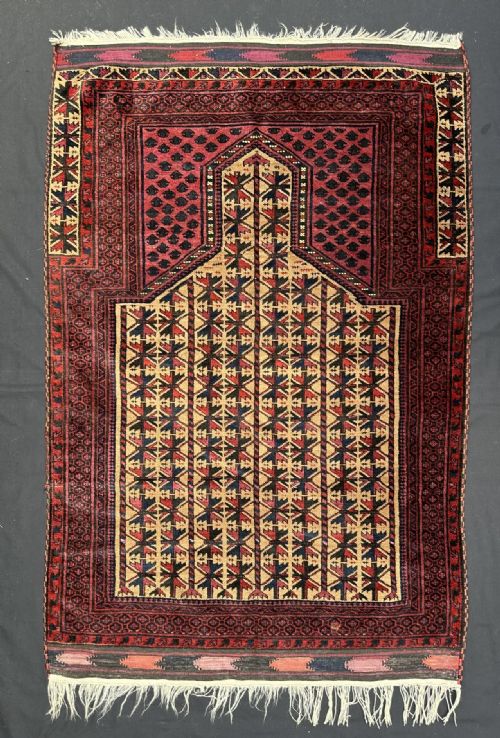
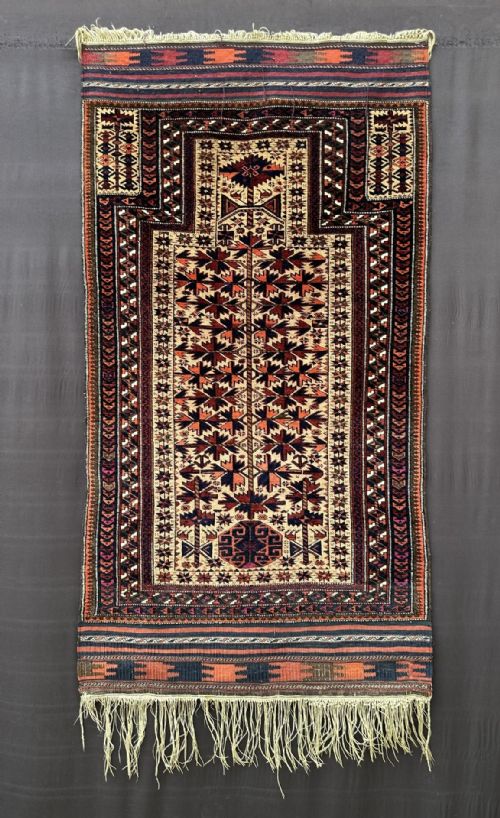
An afghan prayer rug is a portable woven textile created by nomadic and village weavers across the borderlands of Afghanistan and Persia for daily worship. These smaller formats typically feature a central niche or arch directing the eye toward Mecca during prayer.
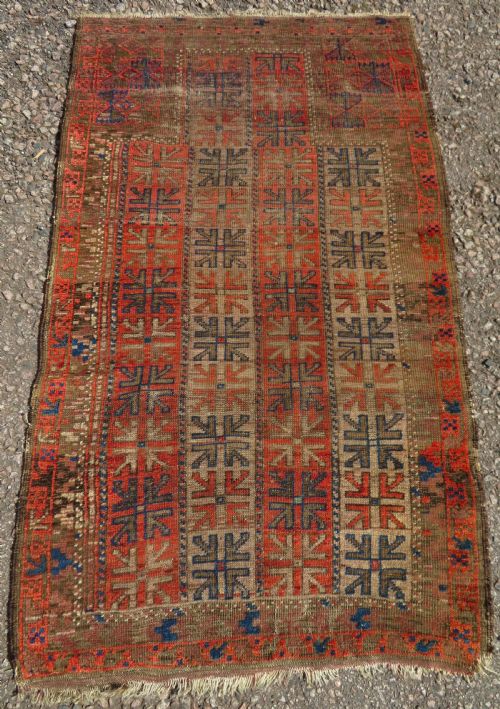
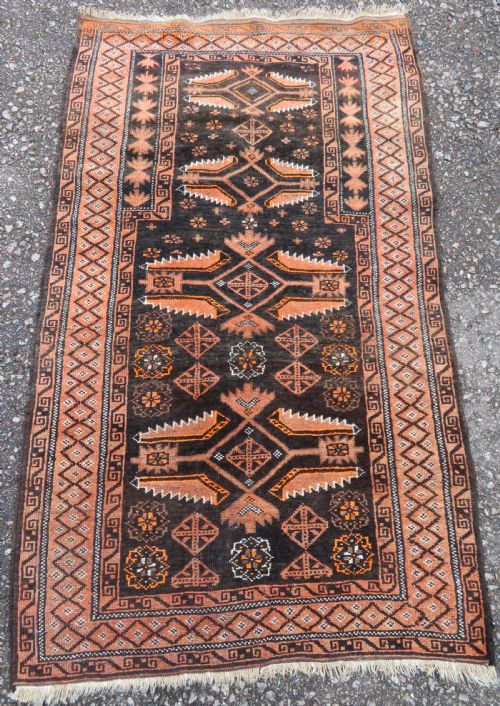
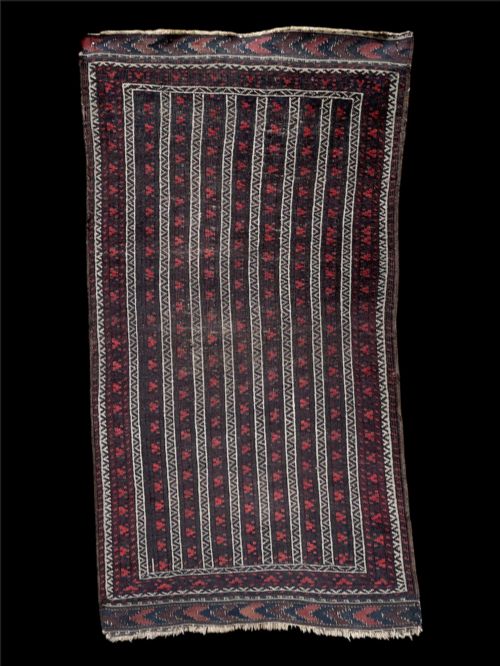
The pieces encountered most frequently on this page originate from tribal groups such as the Baluch, Timuri, Taimani, and Kizil Ayak Turkmen, dating primarily from the late nineteenth and early twentieth centuries. They combine functional utility with rich cultural iconography embedded in village life.
How They Were Made
Weavers relied on locally sourced materials, predominantly hand-spun wool for the plush pile, supplemented by cotton foundations and occasional uses of camel hair or goat hair for durability and textural contrast. Natural dyes provided the deep palette characteristic of these regional floor coverings.
Listed examples span the late nineteenth century through the early decades of the twentieth century, highlighting village and nomadic production.
What Varies in Quality
Quality in these woven works depends heavily on the fineness of the knot density and the precision of the geometric layout executed by the artisan. Tighter knotting supports intricate details within motifs like the mihrab or lotus leaf patterns.
The depth, saturation, and stability of the natural dyes significantly influence the visual impact of the piece. Superior examples display harmonious colour saturation and well-preserved pile without excessive wear to the foundational warps and wefts.
Baluch Tribal·Timuri Tribes·Taimani Nomads·Kizil Ayak Turkmen
The Afghan Prayer Rug Glossary
- Mihrab
- The arched niche found on prayer rugs that represents the direction of prayer. Its design varies widely among different tribal groups.
- Kilim
- A flat-woven textile structure often appearing at the ends of these rugs. It provides a secure finish to the pile portion.
- Warps
- The vertical threads stretched across the loom that form the foundational skeleton of the rug. Weft threads are interlaced across these.
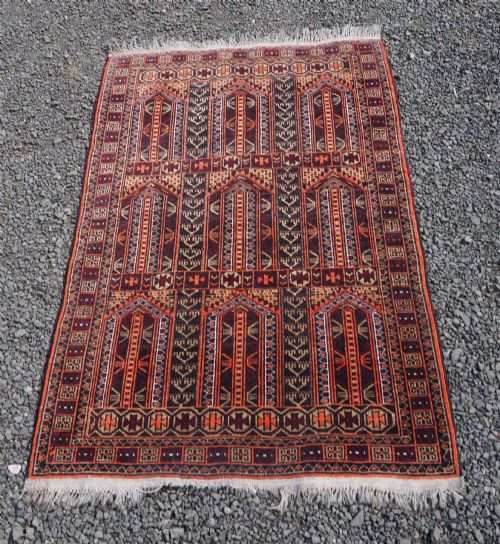
- Seh Mihrab
- A triple arch design incorporating three distinct prayer niches into the field. This layout is a recognised regional variant.
- Natural Dyes
- Colourants extracted from plants, roots, and minerals rather than synthetic compounds. They produce rich patinas as the wool ages.
Afghan Prayer Rug: Frequently Asked Questions
What is an afghan prayer rug used for?
These rugs served primarily as personal, portable prayer mats for daily Islamic devotions. Their distinct architectural niches helped worshippers orient themselves properly.
Beyond religious use, they functioned as essential household textiles within nomadic and village settings. Their manageable dimensions made them versatile for placement throughout living spaces.
How do I identify a prayer rug?
The primary identifier is the presence of a mihrab, an arched design element that mimics the prayer niche found in mosques. This motif dictates the directional nature of the textile.
Secondary indicators include specific tribal iconography, such as rams' horns, lotus leaves, or tree of life patterns. The format is almost exclusively smaller than standard room-sized carpets.
Where were these rugs made?
Production took place across regions of Afghanistan, the western borderlands, and areas extending into north-east Persia. Nomadic confederations and village weavers created them within specific tribal territories.
Specific sub-groups like the Timuri, Baluch, and Taimani worked in these border regions, blending design elements from both Afghan and Persian traditions.
How should I care for an antique rug?
Gentle vacuuming without a rotating brush roll helps remove embedded dust from the wool pile safely. Professional textile cleaners experienced with antique tribal pieces should handle deeper washing.
Keeping the textile out of direct, prolonged sunlight prevents the natural dyes from fading prematurely. Rotating the placement periodically ensures even wear patterns develop over time.