
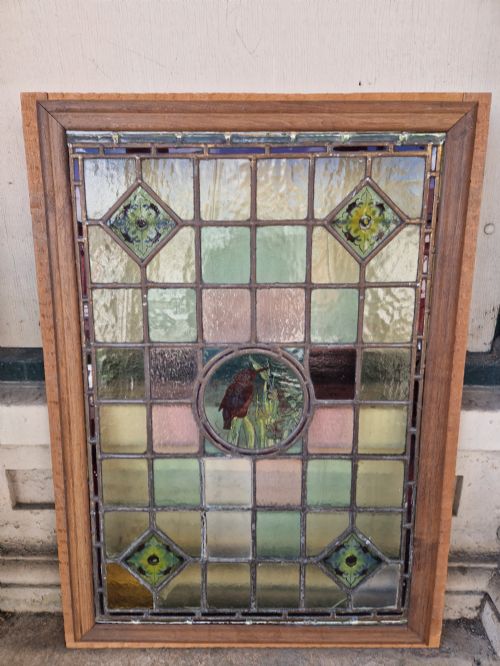


Aesthetic Movement Lighting
Aesthetic movement lighting brings together disciplined brass work and inventive ornament from the late nineteenth century.
Aesthetic Movement Lighting
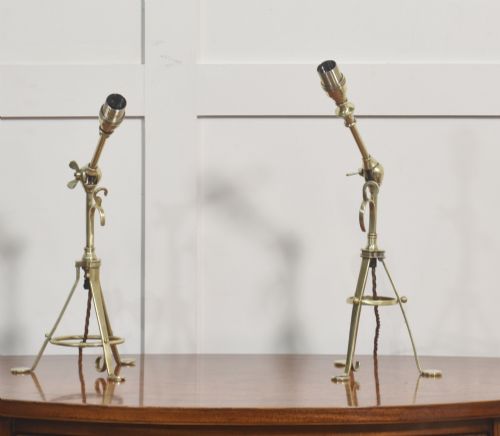
Aesthetic movement lighting encompasses decorative fixtures designed to illuminate interiors during the Victorian era and the decades immediately following. These pieces range from brass table lamps and wall sconces to chandeliers and candlesticks shaped by the artistic philosophies of the late nineteenth century.
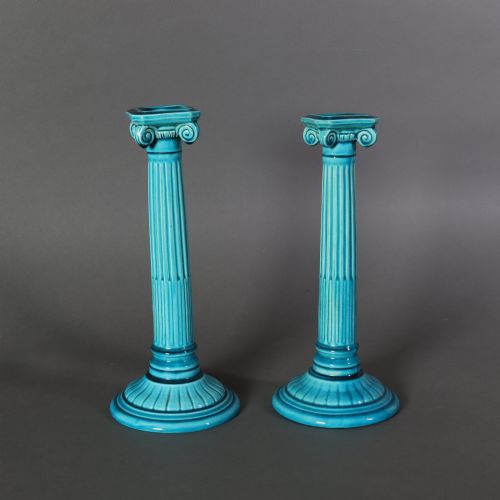
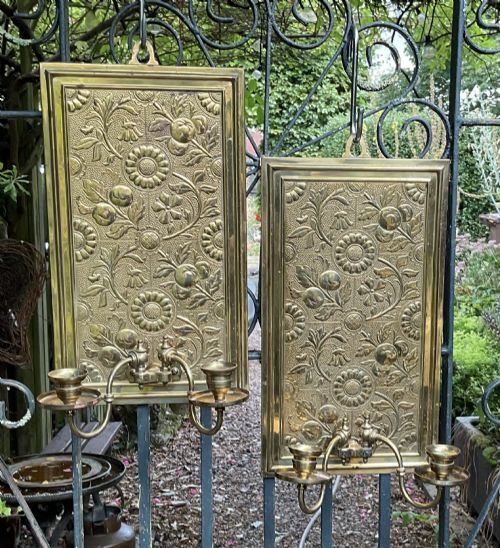
On this page, the selection leans heavily towards brass candlesticks and wall sconces produced in the eighteen eighties and eighteen nineties. Alongside these metal fixtures, buyers encounter porcelain table lights, stained glass panels, and occasional larger furnishings linked to the same design ethos.
How they were made
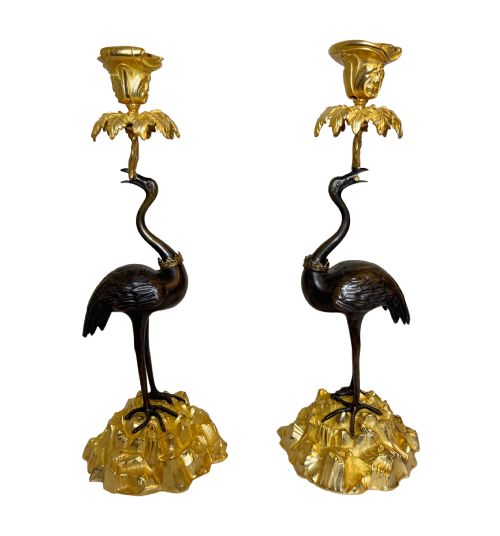
Makers utilised cast and sheet brass, bronze, and copper as the primary metallic structures for these lamps and sconces. Metalworking techniques included surface chasing, piercing, and patination to achieve contrasting textures and finishes.
Porcelain, ceramic inserts, and stained glass frequently complemented the metalwork, adding colour and pattern. Wood elements such as oak appeared in associated furniture pieces designed to hold or accompany these lighting fixtures.
Some nineteenth century candlesticks feature hidden flamingo motifs standing quietly among the brasswork.
What varies in quality
The distinction between standard production and exceptional work lies in the crispness of the casting and the refinement of the decorative motifs. Superior pieces exhibit careful hand-finishing on the brass surfaces and thoughtful integration of ceramic or glass components.
Attribution to notable designers or specific firms elevates a piece, as does the survival of original patination and matching elements in a pair. Modest examples rely on standard commercial manufacturing methods with simpler decorative stampings.
W.A.S. Benson·Bruce Talbert·Dr Christopher Dresser·Liberty of London·Royal Worcester
The Aesthetic Movement Lighting Glossary
- Aesthetic Movement
- A late nineteenth-century design current emphasising visual beauty over narrative or moral function. It drew inspiration from Japanese art and domestic reform.
- Sconce
- A wall-mounted lighting fixture designed to hold candles or lamps. These often incorporate hinged arms or reflective backplates.
- Girandole
- An ornamental branched candlestick or candle sconce, frequently featuring a mirrored backplate to multiply the reflected light.
- Patinated Bronze
- Bronze treated with chemical solutions or heat to produce a controlled surface colour and aged appearance. This finish protects the metal while adding visual depth.
- Chinoiserie
- European decorative motifs imitating Chinese artistic traditions. These designs appear on porcelain and metalwork within the wider aesthetic sphere.
Aesthetic Movement Lighting: Frequently Asked Questions
What defines aesthetic movement lighting?
These pieces combine functional metalwork with stylized natural motifs, Japanese influences, and geometric discipline. They reflect a deliberate shift away from heavy high Victorian styling toward lighter, more artistic domestic objects.
Most surviving examples date from the eighteen seventies through the turn of the twentieth century. They rely heavily on brass, copper, and integrated ceramic elements.
How were these lamps used?
Original domestic spaces used these fixtures for task lighting on tables or ambient illumination along walls and hallways. Candlesticks held wax tapers while early table lamps burned oil.
Many surviving pieces have since been adapted for modern electrical wiring while retaining their original aesthetic brass or porcelain bodies.
How do I date a piece?
Dating relies on stylistic markers, manufacturing techniques, and occasional maker signatures stamped into the metal or painted on porcelain. The aesthetic movement overlapped with the Victorian, Edwardian, and Arts and Crafts periods.
Construction details such as hand-cut threads, riveted joints, and traditional casting methods help place an object within the late nineteenth century.
Are pairs common in these listings?
Many surviving lighting fixtures and candlesticks were produced and kept as matched pairs for mantelpieces or side tables. Finding matching pairs is typical for altar candlesticks, wall sconces, and girandoles.
Single items also appear, particularly larger chandeliers, table lamps, and architectural salvage pieces.