
19th Century Brass Sconces
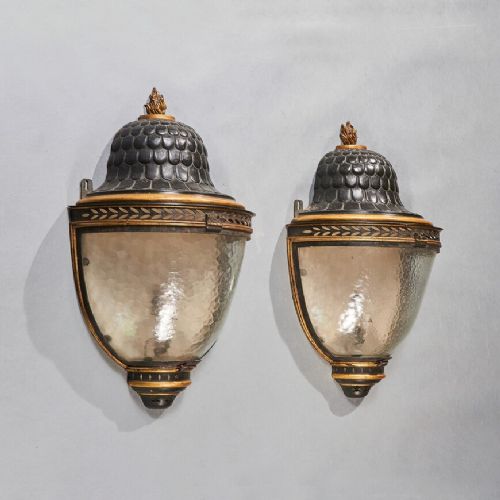
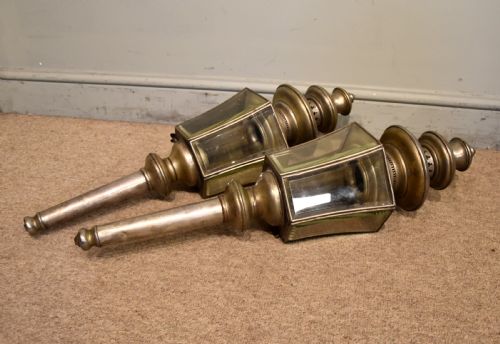
These 19th century brass sconces bring period illumination and decorative warmth to an interior through substantial metalwork and candle arms.
19th Century Brass Sconces
When you search for 19th century brass sconces, you encounter wall-mounted lighting fixtures designed to hold candles alongside related mirrored girandoles and appliques. The majority originate from French workshops, though English, Dutch, and Italian examples appear regularly across the inventory.
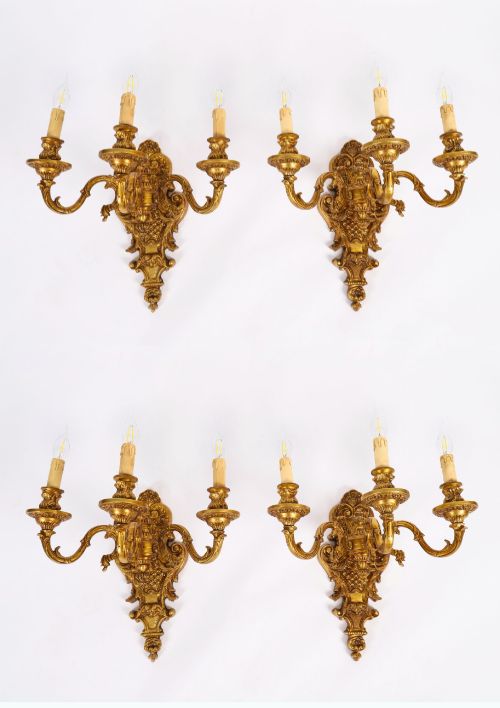
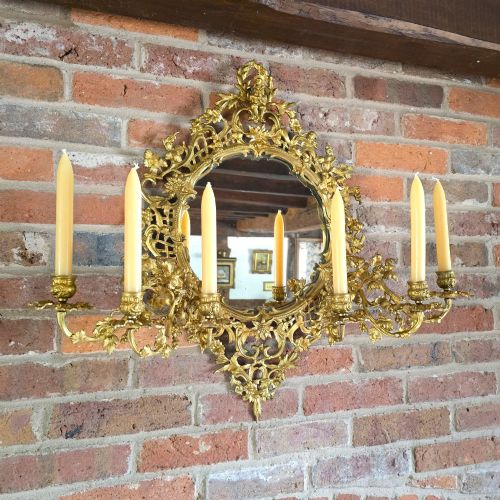
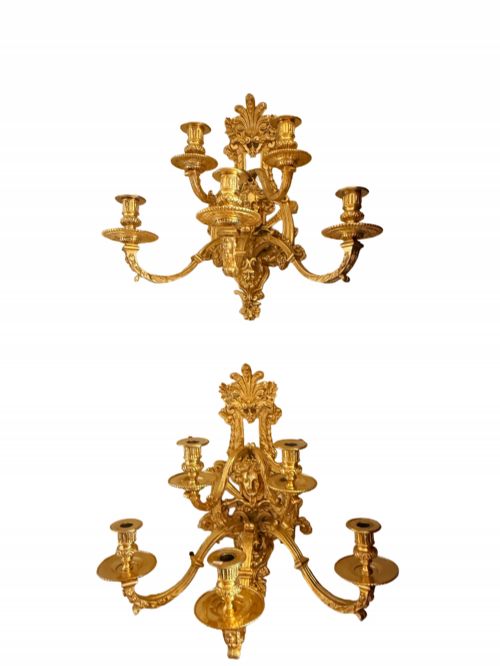
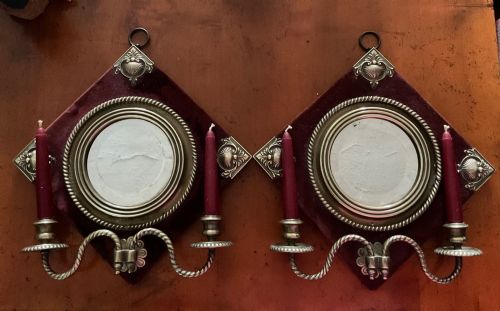
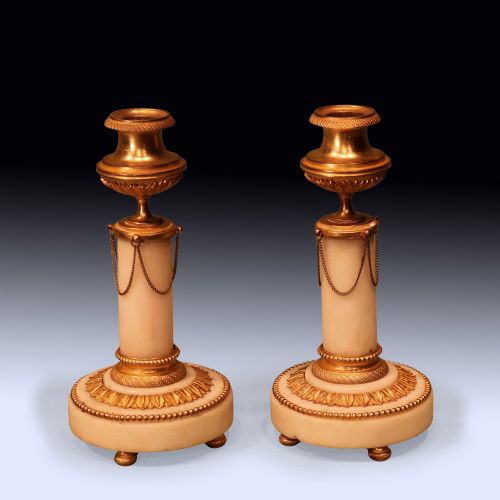
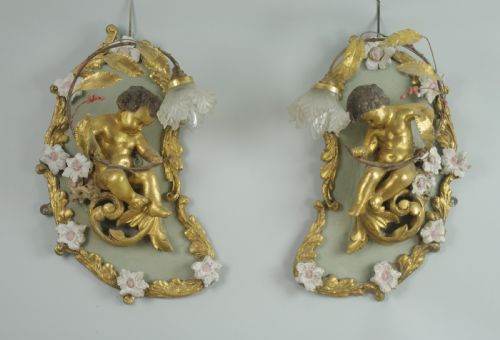
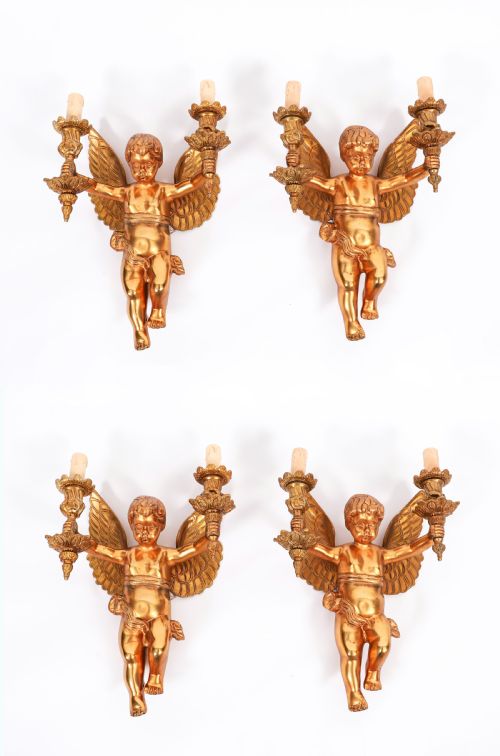
The selection spans simple brass wall pockets and repousse wall sconces to elaborate multi-branched gilt bronze and ormolu designs incorporating cherubs, putti, and neoclassical motifs. Paired sets dominate the offerings, intended originally for symmetrical placement beside mirrors or fireplaces in period drawing rooms.
Continental influences shape much of the stock, reflecting French Rococo Revival, Louis XVI, and Empire styles alongside domestic Victorian and Aesthetic Movement interpretations. Beyond standard wall lights, related items include brass-mounted girandole mirrors and conversion pieces adapted from candlesticks.
Materials and Construction
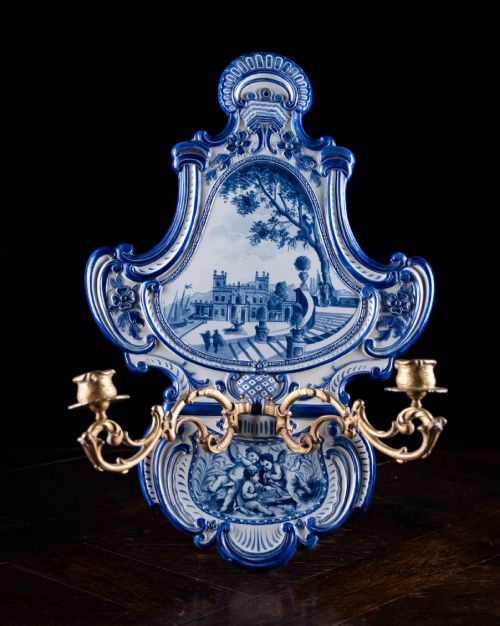
Foundry work relies heavily on cast brass, bronze, and ormolu, often enhanced with fire-gilding to produce a rich golden surface. Metal components combine with secondary materials such as white marble bases, onyx, mahogany, and inset porcelain plaques.
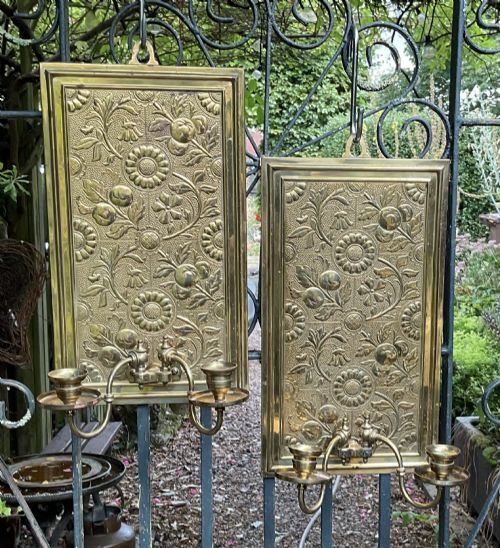
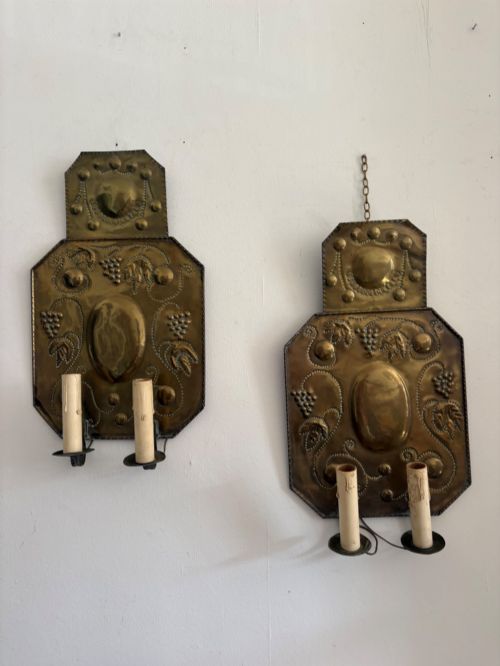
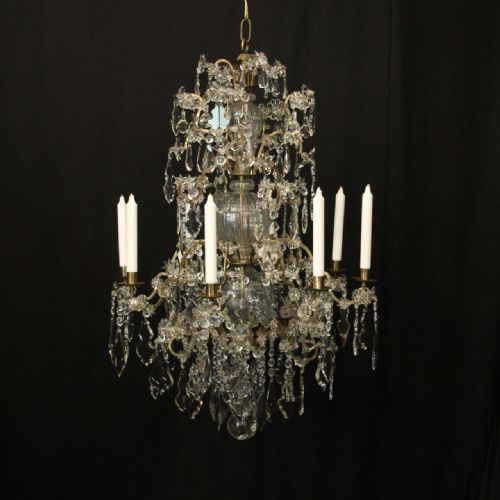
Repousse and chasing techniques define the ornamentation, allowing artisans to hammer thin brass sheets into raised floral or geometric patterns. Cast elements are joined mechanically or pinned, while cut glass lustres and mirrored backplates amplify the candlelight output.
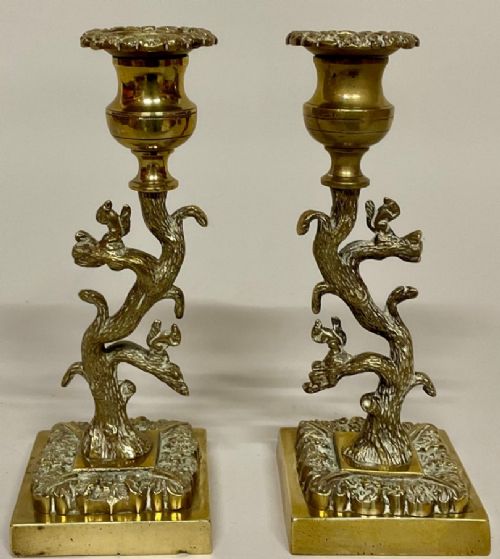
Certain nineteenth-century candlesticks double as miniature menageries, casting squirrels among leafy branches alongside your candle flame.
Craftsmanship and Detail
Weight and structural integrity also separate the grades, with better pieces utilising heavy cast bronze or brass frames rather than thin stamped metal. The retention of original mercury gilding or fire-gilding commands greater regard than later applied lacquers or modern brass paint.
Bruce Talbert·Villeroy and Boch
The 19th Century Brass Sconces Glossary
- Ormolu
- Gilded bronze produced through a mercury amalgamation process that leaves a durable, deep golden finish. This technique was widely practiced in French foundries during the period.
- Girandole
- A branched wall sconce featuring a mirrored backplate to reflect and multiply candlelight. These often include hanging glass prisms or lustres.
- Repousse
- A metalworking technique where the artisan hammers the design from the reverse side to form raised relief work on the front. It is common in domestic Dutch brassware.
- Applique
- A French term for a wall-mounted light fitting or sconce fixed directly to the wall surface. They frequently feature multiple candle branches.
- Champleve
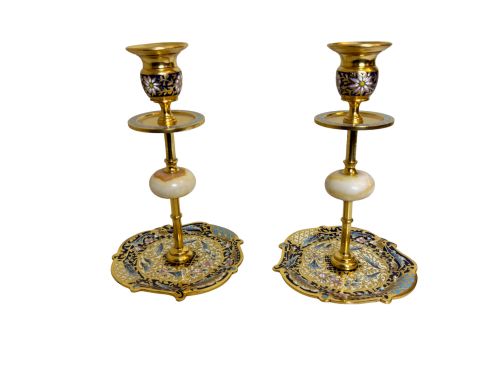
- An enamelling technique where troughs are carved into the metal surface and filled with vitreous enamel before firing. It appears on decorative nineteenth-century candlesticks and mounts.
19th Century Brass Sconces: Frequently Asked Questions
How do I mount antique wall sconces safely?
Most period sconces feature original mounting plates or screw holes intended for direct attachment to wall studs or secure anchors.
Weight varies significantly depending on whether the piece is cast bronze or thin repousse brass, so professional installation is recommended for heavier multi-branch models.
Were these sconces originally wired for electricity?
Nineteenth-century lighting fixtures were manufactured exclusively for candles or oil, meaning any electrical wiring found today represents later adaptation.
Conversion is typically done by running discreet internal wiring through the hollow arms without altering the historic exterior metalwork.
How should I clean antique brass and ormolu?
Maintenance requires only gentle dusting with a soft dry cloth to preserve the accumulated patina and original gilding.
Harsh metal polishes and chemical cleaners must be avoided entirely, as abrasive substances strip away fire-gilding and antique finishes.
How do I distinguish French and English styles?
French production during this era tends toward ornate rococo revival, gilt bronze, and sculptural mythological motifs like putti and ram heads.
English designs often lean toward functional restraint, utilising polished brass, Aesthetic Movement geometry, or combination woods like mahogany.