

Gold Brass Candle Sconces
Gold brass candle sconces bring warmth and refined illumination to a room, offering both historical charm and practical wall lighting.
Gold Brass Candle Sconces
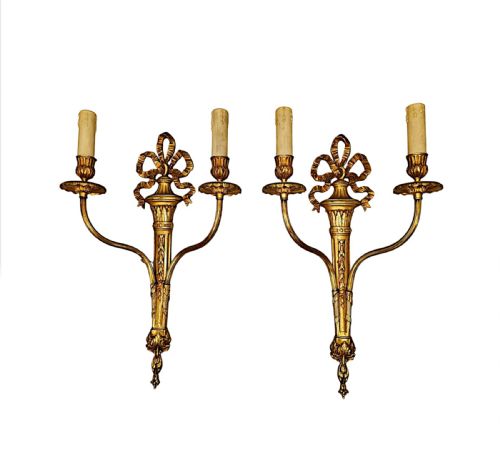
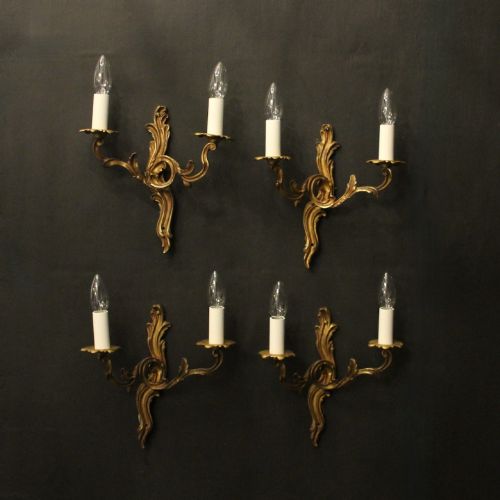
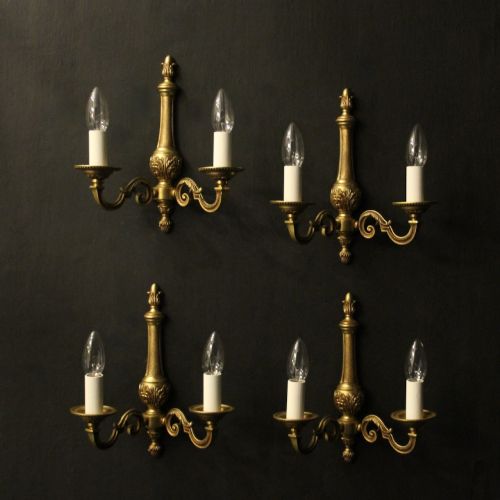
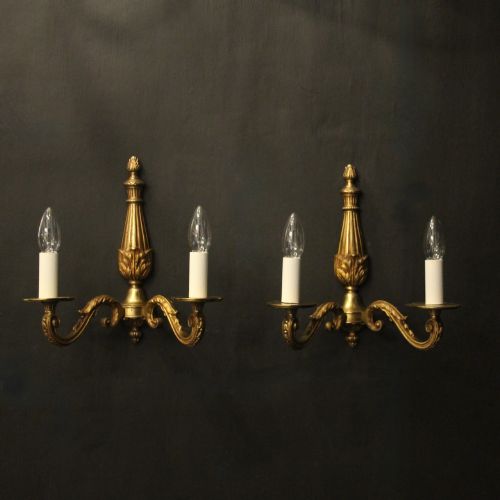
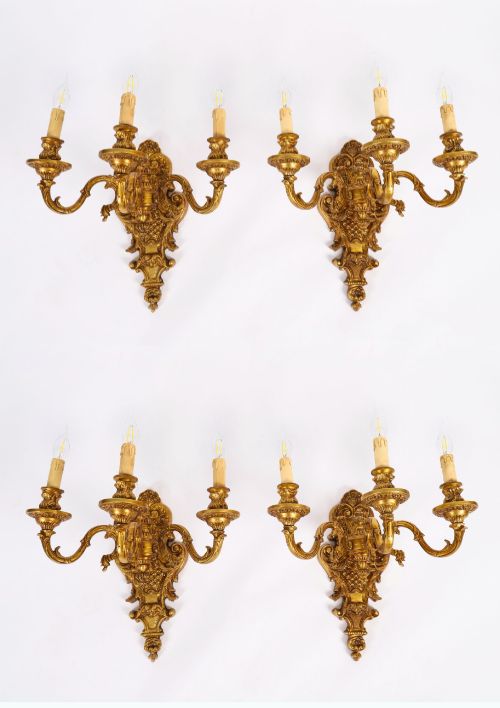
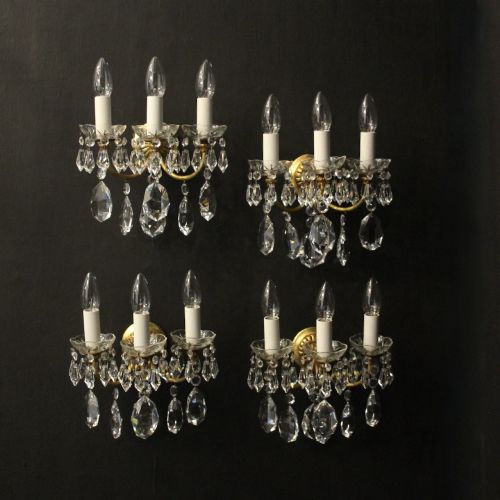
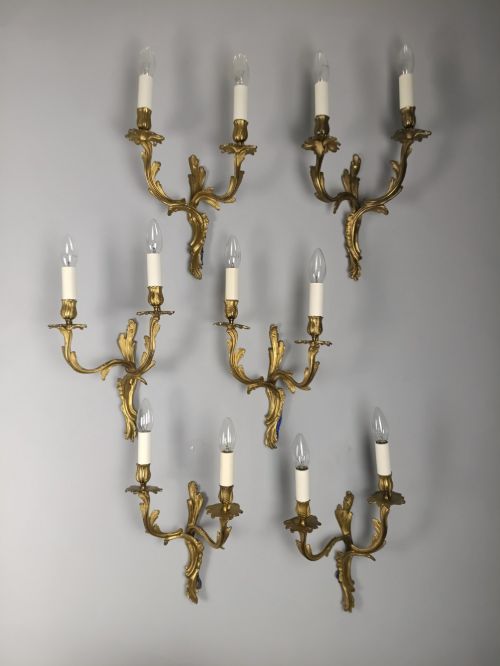
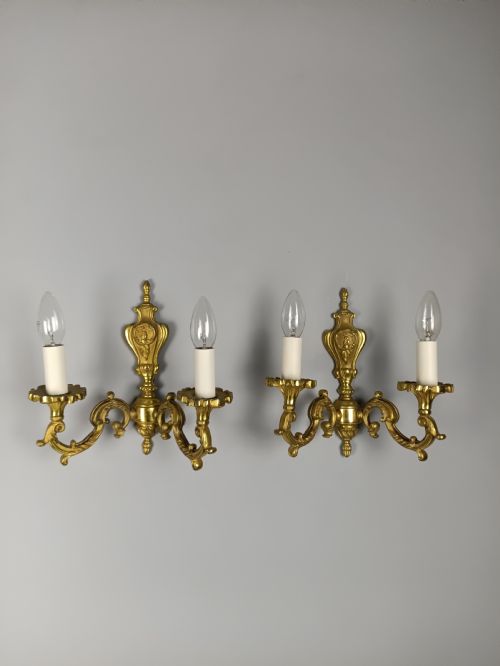
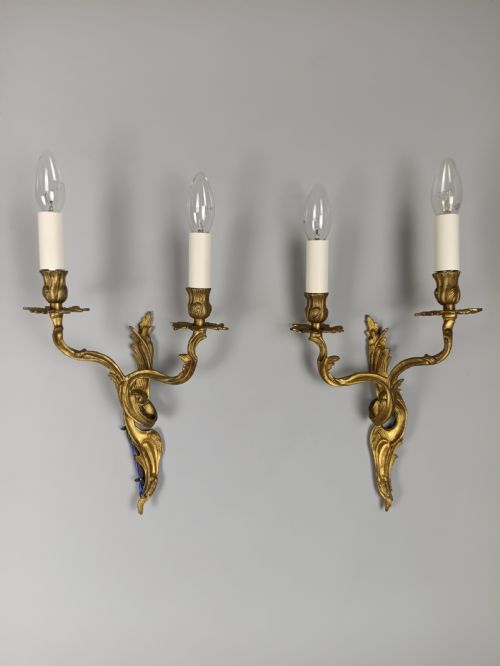
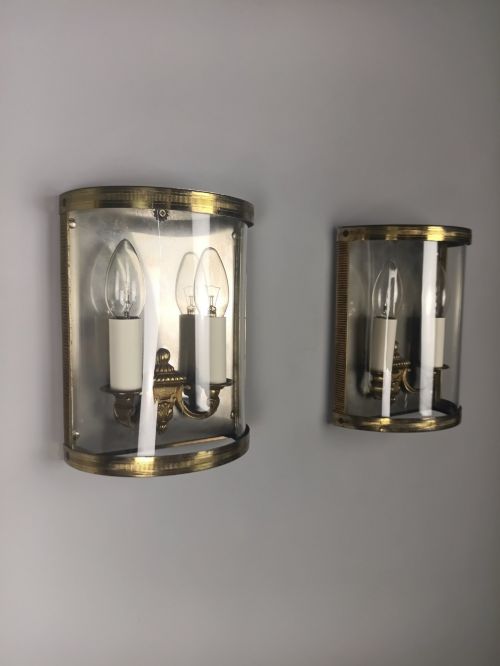
Gold brass candle sconces encompass wall-mounted light fittings designed to hold candles or illuminate interiors through metalwork forms. When searching for gold brass candle sconces, buyers encounter wall lights, appliques, girandoles, and mirror backs originating from various European traditions.
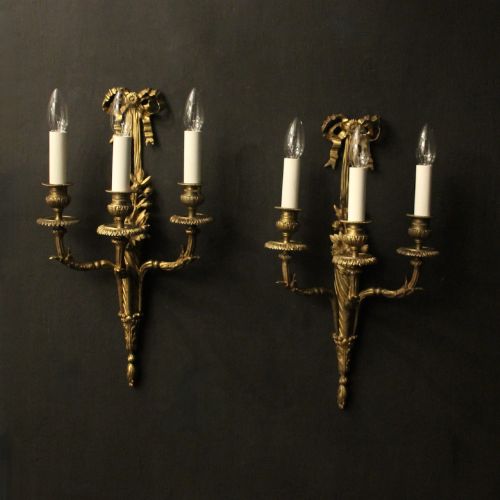
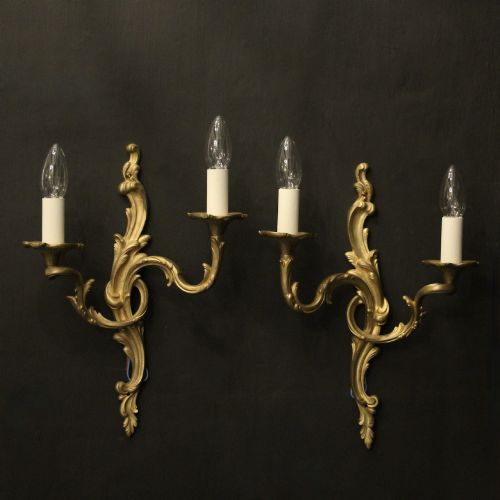
Stylistic influences range from French Rococo and Rococo Revival to Neoclassical, Louis XVI, and Regency designs. Pieces frequently incorporate cast metal branches, ribbons, and sculptural details designed to reflect candlelight across a room.
How they were made
Materials span brass, gilded brass, gilt bronze, ormolu, and gilt metal, often combined with glass or crystal elements. Metalwork forms were cast and chased, utilising traditional foundry techniques to shape intricate foliage, scrolls, and animal motifs.
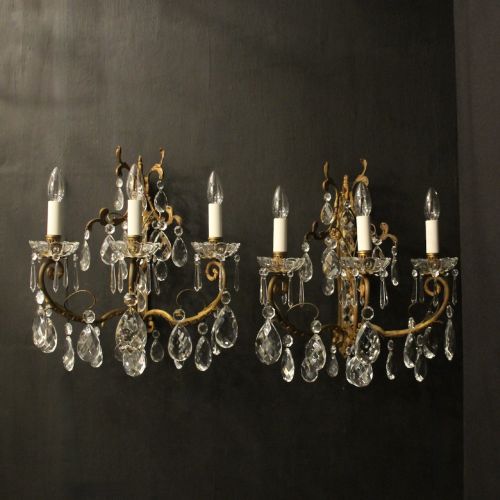
Gilding and ormolu finishes were applied to bronze and brass bases to achieve a rich golden lustre. Many examples also integrate mirror plates or crystal drops to amplify the light cast by the candles.
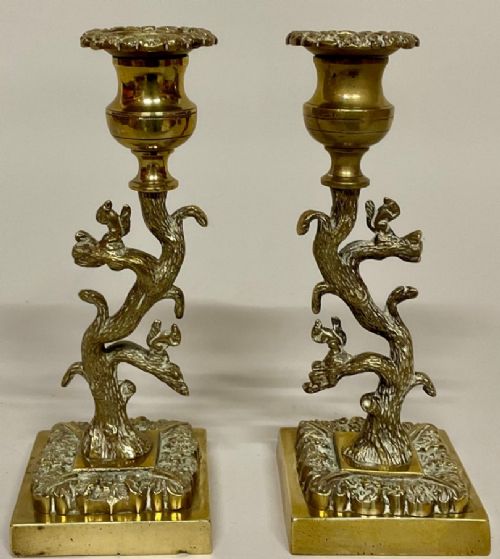
Squirrels forage among cast bronze tree branches on nineteenth-century Regency sconces.
What varies in quality
Quality rests primarily in the crispness of the casting and the depth of the metal finish. Finer pieces display sharply defined chased details, naturalistic foliage, and well-preserved gilding that catches ambient light effectively.
Weight and structural integrity also separate standard production from superior craftsmanship. Heavier casts with balanced arm extensions and secure mounting plates indicate careful construction by skilled workshops.
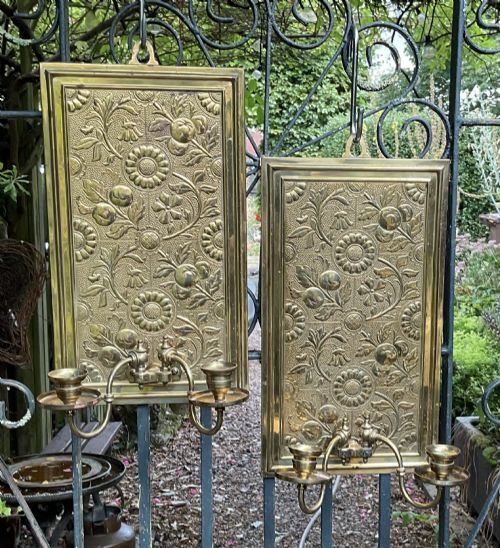
Bruce Talbert
The Gold Brass Candle Sconces Glossary
- Ormolu
- Gilded bronze, where a finely ground gold-mercury amalgam is applied to a bronze base and heated to leave a rich metallic coating. This finish was widely utilised in French decorative metalwork.
- Applique
- A wall-mounted light fitting designed to hold candles or electric bulbs, directing illumination outward into the room. These fixtures often feature decorative backplates and multiple arms.
- Girandole
- An ornamental branched candlestick or light fixture, frequently incorporating a mirror backplate to reflect and multiply the light. They appear in various revival and neoclassical styles.
- Campana
- A bell-shaped vessel or socket form often found on classical candlesticks and sconces. The shape derives from ancient Roman bronze and marble vases.
- Rococo Revival
- A nineteenth-century design style drawing on the asymmetrical scrolls, shell motifs, and naturalistic curves of the eighteenth-century French Rococo movement. It produced ornate, flowing metalwork forms.
Gold Brass Candle Sconces: Frequently Asked Questions
How do I clean gold brass candle sconces?
Dust the metal gently with a soft, dry cloth to prevent accumulation. Avoid harsh chemical cleaners or abrasive polishes that can damage historic gilded surfaces.
For stubborn grime, a slightly damp cloth with mild soap may be used very sparingly, followed immediately by thorough drying with a soft cloth.
Were these sconces wired for electricity?
Many historical wall lights were originally designed exclusively for candles, though some have been adapted for electricity over time. Certain listings note rewiring or mid-century electric configurations.
Buyers should examine each piece to determine whether it retains its original candle-holding form or incorporates modern electrical fittings.
How do I hang a heavy brass sconce safely?
Secure mounting requires anchoring directly into wall studs or utilising appropriate heavy-duty wall plugs matched to your wall type. The weight of cast bronze and brass fixtures demands robust support to ensure stability.
Consulting a professional installer is recommended for heavier pieces, particularly those featuring multiple arms or integrated mirror backs.
What rooms suit gold brass candle sconces?
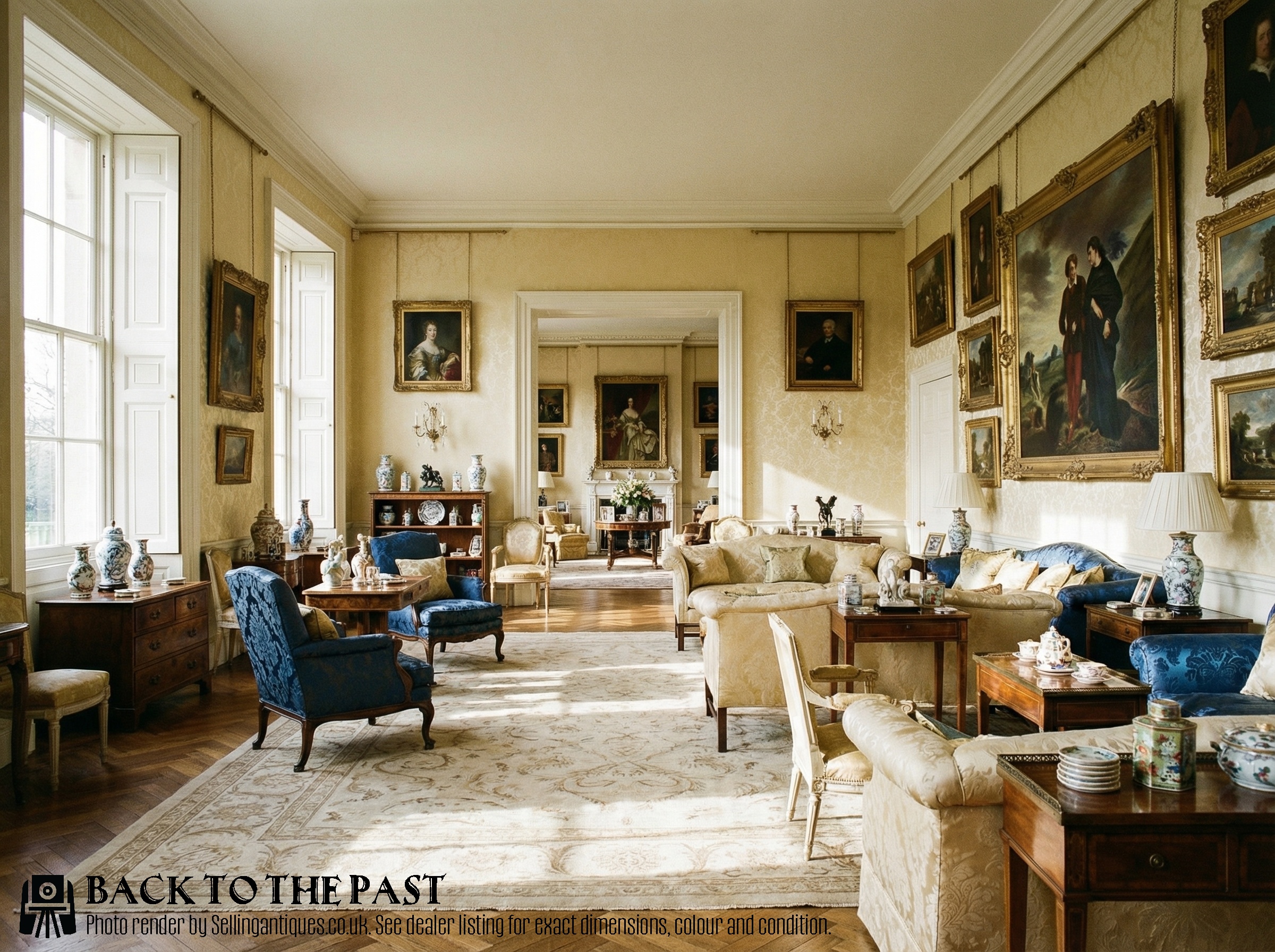
These wall lights complement hallways, dining rooms, and living spaces where warm reflective illumination enhances the interior atmosphere. Their decorative backplates and sculptural arms add character even when unlit.
Pairing them with period mirrors or placing them above sideboards creates a balanced traditional arrangement.