



Victorian Brass Wall Light
A victorian brass wall light brings the warm, polished glow of nineteenth-century metalwork straight into a modern hallway or sitting room.
Victorian Brass Wall Light
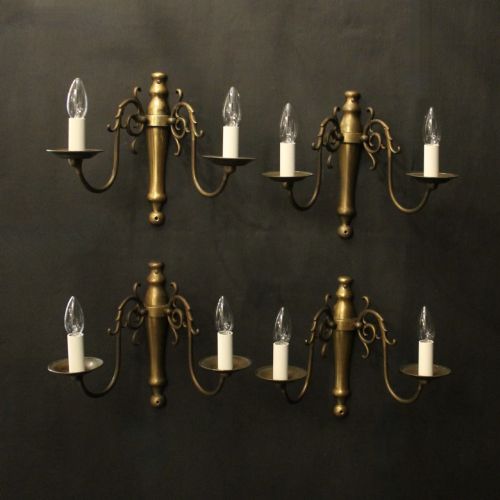
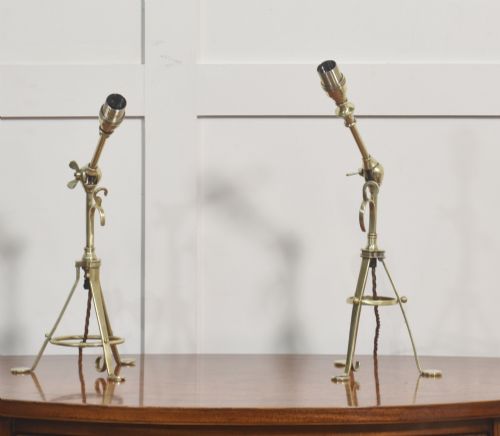
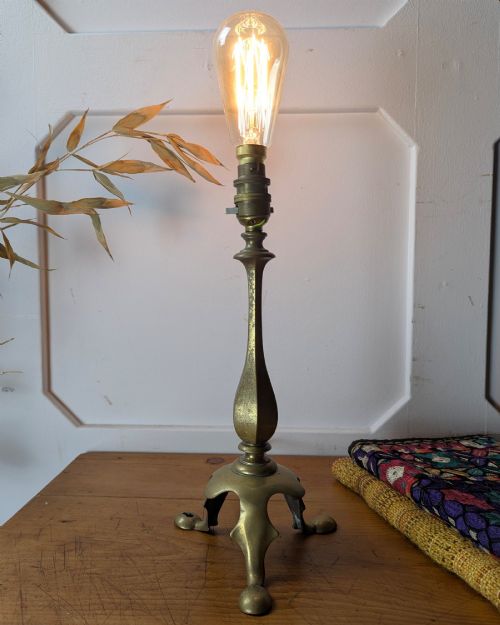
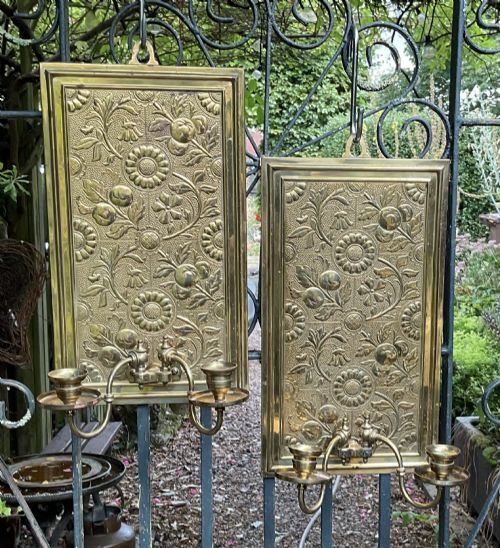
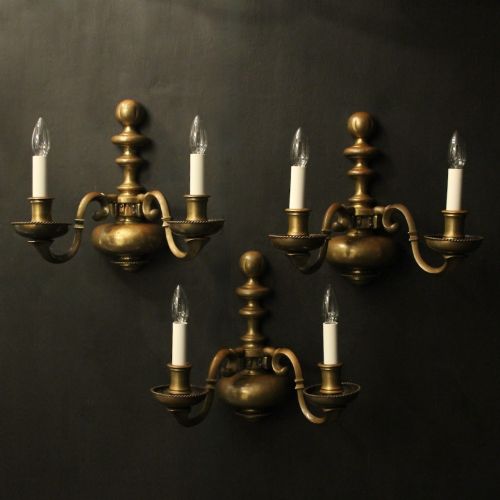
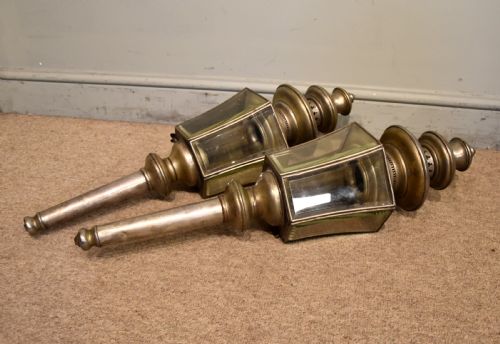
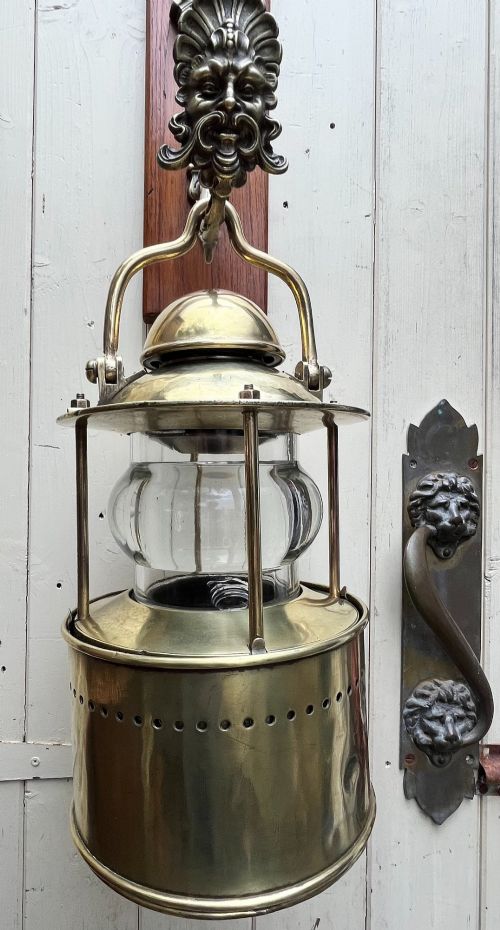
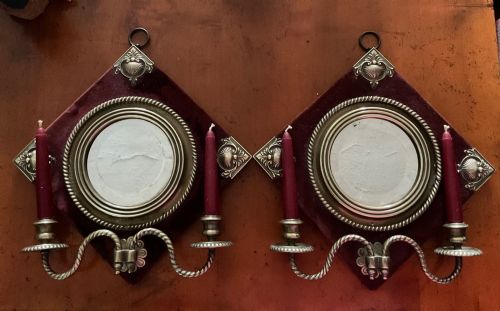
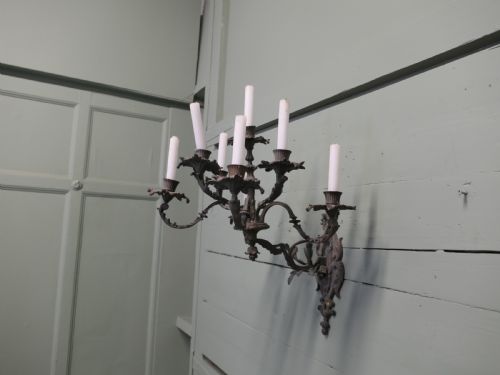
When you search for a victorian brass wall light, you encounter a diverse array of domestic and utilitarian illumination forms spanning the nineteenth century and adjacent decades. These pieces include simple wall brackets, multi-branched gasoliers, swinging arm lamps, and specialised railway or carriage lanterns designed to mount beside a mirror or along a corridor.
The objects on this page bridge the transition from oil and gas burning to early electric lighting, often retaining conversion fittings or original burners alongside later wiring. You will frequently find them paired as matching sets, built from cast and spun brass with decorative elements drawn from Gothic Revival, Aesthetic Movement, and Arts and Crafts vocabularies.
Materials and construction methods
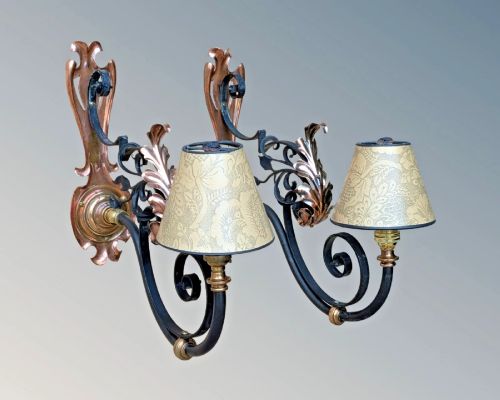
Makers relied heavily on cast and sheet brass, frequently combined with bronze, copper, wrought iron, and cast iron to provide structural rigidity and varied surface textures. Metal components were often patinated, gilded, or polished, then paired with hand-blown glass shades, mirrored backplates, or carved wooden elements.
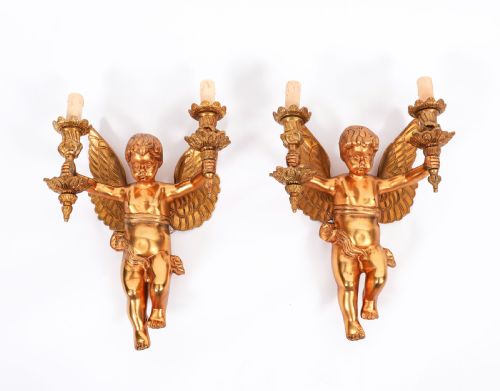
Assembly methods involved mechanical fastening such as riveting and screwing, alongside intricate casting and chasing for ornate foliate, cherubic, or architectural motifs. Many surviving examples show evidence of adaptation, having been converted from gas or oil operation to house electrical wiring.
Design influences span Victorian, Arts and Crafts, Gothic Revival, Rococo Revival, and Art Nouveau styles.
Distinguishing craftsmanship and design
The distinction between ordinary utility lighting and finer decorative pieces rests in the crispness of the metal casting and the depth of the chased detail. Superior examples display carefully articulated motifs, substantial gauge brass that resists bending, and harmonious proportions between the backplate, arms, and any accompanying glass shades.
Design integrity also separates standard production from exceptional work, particularly in signed pieces or those exhibiting distinct stylistic movements like Arts and Crafts or the Aesthetic Movement. The survival of original fittings, matching shades, and unpolished patination adds considerably to the integrity of an antique wall light.
W.A.S. Benson·Bruce Talbert·Liberty·Hinks
The Victorian Brass Wall Light Glossary
- Girandole
- A wall-mounted bracket equipped with a mirror that reflects the flickering light of candles or gas flames. This form was especially popular during the Victorian period for amplifying illumination in dim parlours.
- Gasolier
- A multi-branched lighting fixture originally designed to distribute gas to multiple burners. Many survive today converted to electricity.
- Sconce
- A wall-fixed light fitting designed to hold candles, oil lamps, or electric bulbs. They often feature decorative backplates to protect the wall surface.
- Ormolu
- Finely chased and gilt bronze or brass mounted onto furniture or light fittings. The technique produces a rich, gold-coloured metallic finish.
- Baluster
- An architectural column shape with a swelling base that tapers toward the top. This profile frequently appears on the stems of wall lamps.
Victorian Brass Wall Light: Frequently Asked Questions
Can these antique lights be used safely today?
Most antique wall fixtures require professional rewiring and PAT testing to meet modern electrical safety standards before installation in a home.
Qualified electricians can easily adapt historical fittings to accept standard modern bulbs while preserving the original metalwork.
How do I distinguish gas fittings from electric ones?
Gas-era wall lights typically feature heavy brass tubing, downward-pointing keys or stopcocks, and solid nozzles designed to mix gas and air.
Converted examples often retain these original valves as fixed decorative elements alongside modern wiring.
Where should I mount a wall sconce?
These fixtures suit hallways, flanking living room mirrors, or providing ambient lighting beside a bed or fireplace.
Placement height depends on the specific reach of the arms and whether the shades direct light upward or downward.
Should I polish the brass?
Polishing preference is entirely personal, though many collectors favour leaving an aged, undisturbed patina on nineteenth-century metal.
If you choose to clean the brass, use non-abrasive cleaners to avoid removing delicate surface details or gilding.