
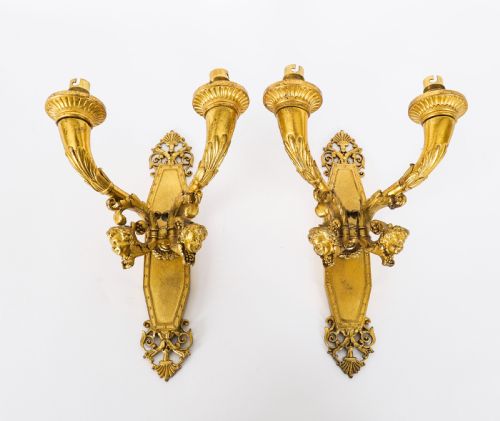
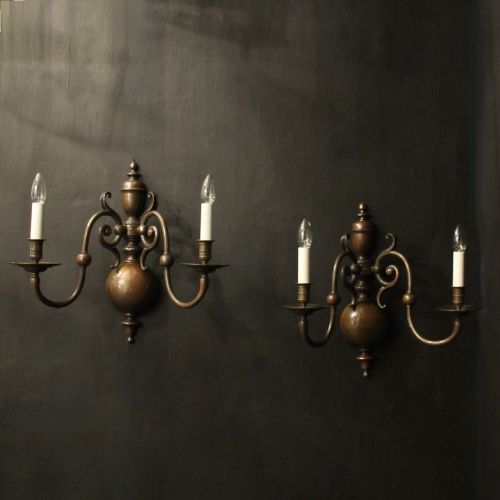
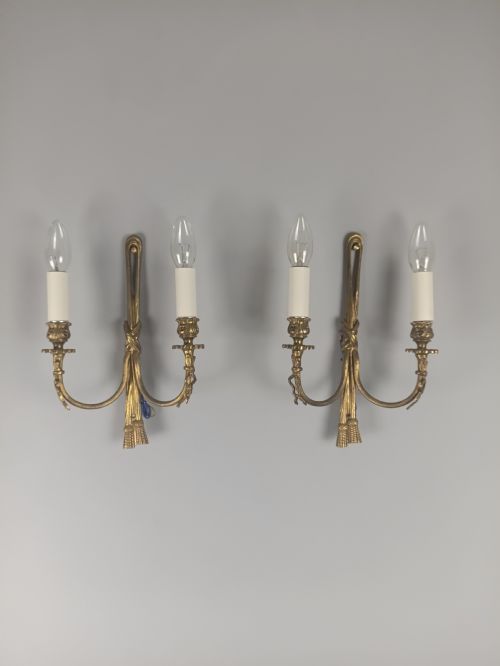
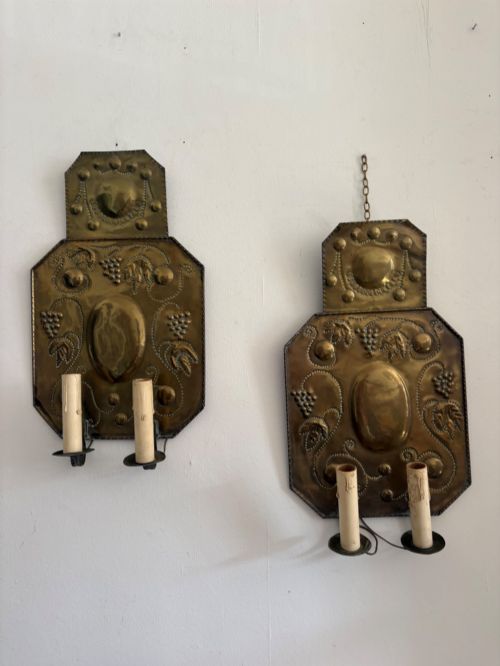
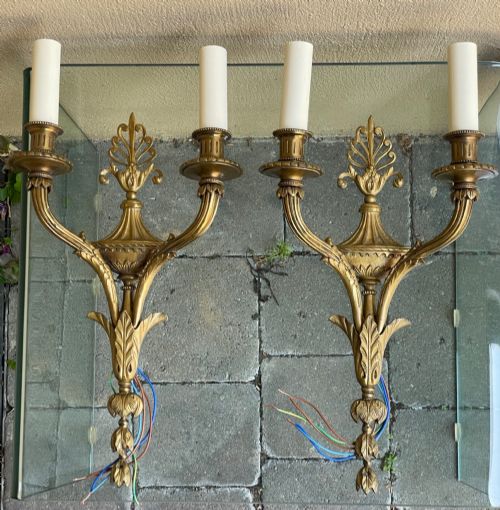
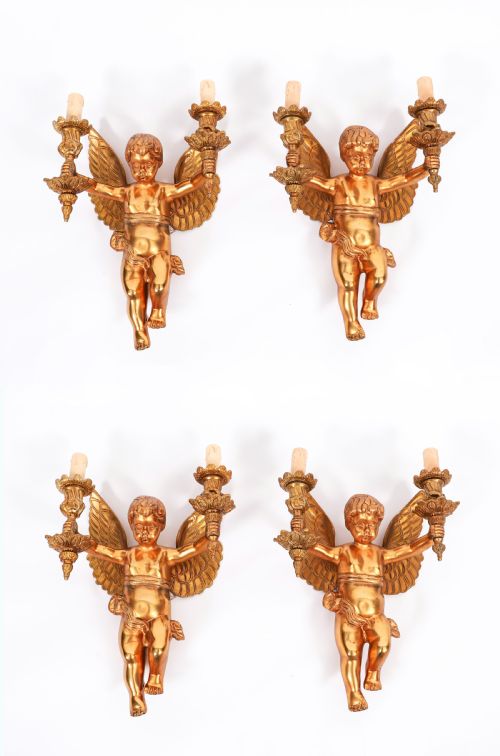
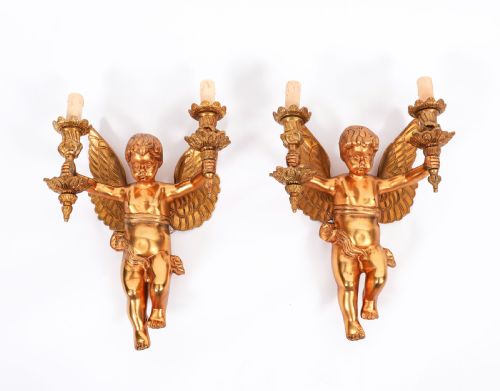


Two Branch Sconces
Two branch sconces provide targeted illumination through pairs of arms projecting from a wall, blending functional light with decorative metalwork.
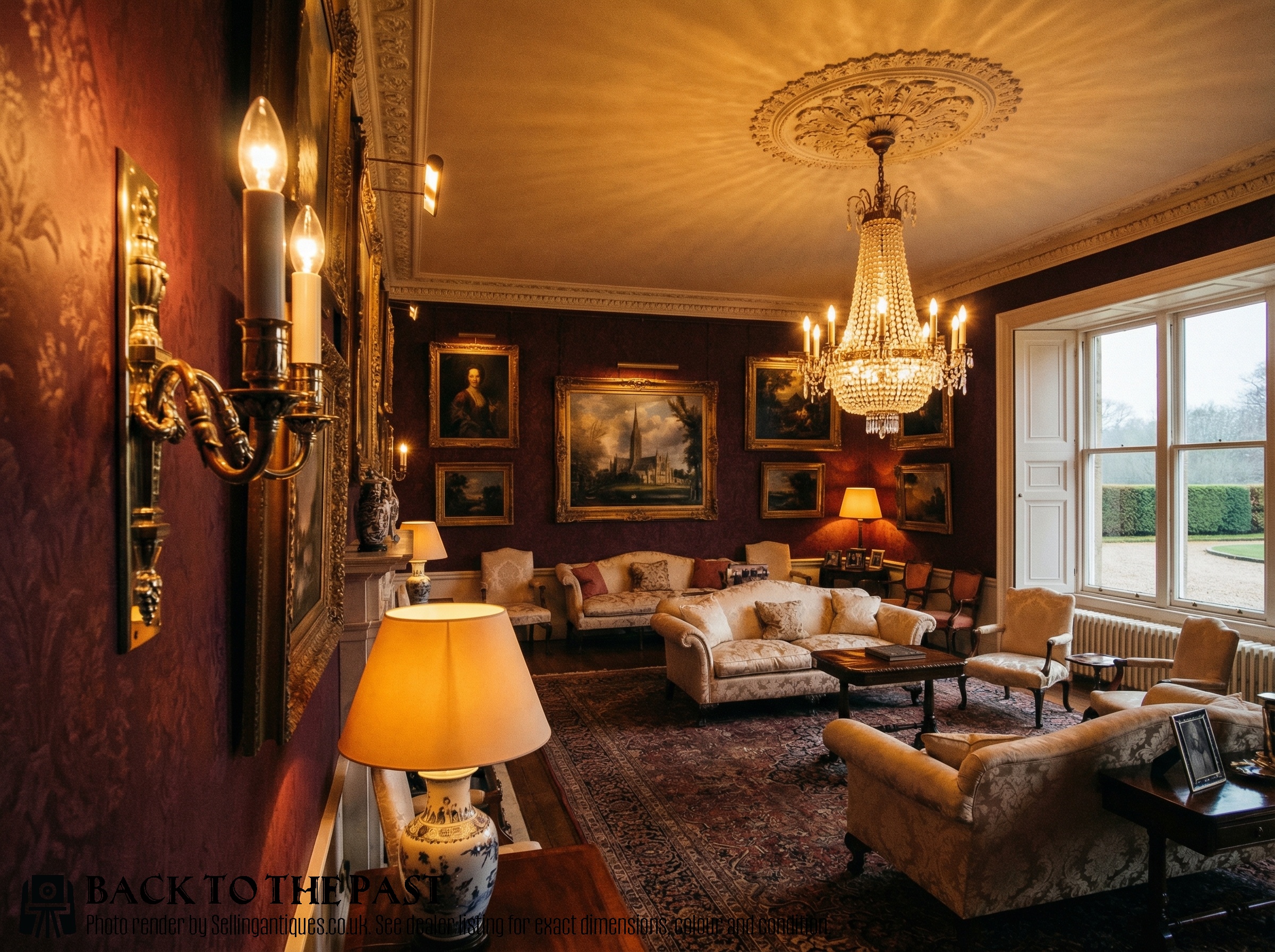
Two Branch Sconces
Two branch sconces are wall-mounted lighting fixtures designed to hold candles or electric bulbs across a pair of extending arms. These pieces serve as decorative focal points while casting warm light across a room.
The timeline spans from the early nineteenth century through to the 1930s, encompassing Victorian and Edwardian periods as well as specific revivals of earlier stylistic eras. Buyers frequently encounter French Rococo, Louis XIV, and Neoclassical designs among these offerings.
Materials and construction
Metal forms dominate the construction of these fixtures, utilising brass, bronze, and gilt metal shaped through casting and repoussé techniques. Guilders applied gold leaf or ormolu finishes to bronze and brass bases to achieve a bright, reflective surface.
Wood appears in select pieces through carved and gilded giltwood frames that provide an organic alternative to metalwork. Certain designs incorporate ceramic elements such as Sevres or Limoges porcelain alongside metal arms.
Construction methods range from heavy cast bronze assemblies secured with threaded pins to lighter stamped brass components. Surface decoration relies on chased detailing, repoussé relief work, and applied gilding rather than structural complexity.
Materials documented across the inventory include brass, gilt bronze, ormolu, bronze, gilt brass, giltwood, gold leaf, and porcelain.
Assessing quality and finish
Quality rests upon the crispness of the casting and the depth of the hand-chased detailing across the metal surface. Superior examples exhibit sharply defined ornamentation on the arms and backplates, whereas lesser pieces display softened contours from worn moulds.
The integrity of the surface finish dictates the visual impact of each piece. Intact ormolu, fire-gilding, and gold leaf retain a rich luminosity, while inferior platings show flaking, wear, or unsympathetic modern recolouring.
Structural robustness distinguishes utilitarian items from high-status decorative works. Solid bronze and heavy cast brass provide stability to the twin arms, whereas thin stamped metal components are prone to distortion.
The Two Branch Sconces Glossary
- Ormolu
- A technique of applying finely ground high-carat gold to a bronze object using a mercury amalgam. This process creates a durable, luminous golden finish characteristic of fine French decorative metalwork.
- Repoussé
- A metalworking technique where the artisan hammers the material from the reverse side to form a raised design in relief. This method produces ornate surface patterns on brass wall sconces.
- Girandole
- A branched wall-mounted candleholder or light fixture often featuring reflective surfaces such as mirrors or polished metal backplates. The term typically describes decorative sconces designed to multiply ambient illumination.
- Candelabra
- A branched candlestick or light fitting designed to hold multiple candles or bulbs. Versions mounted to walls are frequently termed wall sconces.
Two Branch Sconces: Frequently Asked Questions
How are two branch sconces mounted?
These fixtures secure directly to walls through a central backplate fastened with screws or wall anchors. Historic pieces generally require professional installation to accommodate modern wiring safely behind the mounting surface.
Positioning typically involves placing pairs at eye level flanking doorways, fireplaces, or large mirrors to create balanced illumination.
Were these fixtures originally for candles?
Many nineteenth-century examples began as candleholders before undergoing conversion to electricity during the twentieth century. Rewired pieces frequently retain their original drip pans and sockets adapted for miniature bulbs.
Earlier models from the 1800s rely entirely on candle power, while items from the 1920s and 1930s often show original electrical adaptation.
How do I identify French revival styles?
French revival pieces incorporate distinct architectural motifs from the reign of Louis XIV or Louis XVI, such as cascading ribbons, cherubs, and asymmetrical Rococo scrollwork. Makers utilised cast bronze and ormolu to replicate the opulence of seventeenth and eighteenth-century palaces.
Comparing the casting detail and weight helps distinguish nineteenth-century revival works from later twentieth-century interpretations.
What is the difference between brass and ormolu?
Brass is a durable alloy of copper and zinc used for structural components and stamped backplates. Ormolu denotes a specific gilded finish applied to bronze, yielding a deep, rich golden hue.
While plain brass develops a natural patina over time, ormolu retains its bright, non-tarnishing golden appearance due to the gold content.