
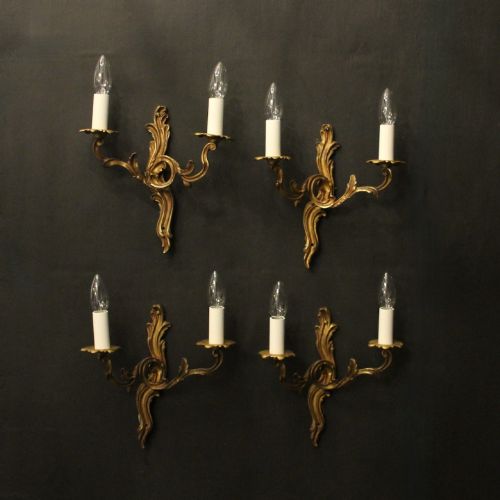
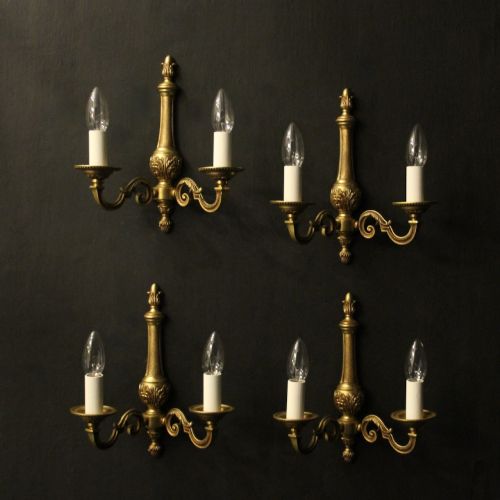
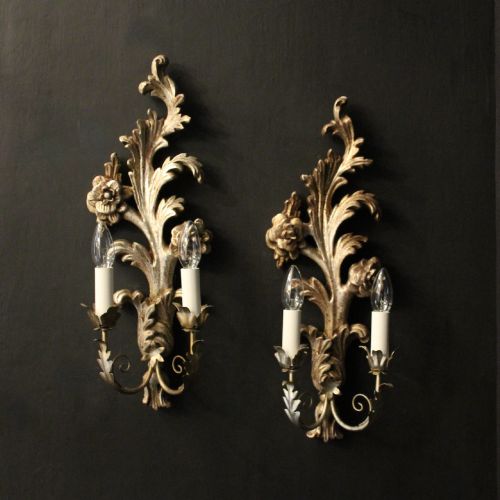
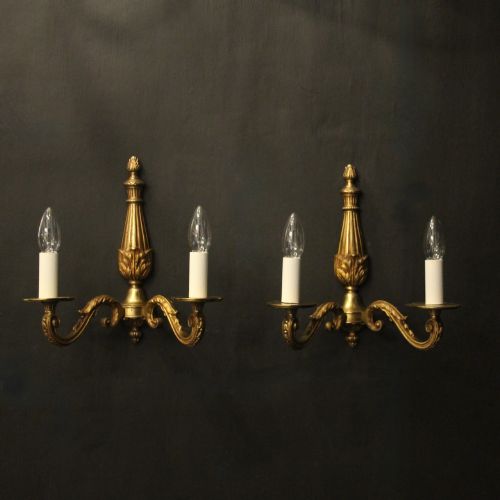
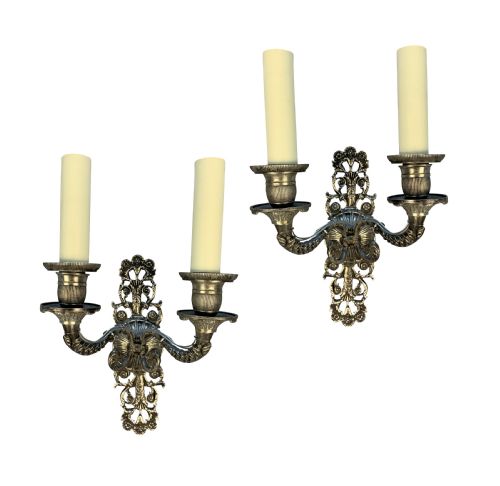
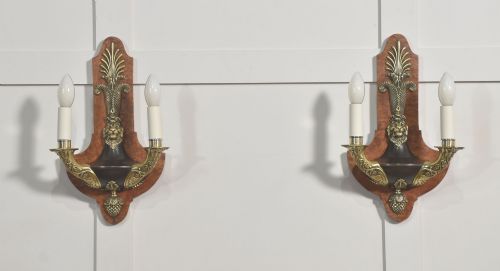
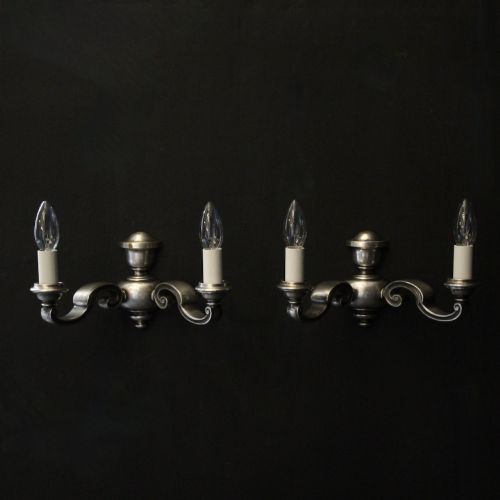
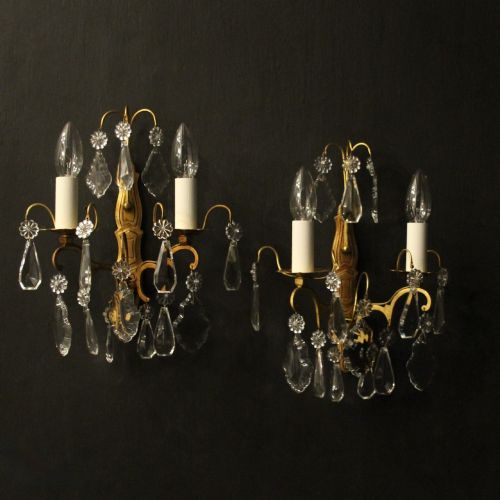
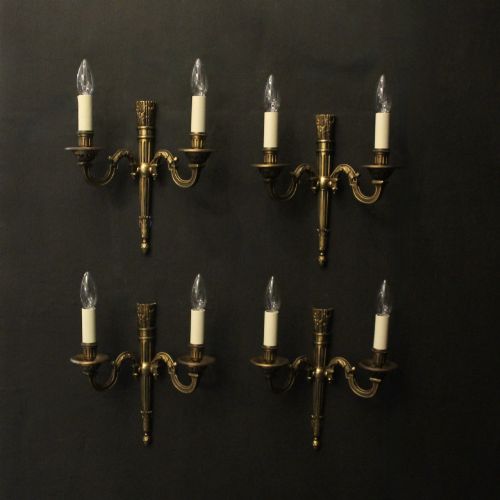
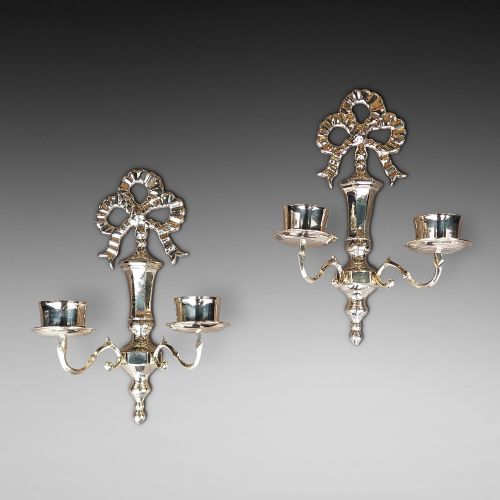
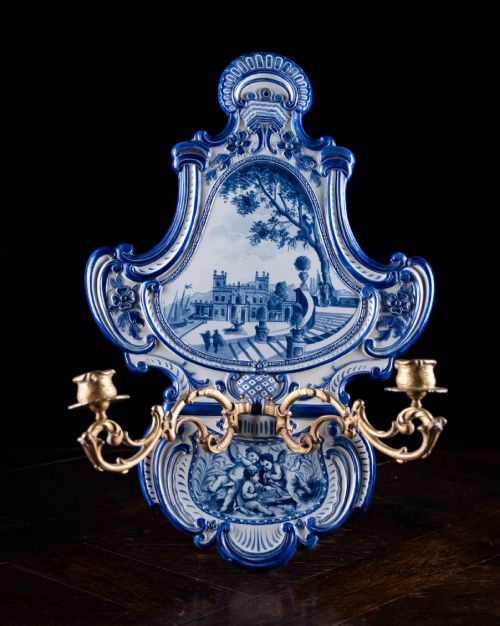
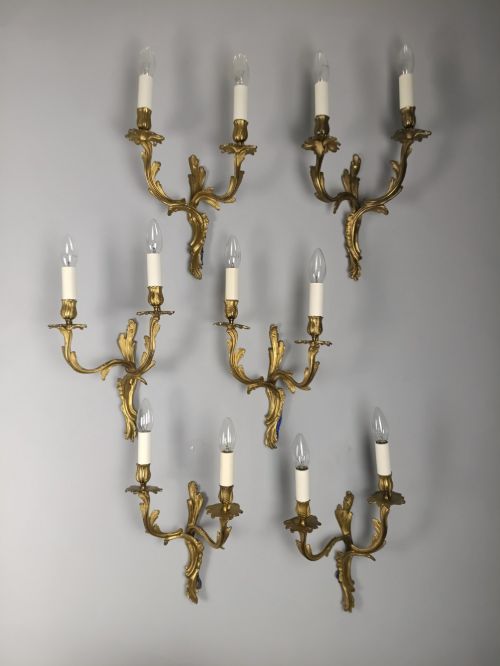
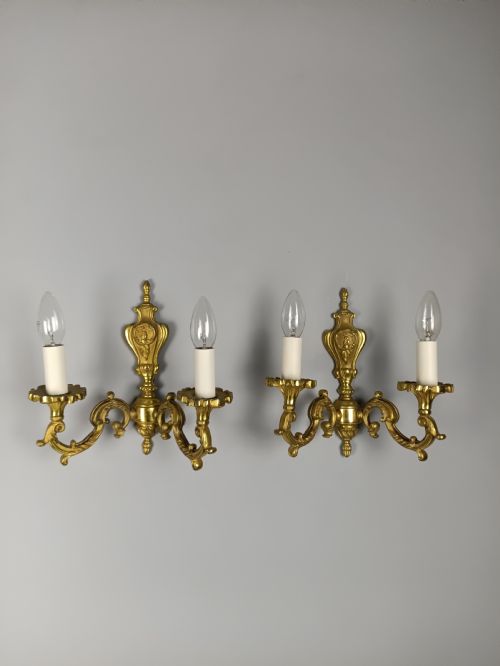
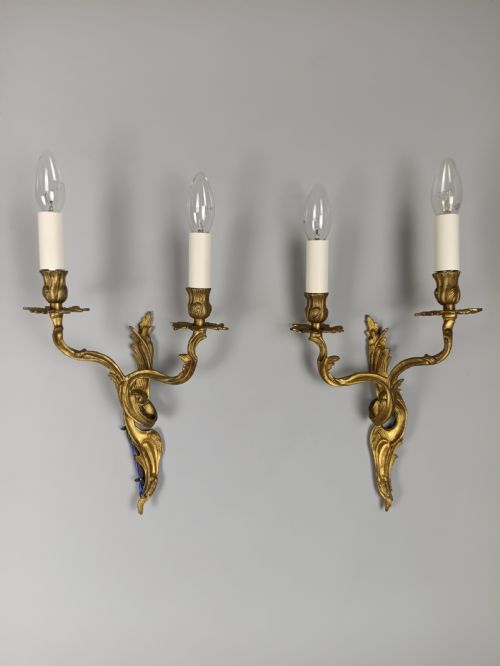
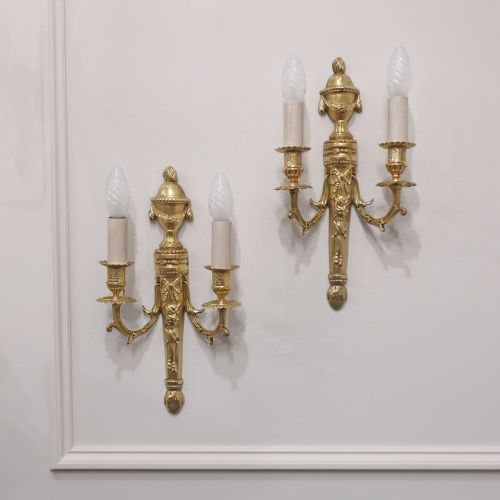
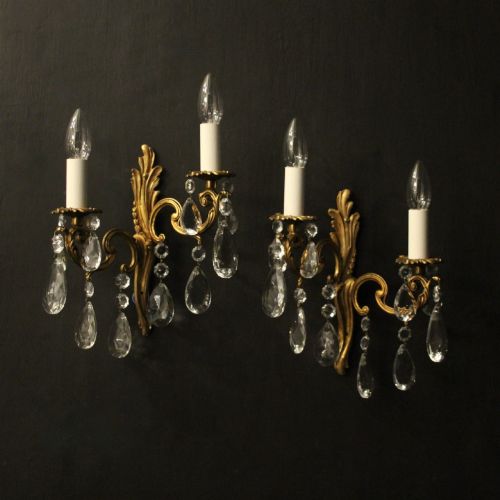
Double Arm Sconces
Double arm sconces bring layered wall illumination to a room, offering functional light through pairs of branching metal candleholders or electrified arms.
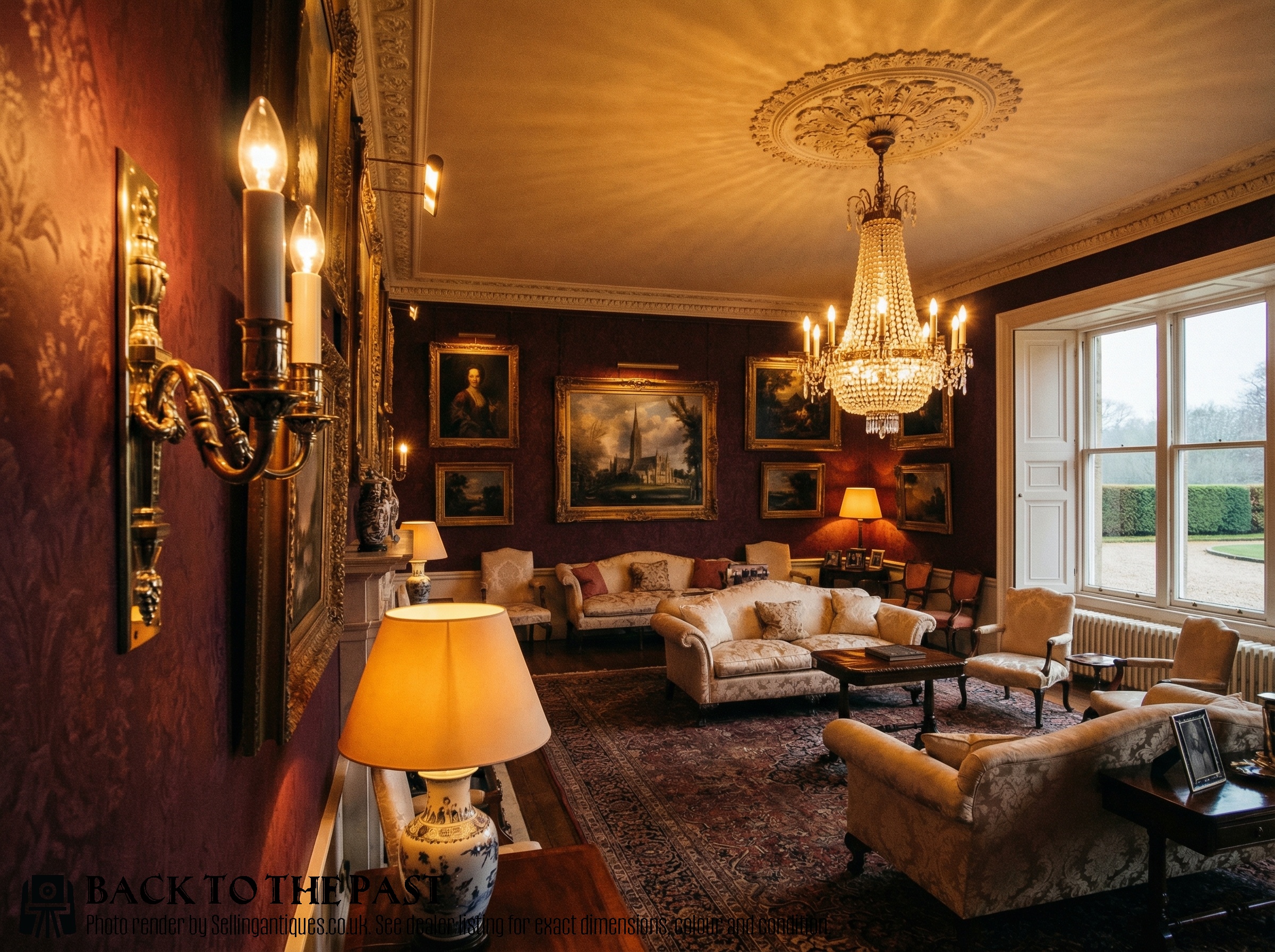
Identifying Double Arm Sconces
Double arm sconces are wall lights featuring two extending branches designed to mount directly onto vertical surfaces. When searching for double arm sconces, a buyer encounters wall sconces and wall lights originating from English and French traditions.
The pieces on this page span the nineteenth century, the Victorian period, and the decades of the nineteen-twenties and nineteen-thirties. These wall lights appear in sets and pairs, showing both traditional English designs and elaborate French styling.
French examples lean heavily into Rococo and Louis XV Rococo aesthetics, whilst English pieces represent traditional and grand regency styles. Buyers frequently meet paired or grouped fixtures constructed for symmetrical interior placement.
Materials and Construction
Makers utilised solid brass, bronze, gilded bronze, and ormolu to form the structural bodies and twin arms of these fixtures. Metalworking techniques allowed artisans to cast and shape heavy bronze and brass into curving branches.
Gilding was applied to bronze and brass surfaces to achieve rich metallic finishes that caught and reflected candlelight. The combination of cast bronze and applied gilding created durable, ornate wall fixtures built for formal interiors.
Retail Price Guide 2026
Typical UK retail prices for double arm sconces, calculated from the Sellingantiques database of over a million retail prices indexed since 2003. This retail price guide relies exclusively on Sellingantiques data; no external sources or auction records are used, so the figures do not describe the wider market.
Listings on this page exclusively feature wall lights and wall sconces made from brass, bronze, gilded bronze, ormolu, and gilded brass.
Assessing Quality and Execution
Quality in these wall lights rests upon the crispness of the metal casting and the depth of the chased detail along the arms. Finer examples display fluid, organic curves in their Rococo scrolls, whilst simpler pieces show more restrained, uniform profiling.
The finish separates standard production from superior work, particularly in the warmth and adherence of the gilding on bronze and brass. Heavier bronze castings naturally command greater presence on the wall than lighter brass alternatives.
The Double Arm Sconces Glossary
- Ormolu
- Finely chopped high-zinc brass applied as a surface finish to bronze objects, creating a bright gold appearance. This technique was widely practiced by French metalworkers.
- Gilded Bronze
- Bronze metal treated with a thin layer of gold leaf or gold paint to enhance visual richness. It provides the durability of bronze with a lustrous exterior.
- Rococo
- An ornate design style characterised by asymmetry, C-scrolls, and naturalistic plant motifs. It heavily influences the French wall lights from this selection.
- Grand Regency
- An English architectural and decorative style known for classical restraint mixed with lavish ornamentation. Pieces in this idiom display formal symmetry and bold proportions.
Frequently Asked Questions
How were double arm sconces used?
These wall lights were positioned in pairs or sets along reception room and hallway walls to supplement ambient illumination. They reflected candlelight from mirrors and gilded surfaces to brighten grand interiors.
Today, many of these fixtures are wired for electricity while retaining their original structural metalwork. They function effectively as primary or accent lighting in living spaces and corridors.
What periods do these wall lights represent?
The pieces span the nineteenth century, the Victorian era, and the nineteen-twenties and nineteen-thirties. Each era brings distinct decorative choices to the casting and finish.
French pieces from the twentieth century often adopt earlier eighteenth-century Rococo revivals. English pieces maintain a focus on traditional forms and regency proportions.
What metals are used in these fixtures?
The construction relies primarily on brass, bronze, gilded bronze, and ormolu. These materials offered the necessary structural strength for extending arms while supporting decorative surface treatments.
Bronze provides heavy, stable casting qualities, whilst brass offers a slightly brighter metallic tone. Gilded finishes enhance the reflective capacity of both metals under light.