
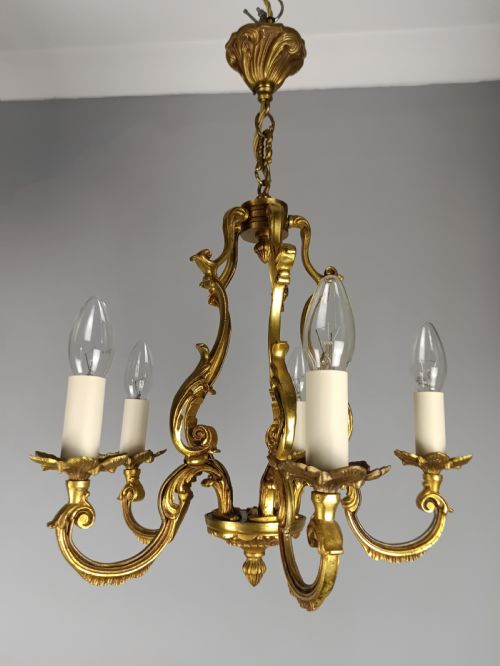
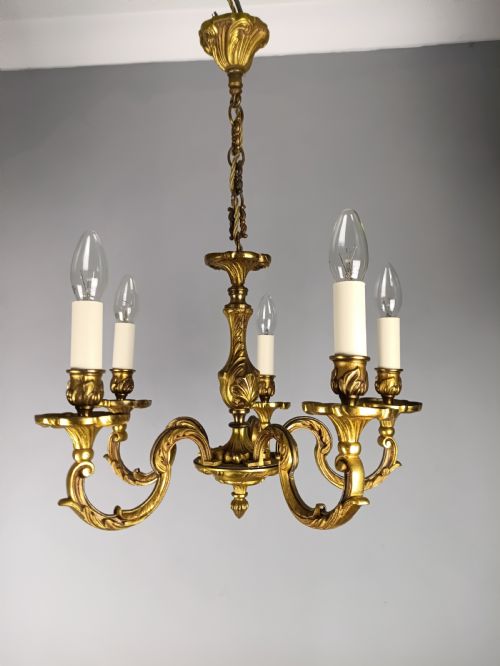
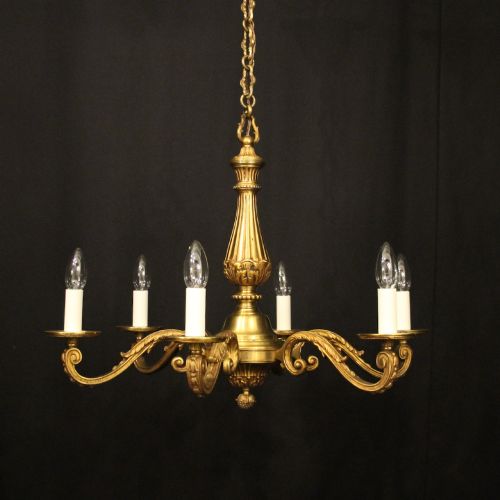
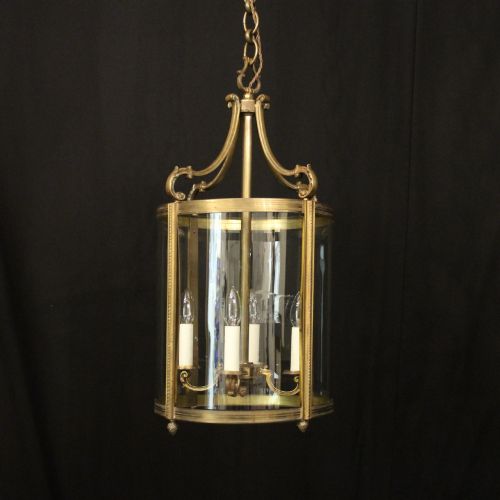


Gilded Bronze Light
A gilded bronze light brings heavy metalwork and brilliant glass together to illuminate a room with nineteenth and early twentieth century elegance.
Understanding gilded bronze light
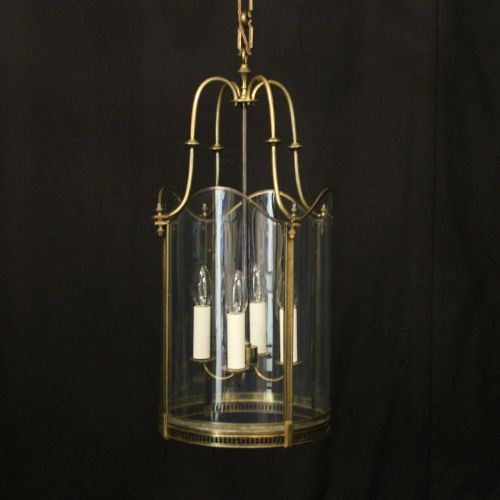
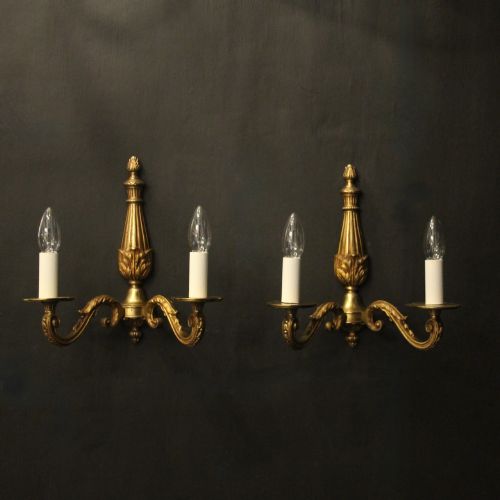
A gilded bronze light encompasses hanging lanterns, hall lanterns, ceiling lights, and wall lights designed to illuminate grand spaces. When you search for a gilded bronze light, you encounter pieces originating primarily from French and Italian workshops across the nineteenth and early twentieth centuries.
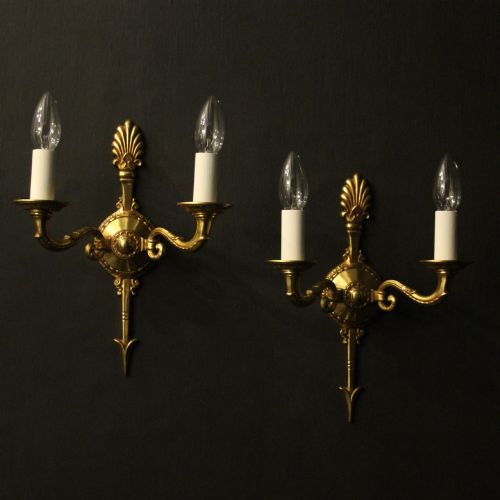
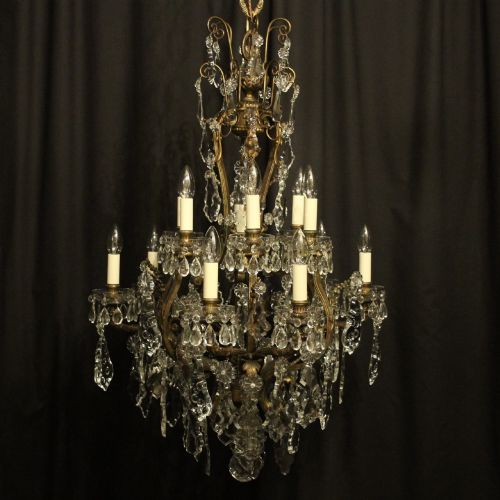
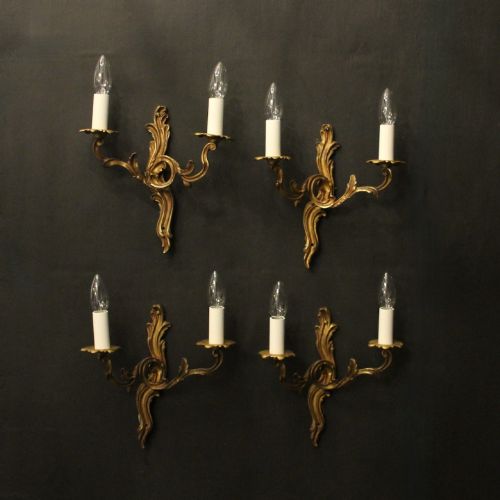
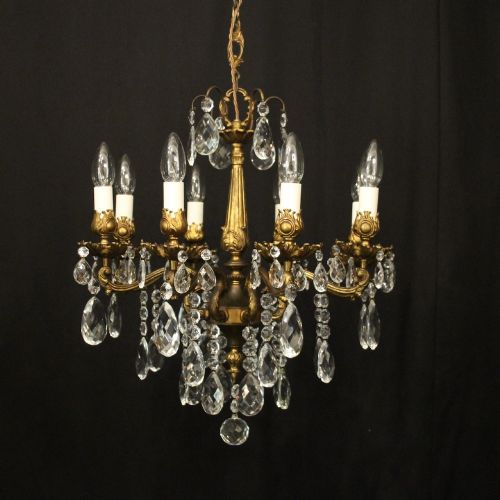
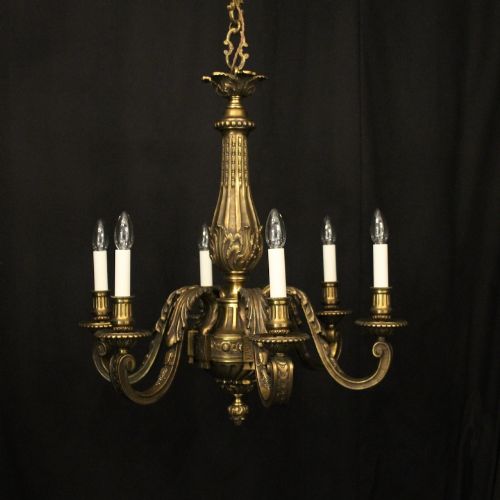
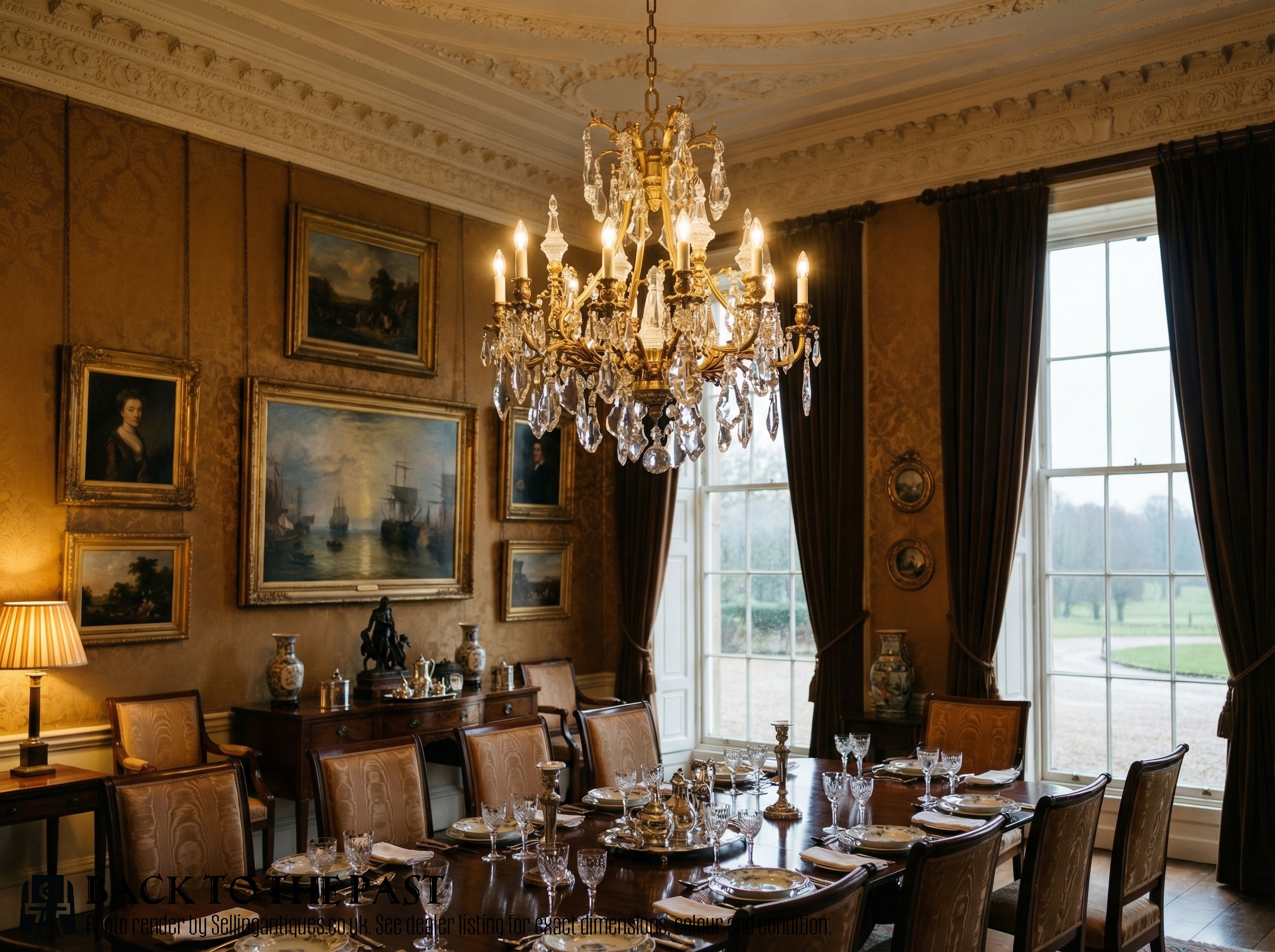
The selection ranges from single-arm wall sconces and small hanging lanterns to massive multi-tier chandeliers holding over twenty lights. French Rococo revival and Neoclassical designs dominate the form, often drawing direct inspiration from palace interiors.
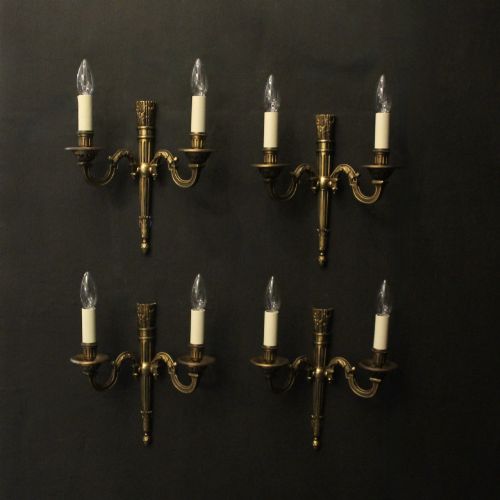
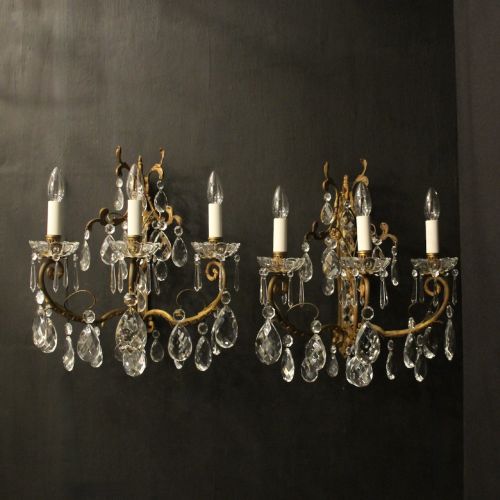
Hanging lanterns and chandeliers form the core of the available types, alongside twin-arm wall lights designed for symmetrical placement. These pieces combine structural metalwork with suspended crystal elements to catch and refract illumination.
Materials and construction
Craftsmen cast bronze, ormolu, and brass into intricate frames, applying gold gilding to the metal surfaces to create a luminous finish. Many examples incorporate cut crystal drops, beads, and waterfalls that hang directly from the main metallic structure.
Workers assembled these fixtures using mechanical joints and pins to secure arms, branches, and glass components to the central frame. Wiring and electrical fittings were frequently added or updated later to accommodate modern power while retaining the historic metal bodies.
Retail Price Guide 2026
Typical UK retail prices for gilded bronze light, calculated from the Sellingantiques database of over a million retail prices indexed since 2003. This retail price guide relies exclusively on Sellingantiques data; no external sources or auction records are used, so the figures do not describe the wider market.
Object forms include single-arm and twin-arm wall sconces alongside multi-light chandeliers holding up to twenty-one bulbs.
Assessing quality in metal and glass
Quality rests in the crispness of the bronze casting and the depth of the gilding applied to the surface. Finer examples display sharp relief work on acanthus leaves and scrolls, whereas lesser pieces show softer contours and worn finishes.
The inclusion and clarity of cut crystal elements elevate a fixture, with machine-cut or hand-cut glass prisms reflecting light more cleanly than pressed glass alternatives. The structural integrity of multi-tiered frames and the weight of the cast bronze components also indicate the original workshop standards.
The Gilded Bronze Light Glossary
- Ormolu
- Gilded bronze produced by applying a gold-mercury amalgam to a bronze base and heating it. This technique creates a rich, durable golden surface characteristic of fine antique metalwork.
- Chandelier
- A branched decorative ceiling light designed to hold multiple bulbs or candles. These fixtures often feature elaborate tiers of metal arms and hanging crystals.
- Sconce
- A wall-mounted lighting fixture secured directly to vertical surfaces. Twin-arm versions appear frequently in pairs or sets along period interiors.
- Cut crystal
- Glass that has been faceted by grinding and polishing to enhance light refraction. It hangs in drops and cascades from superior chandeliers and lanterns.
- Rococo revival
- A nineteenth century style emulating eighteenth century asymmetric scrollwork, shell motifs, and natural curves. It defines the ornamentation on many wall lights and lanterns.
Frequently Asked Questions
What is a gilded bronze light?
A gilded bronze light is an antique fixture made from cast bronze treated with gold leaf or ormolu, often paired with cut crystal. These pieces include chandeliers, wall sconces, and hall lanterns dating from the nineteenth and early twentieth centuries.
Most examples reflect French design styles such as Rococo and Neoclassical aesthetics. They function as both functional illumination and decorative architectural metalwork.
How do I hang a heavy chandelier?
Hanging a heavy bronze and crystal fixture requires securing the weight directly to ceiling joists using rated structural hooks. Professional installation is essential due to the combined mass of cast metal and glass components.
Electrical wiring must also be evaluated to ensure it supports the total wattage of multi-bulb frames safely. Many antique fixtures arrive rewired for modern installation standards.
Are these lights rewired for use?
Many antique chandeliers and wall sconces are rewired to meet current electrical installation standards while preserving the historic exterior. This preparation allows them to be mounted and connected safely in contemporary homes.
Buyers should inspect the internal wiring status of each specific fixture before installation. Rewired options save time and ensure compatibility with standard electrical boxes.
How do I clean gilded bronze?
Cleaning gilded bronze requires gentle dusting with a soft brush to prevent damage to the delicate gold surface. Moisture and harsh chemical cleaners should be avoided to protect the historic metal finish.
Crystal elements can be carefully wiped down with a mild solution while detached from the frame. Regular maintenance preserves the lustre of both the metalwork and the hanging glass.
What rooms suit wall lights?
Twin-arm wall lights suit hallways, dining rooms, and drawing rooms where symmetrical accent lighting is desired. They function effectively on either side of mirrors, fireplaces, or architectural archways.
Pairing multiple wall sconces creates balanced ambient illumination along longer walls. Their compact projection makes them practical for spaces with limited floor area.