


Bronze Hall Lantern
A bronze hall lantern commands an entryway with enduring presence, casting a warm light through glass panels.

The Form of the Bronze Hall Lantern
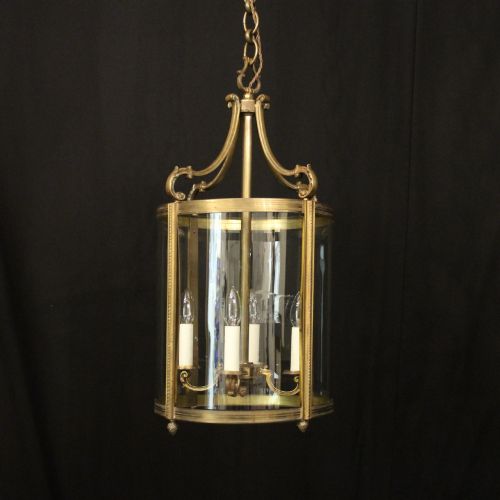
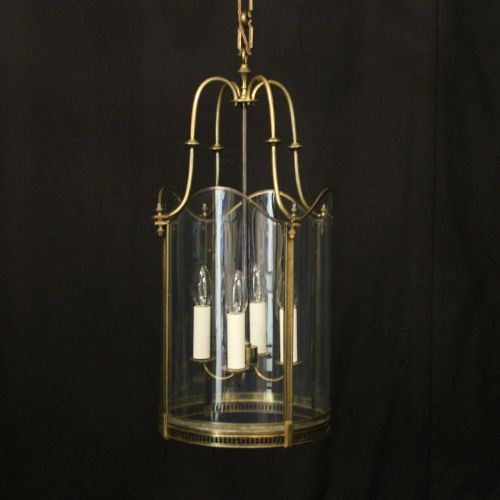
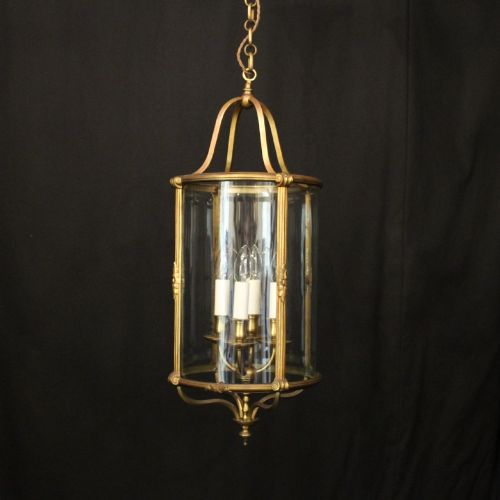
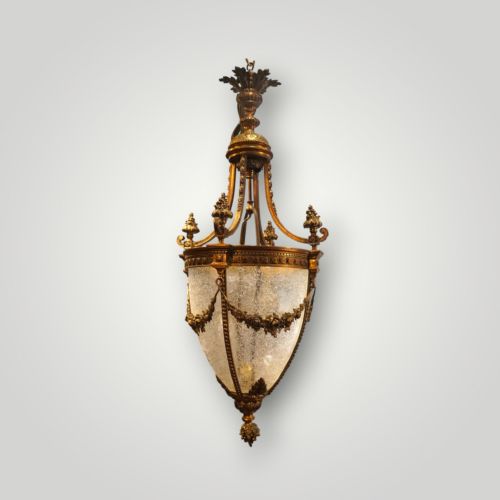
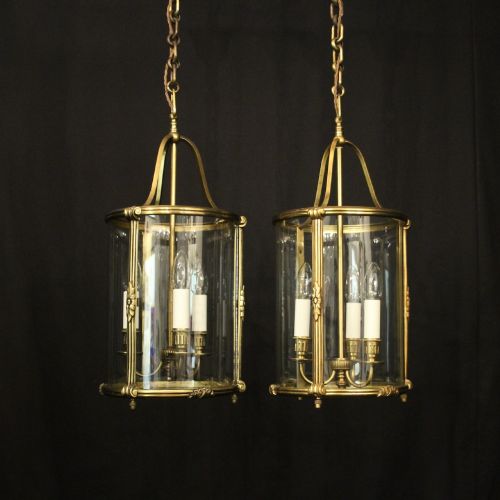
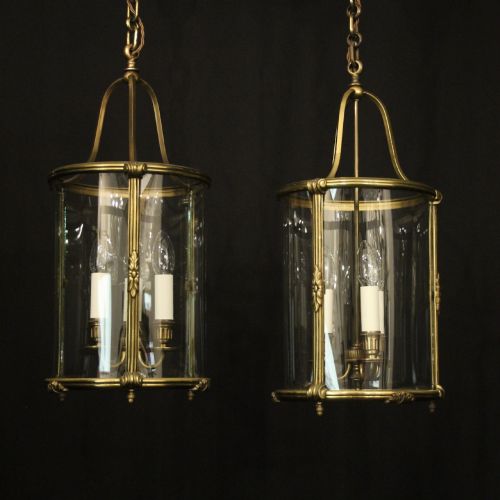
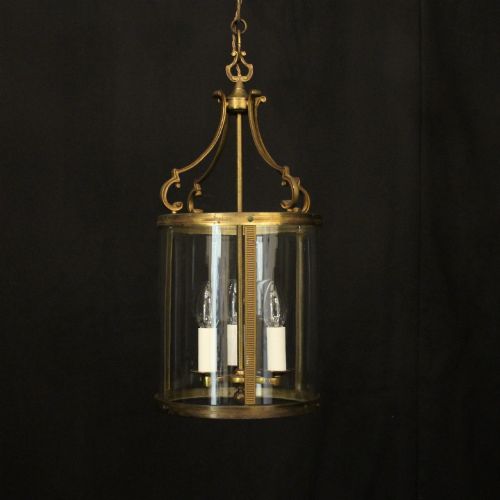
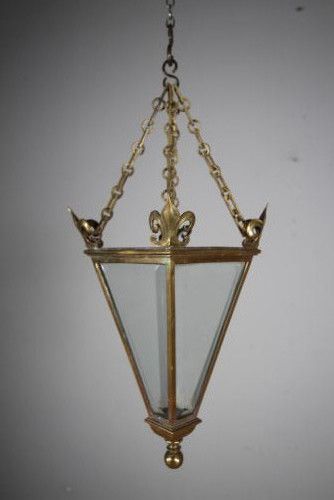
A bronze hall lantern serves as a principal overhead light source for corridors, stairwells and entrance passages. These pieces combine metal framework with transparent or translucent panels to enclose an internal light fitting.
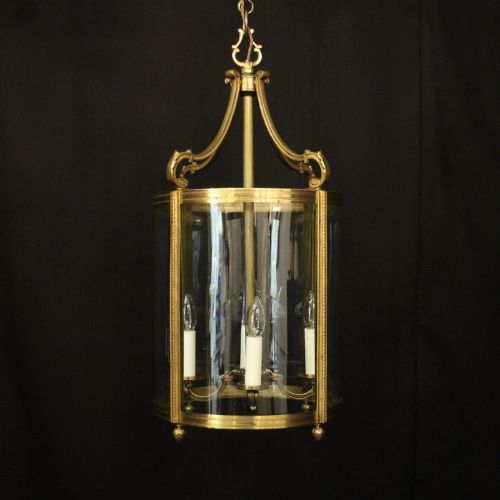
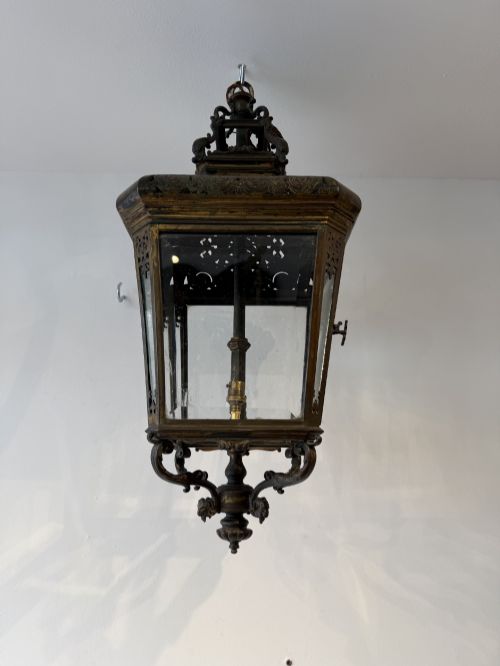
The bronze hall lantern varieties found here span the late nineteenth century through to the Edwardian period. English examples sit alongside French designs, displaying styles from French Rococo and Victorian and Gothic to French Chateau and Edwardian.
Most items appear as single pendants or ceiling lights, with French triple and twin light configurations frequently occurring. Buyers encounter cylindrical shapes, circular profiles and convex glass formats.
Materials and Construction
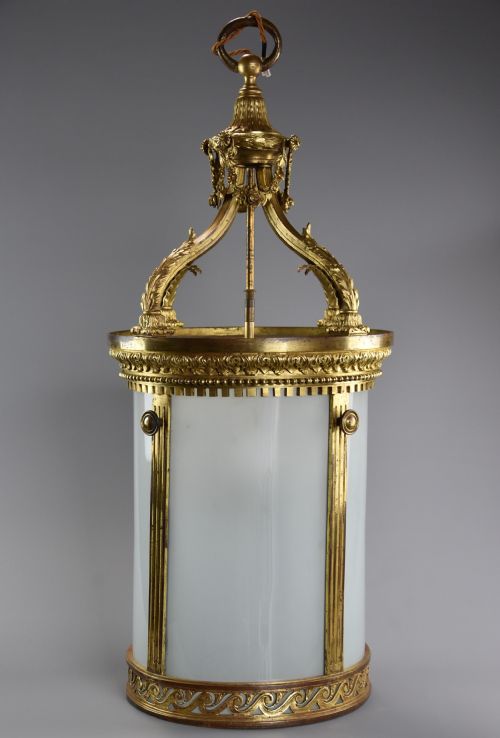
The primary structural frame relies on cast or worked bronze, often accompanied by brass elements and gilded surface treatments. Metalwork ranges from dark patinated finishes to bright gilt applications.
Panels incorporate clear glass or frosted glass, held securely within the metal armature. Certain Victorian iterations integrate stained glass within the design.
Retail Price Guide 2026
Typical UK retail prices for bronze hall lantern, calculated from the Sellingantiques database of over a million retail prices indexed since 2003. This retail price guide relies exclusively on Sellingantiques data; no external sources or auction records are used, so the figures do not describe the wider market.
Listings feature pieces from the Edwardian era alongside items dated eighteen ninety, nineteen hundred, and nineteen twenty.
Distinctions in Execution
Quality rests upon the crispness of the bronze casting and the depth of the chased ornamentation. Superior examples display refined detail in the metal mounts and structural framing.
The scale of the piece and the complexity of the internal light configuration dictate distinction. Multi-light arrangements and curved convex glass demand greater technical skill during manufacture.
Faraday and Son
The Bronze Hall Lantern Glossary
- Bronze
- An alloy consisting primarily of copper, traditionally used for durable and decorative metalware frames. This material takes patination and gilding exceptionally well.
- Frosted glass
- Glass treated to diffuse light, reducing glare while maintaining luminosity within a hallway. It creates a softer glow than standard clear panes.
- Ormolu
- Finely ground high-carat gold applied to a bronze object using mercury amalgam. This technique provides a rich, durable golden surface.
- Pendant lighting
- Light fixtures suspended from the ceiling by a chain, rod or cord. Hall lanterns utilise this method to position illumination correctly in vertical spaces.
Frequently Asked Questions
How do I hang a hall lantern?
These fixtures suspend from ceilings via chains or matching metal rods secured to structural joists. Professional electricians should handle the hanging and weight bearing requirements.
Ensure the lantern hangs at a height that clears household traffic while adequately lighting the entryway space.
Are these lanterns rewired?
Many historical pieces arrive with updated modern wiring to meet current safety standards. Rewiring preserves the original metal body while ensuring domestic electrical compatibility.
Buyers should inspect the specific listing details regarding the current state of internal electrical components.
What periods do these lanterns represent?
The available selection spans late nineteenth century Victorian and Edwardian eras, alongside pieces dated around nineteen hundred and nineteen twenty.
French and English workshops produced these designs, incorporating regional aesthetic traditions from Gothic revivals to Rococo curves.
How do I clean bronze and glass?
Dust the metal framework gently with a soft dry cloth, avoiding abrasive cleaners that damage patination or gilt surfaces. Glass panels respond well to standard glass cleaner applied sparingly.
Take care to protect surrounding metalwork when wiping the transparent or frosted glass sections.