
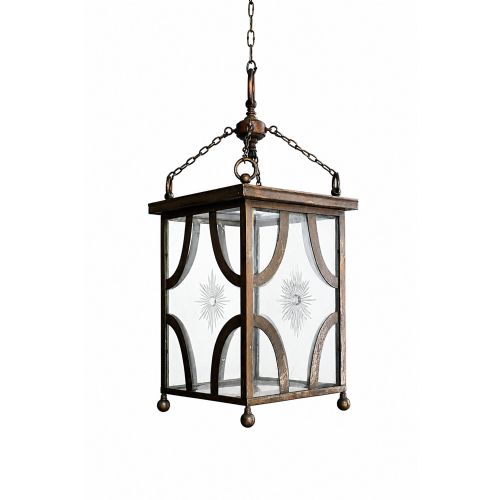
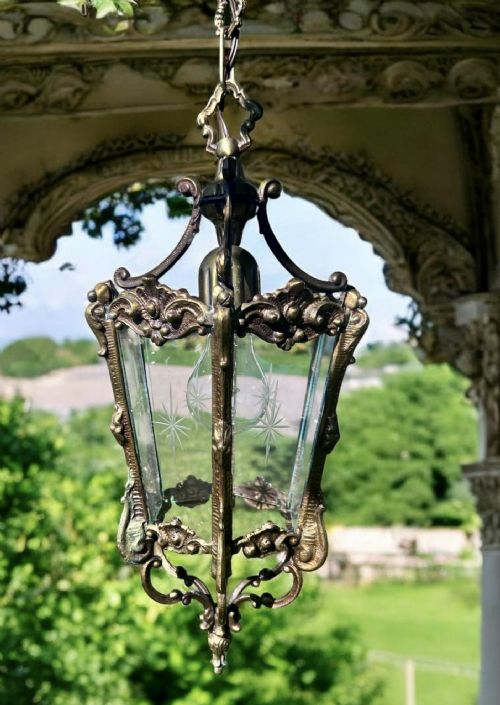
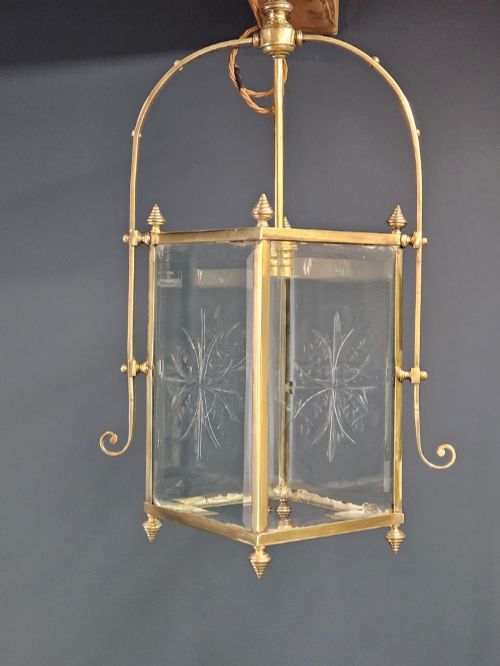


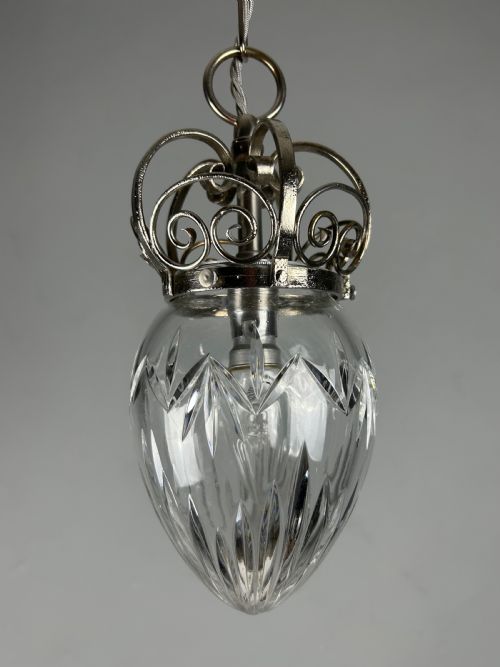


Cut Glass Lantern
A cut glass lantern catches the light in a hallway and brings genuine period character to an entrance.
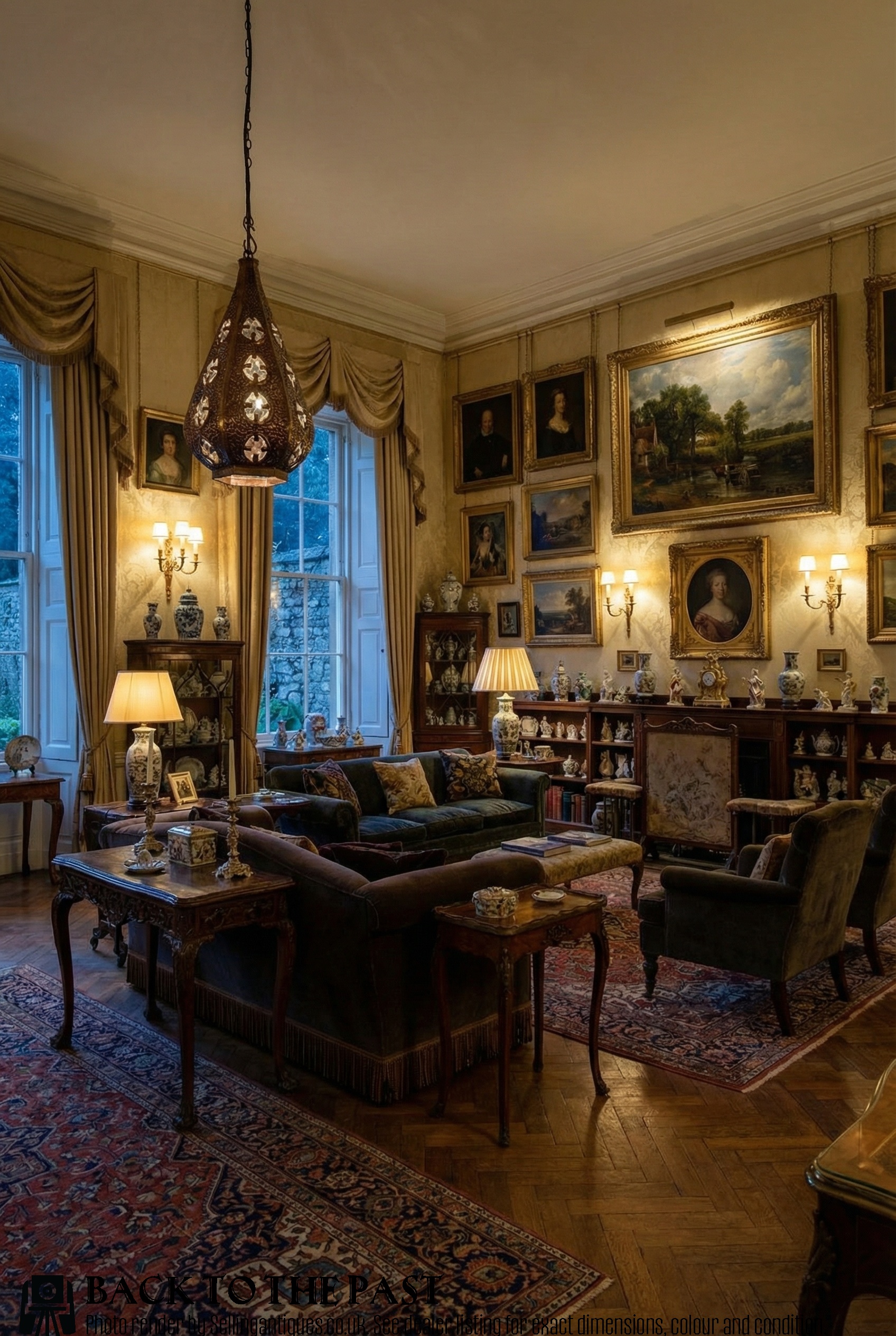
What a cut glass lantern is
A cut glass lantern is a suspended lighting fixture designed for hallways, porches and high-ceilinged rooms, relying on faceted panels to refract light across the walls. When you search for a cut glass lantern, you find pieces originating from the Edwardian era through to the 1930s, alongside French designs spanning the same decades.
The most common examples on this page are French and Edwardian pendant lights featuring metal frames fitted with cut, etched or moulded glass panels. These fixtures function primarily as ceiling lights and hanging lanterns, often configured to hold a single internal bulb or multiple lights.
Many of these lanterns draw on classical aesthetic traditions, including French Neoclassical, French Chateau, and Louis XVI styles, while others lean towards Moroccan Revival. You encounter both single pieces and matched pairs, suitable for hanging in a vestibule or above a stairwell.
Materials and construction
The structural framework of these lanterns relies on metals such as brass, copper, bronze, gilt bronze and silver plate. These metals form the structural cage, suspension chains and decorative mounts that secure the glass panels in place.
The glazing consists of heavy glass panels that are cut, etched, frosted or moulded to create texture and pattern. These panels enclose the light source, diffusing the illumination while the faceted cuts create bright geometric reflections.
Retail Price Guide 2026
Typical UK retail prices for cut glass lantern, calculated from the Sellingantiques database of over a million retail prices indexed since 2003. This retail price guide relies exclusively on Sellingantiques data; no external sources or auction records are used, so the figures do not describe the wider market.
Listings for this phrase include pieces from the Edwardian period, 1900, 1910, 1920, and 1930, utilising brass, bronze, copper, and silver plate.
Distinguishing quality in these lanterns
Quality in a cut glass lantern reveals itself in the weight and depth of the glass cutting, where sharper facets produce a cleaner refraction of light. The metalwork also dictates the tier of the piece, with finely cast bronze or heavy brass mounts showing greater hand-finishing than simpler folded sheet metal.
Proportion and scale separate standard hall fixtures from grander architectural examples, particularly in matched pairs and larger multi-light configurations. The integration of structural decorative details, such as cast brass bezels or detailed metal galleries, indicates a higher standard of manufacture.
The Cut Glass Lantern Glossary
- Cut glass
- Glass that is decorated by grinding and polishing facets onto the surface. This technique produces sharp edges that catch and disperse light.
- Moulded glass
- Glass formed in a mould to create raised patterns or three-dimensional shapes. It offers a softer texture than hand-cut facets.
- Gilt bronze
- Bronze metal treated with a thin layer of gold or gold-coloured finish. It provides a rich, warm metallic tone often seen on French neoclassical frames.
- Frosted glass
- Glass treated to appear opaque or semi-translucent, softening the glare of the internal lamp. It diffuses light evenly across the room.
- Pendant light
- A light fixture suspended from the ceiling by a cord, chain or metal rod. These fixtures hang downward to illuminate specific zones.
Frequently Asked Questions
Where should I hang a cut glass lantern?
These lanterns suit entrance halls, vestibules and high-ceilinged landings where they can act as a central focal point. Their reflective panels work effectively in narrow spaces by bouncing light off surrounding walls.
Ensure you measure the drop from the ceiling to allow sufficient clearance beneath the fixture. Porch installations require covered outdoor areas to protect the vintage metal and electrical components from direct weather exposure.
How do I clean the glass panels?
Remove dust gently using a soft, dry cloth or a feather duster before applying any liquid cleaner. For deeper cleaning, lift the panels out if the frame allows, or wipe them carefully in place with a mild glass cleaning solution.
Avoid getting moisture onto vintage metal mounts, particularly gilt bronze or silver plate, as harsh chemicals can damage the aged surface. Dry each panel thoroughly to restore the sparkle of the cut facets.
Are these lanterns wired for modern use?
Many vintage and antique light fixtures are updated with modern wiring, often featuring flexible cords and standard safety testing. It is prudent to check the specific wiring details of any individual piece.
Consult a qualified electrician to install vintage lighting fixtures safely in your home. They can verify that the ceiling mount and electrical load meet current regulations.
How can I tell a French style lantern apart?
French lanterns frequently incorporate Neoclassical or Louis XVI motifs, such as decorative cast bronze mounts, urn finials and scrolling metalwork. These details reflect a more ornate design tradition compared to simpler Edwardian hall lights.
The use of gilt bronze and specific proportions also points towards continental workshops. Examining the construction of the metal frame often reveals the distinct manufacturing approach of French makers.