



English Brass Wall Lights
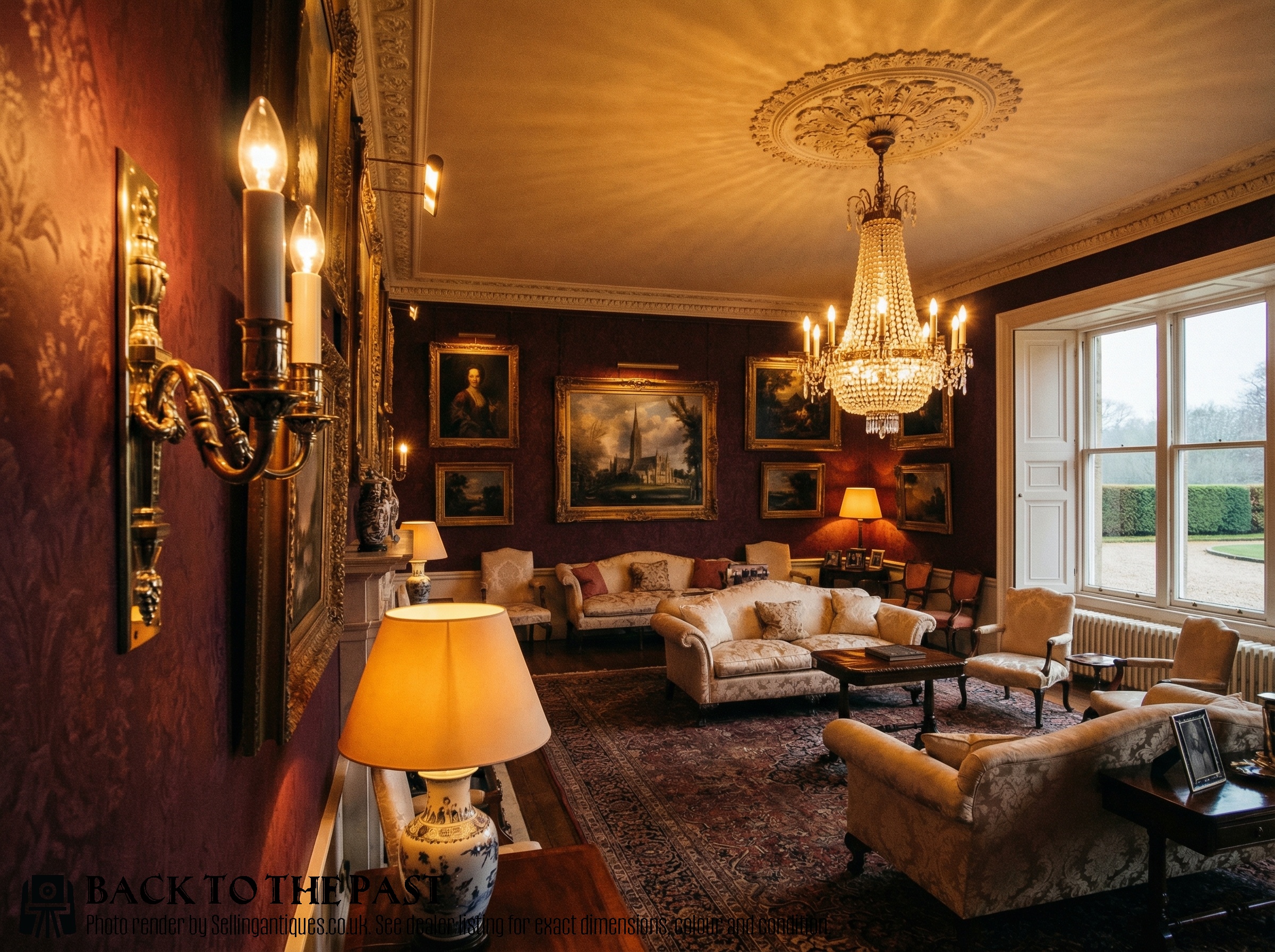
English brass wall lights bring period warmth to a room, offering practical illumination through substantial cast and spun metal forms.
English Brass Wall Lights
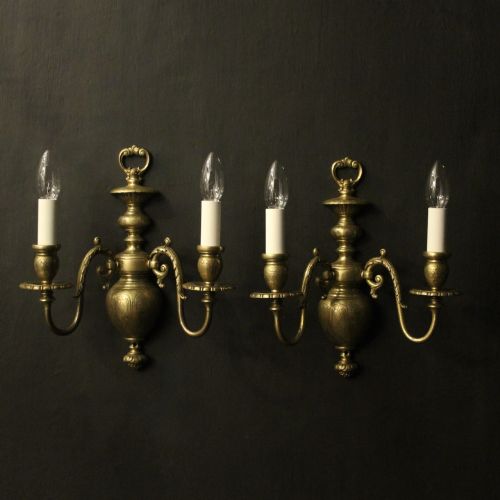
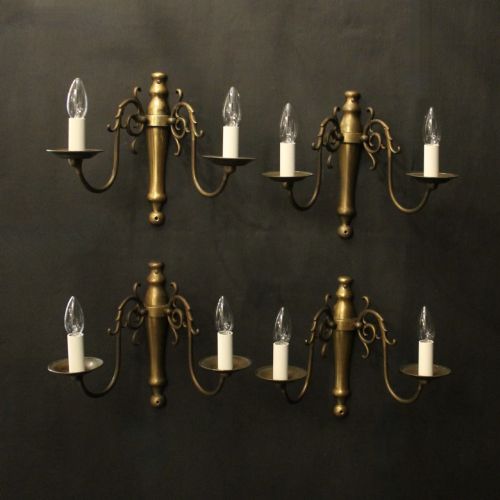
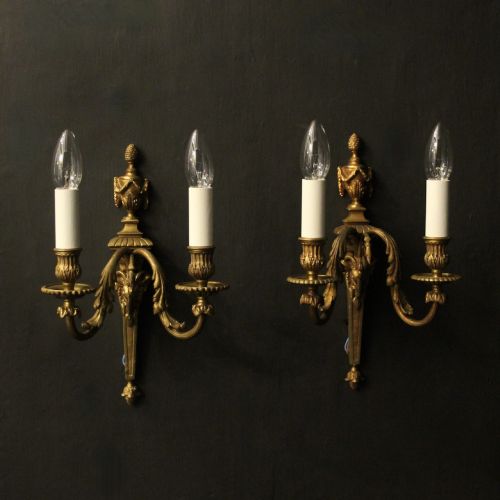
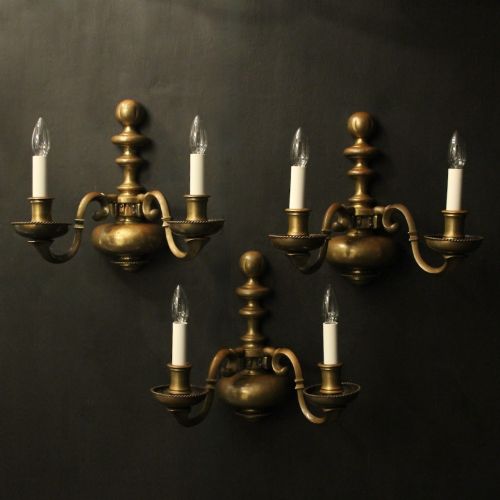
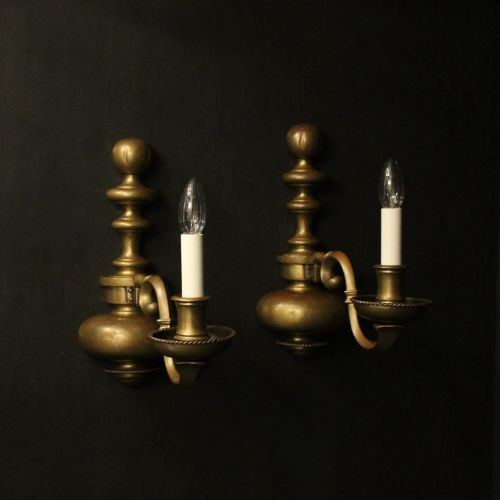
These English brass wall lights comprise single, twin, and triple arm fixtures designed to mount directly onto domestic walls. Buyers find numerous matched pairs and sets originating from the Victorian period through to the mid-twentieth century.
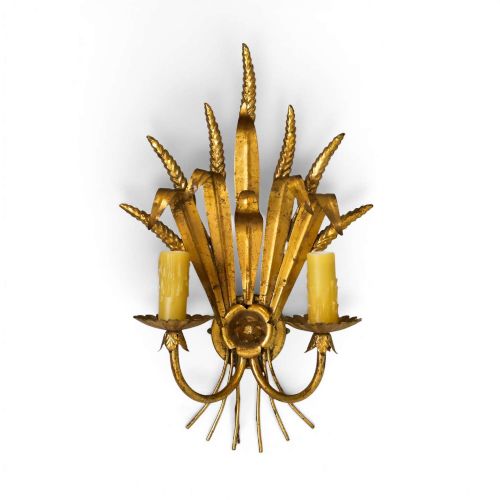
The selection includes specialised library lights, shield-backed designs, and gasolier adaptations fitted for modern electric circuits. Brass predominates as the primary medium, supported by related examples in bronze, gilt metal, and silvered brass.
Victorian and nineteenth-century specimens display heavier casting and ornate detailing, while pieces from the 1920s and 1930s introduce cleaner lines. Occasional variants incorporate cut crystal, glass shades, and velvet elements to soften the light output.
Materials and construction
Foundry work dominates the construction, utilising cast and spun brass components joined by threaded rods and screws. Heavier nineteenth-century pieces employ thick bronze and brass castings, whilst later twentieth-century iterations utilise lighter sheet and tubular metal arms.
Surface finishes range from polished and lacquered brass to bronzed treatments and delicate silvering. Many surviving examples incorporate electrical conversions, replacing original gas burners or candle sockets with wired fittings while retaining the structural metalwork.
English Brass Wall Lights Retail Price Guide 2026
Typical asking prices for english brass wall lights among the pieces listed under this phrase on Sellingantiques today, from the lower quarter to the upper quarter. They describe what is for sale here now, not the wider market.
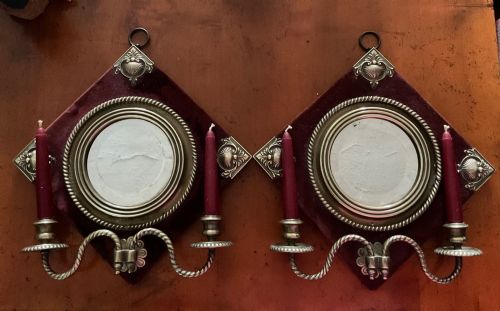
Library lights occasionally retain their original velvet backings, designed to protect wood paneling from brass friction.
Design and execution
The distinction between ordinary and superior pieces rests on the crispness of the metal casting and the integrity of the design. Heavier gauge brass and deeply chased ornamentation, such as lions heads or rams heads, indicate higher workshop standards.
Completeness of original components, including matched sets of arms and authentic shades, elevates a fixture. Finer examples retain balanced proportions across multi-arm configurations, whereas lesser items show simpler pressed joints and thinner gauge materials.
Farady And Son·Gec
The English Brass Wall Lights Glossary
- Gasolier
- A light fixture originally designed for gas lighting, frequently converted to electricity in later periods. These retain multi-arm branch formations.
- Girandole
- A decorative wall mirror fitted with candle sconces or light arms attached to the frame. The reflective glass multiplies the illumination.
- Sconce
- A wall-mounted bracket fixture designed to hold candles or electric lamps. The term appears interchangeably with wall light.
- Twin arm
- A bracket configuration featuring two distinct branching arms stemming from a single backplate. This layout maximises light distribution.
English Brass Wall Lights: Frequently Asked Questions
How do I wire antique wall lights safely?
Most antique metal wall fixtures require rewiring by a qualified electrician to meet current domestic standards. Professional rewiring ensures internal cables match modern insulation requirements without altering the exterior metalwork.
Original backplates often retain mounting points that align with standard conduit boxes. Electricians can thread modern flex through historical brass tubing while preserving the original switches and holders.
How do I clean historical brass lights?
Routine maintenance requires only a soft dry cloth to remove surface dust from the metal arms. Avoid abrasive commercial cleaners that strip patination and damage applied lacquers.
Heavily tarnished surfaces benefit from mild soapy water applied with a soft brush, followed by thorough drying. Preserving the natural aged tone maintains the character accrued over decades.
What period do these wall lights represent?
The available fixtures span from the nineteenth century through the early and mid-twentieth century. Victorian examples exhibit heavy casting and elaborate motifs, while 1920s and 1930s pieces reflect simpler geometric trends.
Mid-century modern specimens introduce streamlined gilt metal construction. This broad chronological range allows interiors to match specific architectural eras.