


Set of Four Wall Lights
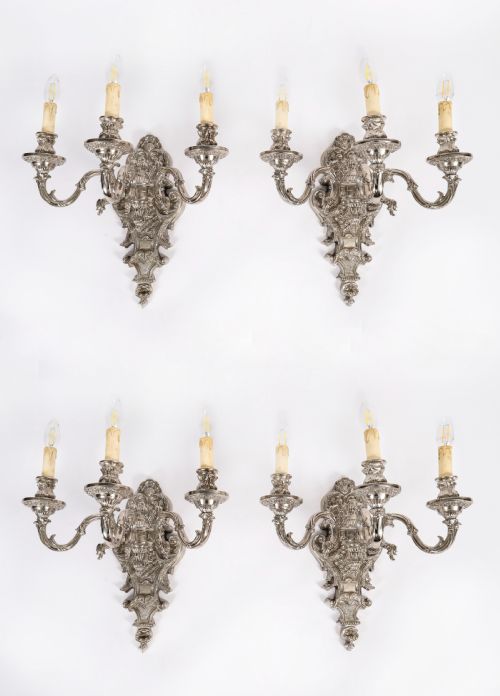
A set of four wall lights brings symmetrical balance to a room, offering matched illumination across architectural expanses from French châteaux to English townhouses.
Set of Four Wall Lights
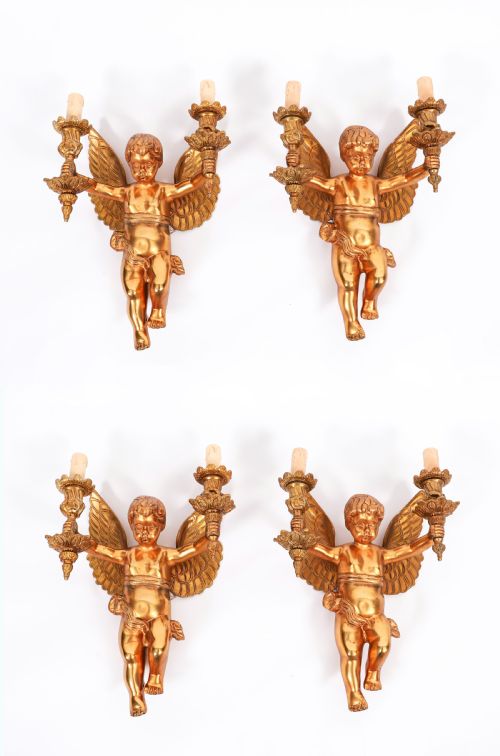
A set of four wall lights provides a coordinated scheme of bracketed illumination for larger rooms, hallways or galleries. When you search for a set of four wall lights, you meet matched groupings designed to distribute light evenly across a pair of walls or flanking a central architectural feature.
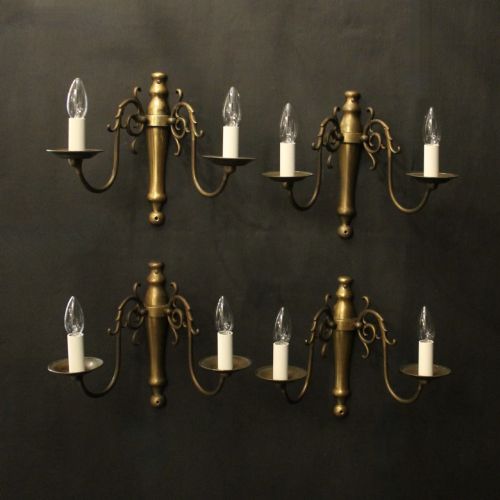
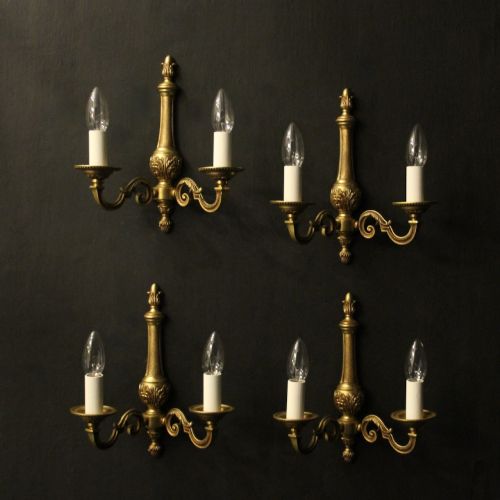
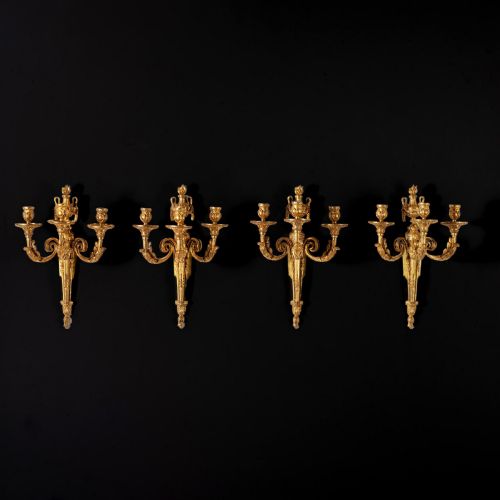
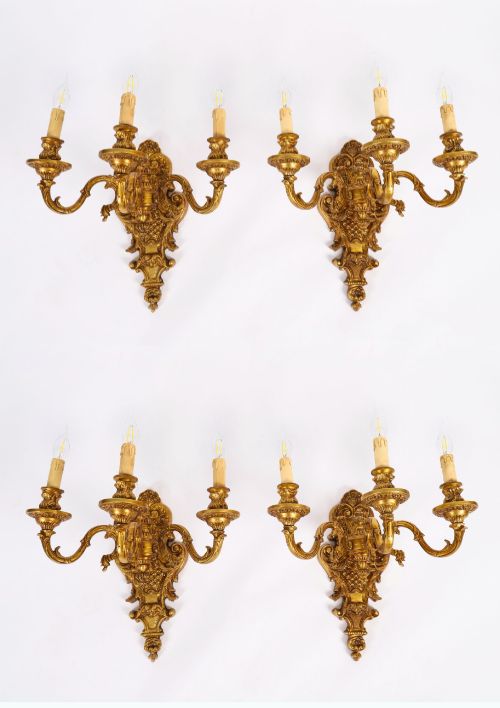
The pieces on this page span several centuries and styles, originating predominantly from French and English workshops. They take the form of wall sconces, appliques and light fittings, configured with single, twin, three or six branches.
You encounter forms ranging from traditional English brass and Adam style sconces to ornate French Rococo, Louis XV, and geometric Art Deco designs. Materials include brass, gilt bronze, ormolu, silver plate and glass.
How They Were Made
Metalworking forms the basis of these fixtures, utilising cast and chased brass, gilt bronze, ormolu, copper and silver plate. Founders shaped molten metals into elaborate backplates, scrolling arms, and figural motifs such as cherubs, leaves and acorns.
Gilding techniques, including fire gilding for ormolu and applied leaf, provide surfaces that catch and reflect candlelight or electric illumination. Glass elements, such as crystal drops and moulded shades, complement the metalwork in Art Deco and crystal-adorned pieces.
Listings demonstrate a strong representation of 20th-century production, spanning 1920s Art Deco designs, early 19th-century ormolu, and 18th-century Louis XV pieces.
What Varies in Quality
The choice of base metal and the depth of the gilding or silver plating dictate the richness of the finished object. High quality is evident in substantial weight, harmonious proportions across all four matched components, and integrated rather than superficial decorative detailing.
Faraday and Sons
The Set of Four Wall Lights Glossary
- Ormolu
- Gilded bronze produced by applying a mercury and gold amalgam to a bronze casting and heating it. This technique creates a durable, golden finish characteristic of fine 18th and 19th-century French lighting.
- Applique
- A wall-mounted light fitting fixed directly to the vertical surface. The term is frequently used interchangeably with wall sconce.
- Adam style
- A neoclassical design language popular in the late 18th century, drawing on ancient Roman motifs. It utilises symmetrical arrangements, urns, swags, and husks.
- Rococo
- An exuberant artistic style marked by asymmetrical C-scrolls, shell motifs, and naturalistic curves. It dominates mid-18th-century design and saw numerous revivals.
- Bag wall lights
- Sconces featuring a basket or bag shaped framework hung with numerous glass or crystal drops. They diffuse light through the suspended glass elements.
Set of Four Wall Lights: Frequently Asked Questions
Where should a set of four wall lights be placed?
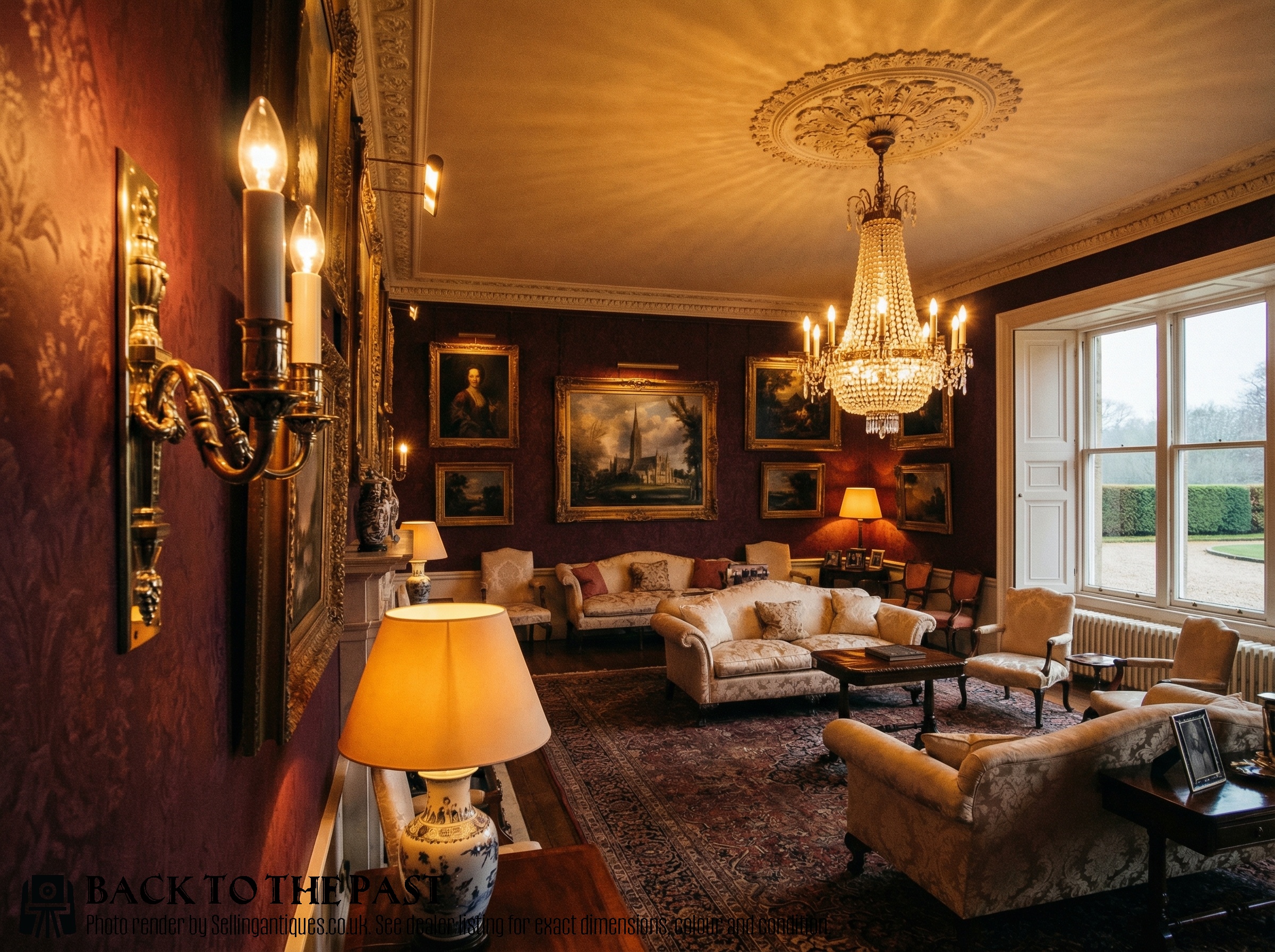
Four matched lights are ideal for dividing a long wall into balanced segments, or for placing two on opposing walls to create symmetrical harmony in a principal reception room or dining space.
They also work effectively when positioned to flank a large mirror, fireplace, or architectural doorway, ensuring even illumination across the perimeter of the interior.
How do I date a set of wall lights?
Dating relies on identifying stylistic markers, such as the symmetrical restraint of Adam neoclassical pieces versus the exuberant curves of Rococo or the geometric linearity of Art Deco. Manufacturing methods, including the transition from gas fittings to electricity and the quality of metal casting, offer further chronological clues.
Examining the backplates, screw types, and wiring channels helps distinguish 18th-century originals from 19th-century revivals and 20th-century reproductions.
Were these originally wired for electricity?
Many surviving sets from the 18th and 19th centuries were originally manufactured for candles or gas before being converted for modern electrical use. Descriptions often note whether pieces have been rewired to meet current safety standards.
Art Deco and later 20th-century fixtures were typically designed for electricity from creation, often incorporating glass shades or specialised bulb holders.
How do French and English styles differ?
French wall lights from periods like Louis XV and the Rococo revival tend to favor ornate, highly decorative bronze and ormolu castings featuring cherubs, scrolling foliage, and gilt finishes. They prioritize sculptural presence and theatrical visual weight.
English designs, particularly in brass and the Adam style, frequently emphasise architectural symmetry, restrained classical proportions, and disciplined geometric or urn-based motifs.