

Vintage Brass Light Fitting
A vintage brass light fitting brings warmth and period character to a room through heavy cast metal and glass.
Vintage Brass Light Fitting
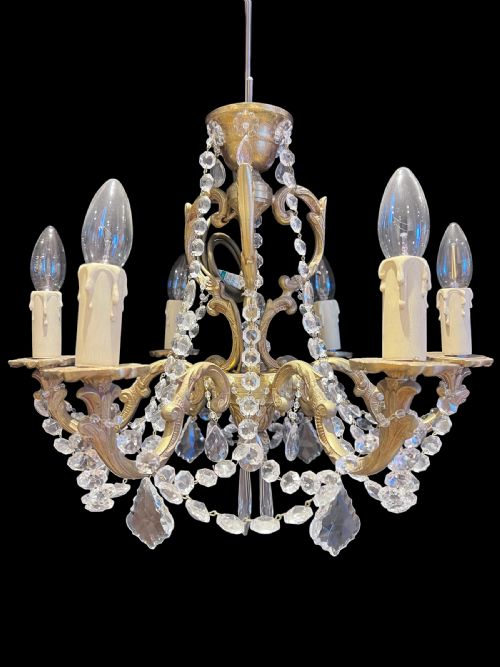
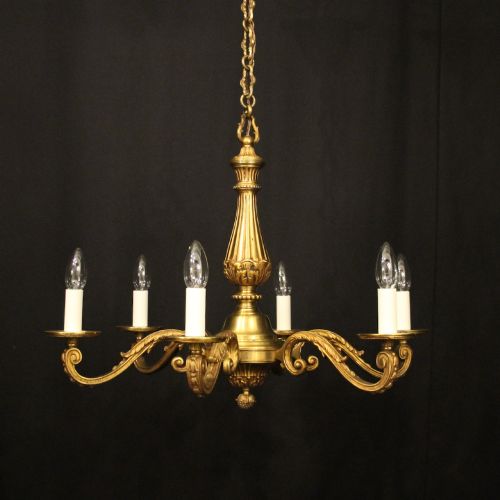
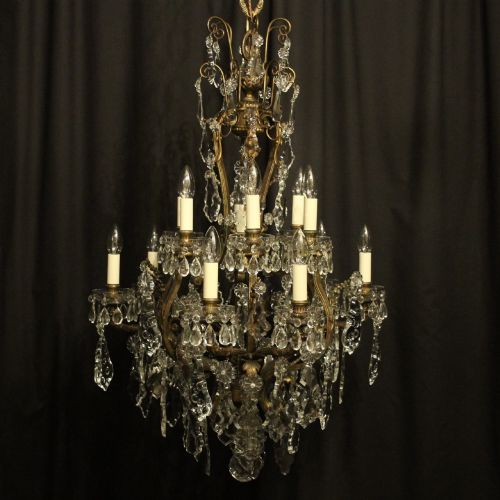
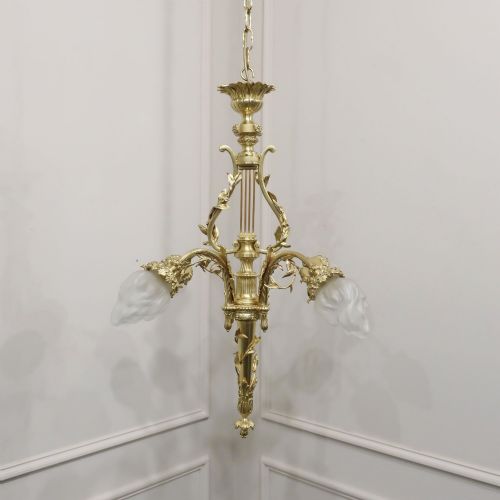
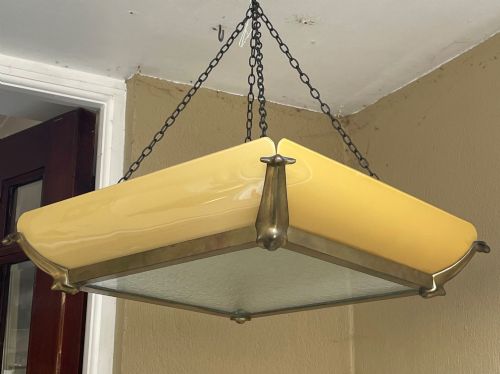
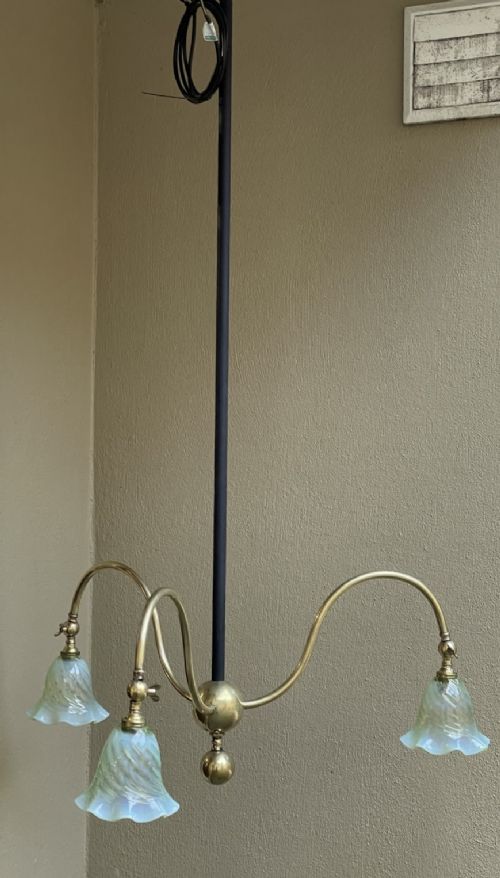
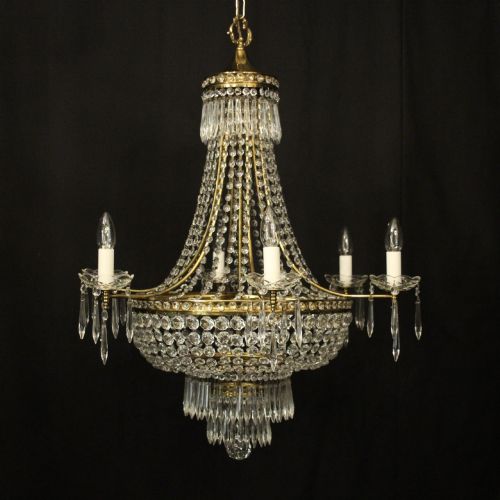
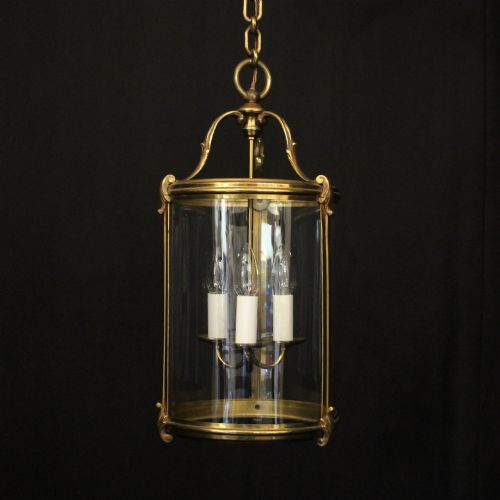
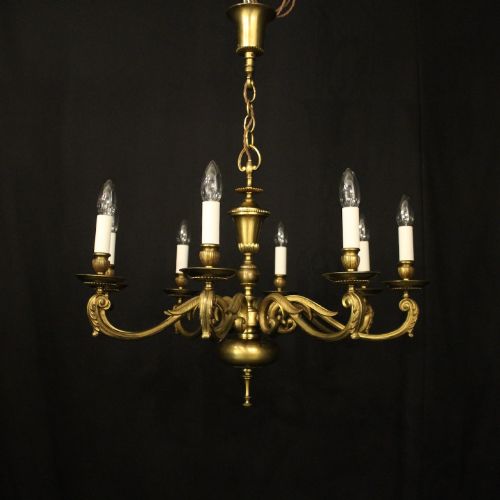
A vintage brass light fitting encompasses a broad selection of ceiling lights, chandeliers, wall lights and pendant lamps drawn from the Victorian era up through the Art Deco period. These fixtures range from elaborate French gilded bronze chandeliers hung with crystal drops to utilitarian industrial ceiling lights and simple Edwardian brass brackets.
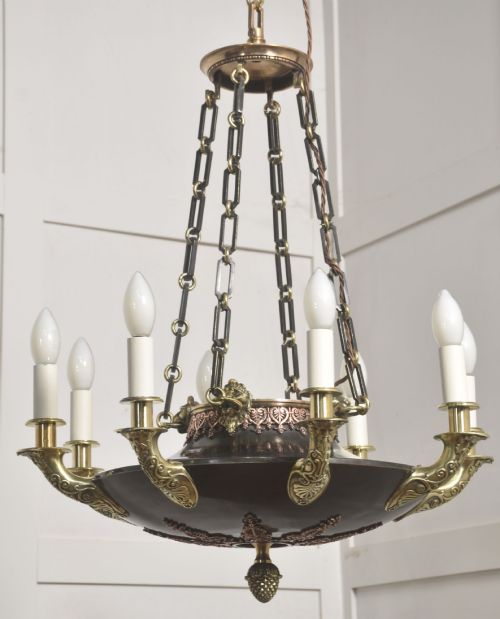
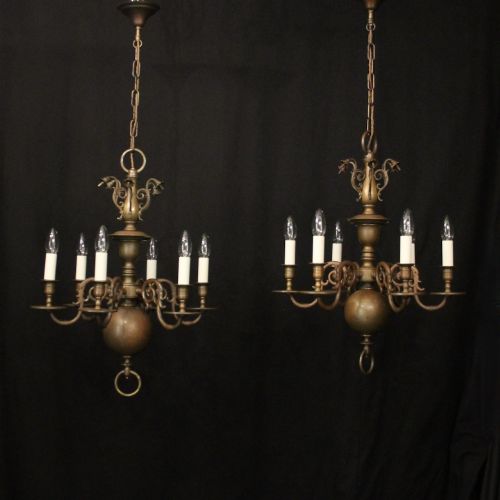
The pieces appearing most frequently on this page originate from the early twentieth century and the 1920s, with a strong representation of French chateau and Empire styles. Buyers encounter multi-arm chandeliers, hall lanterns and flush-mounted plafonieres constructed primarily to illuminate principal rooms and hallways.
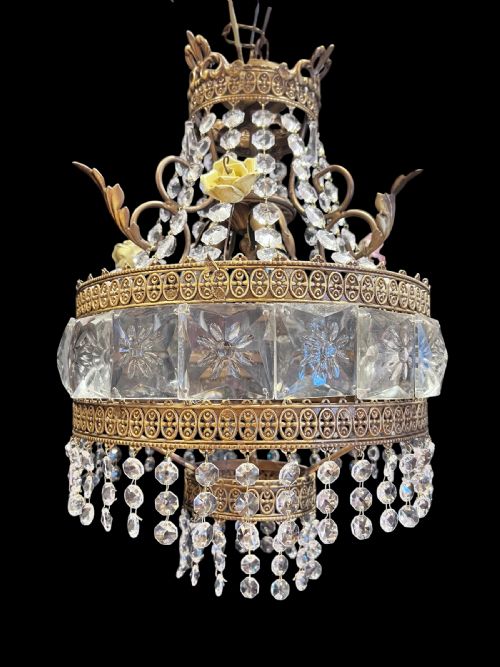
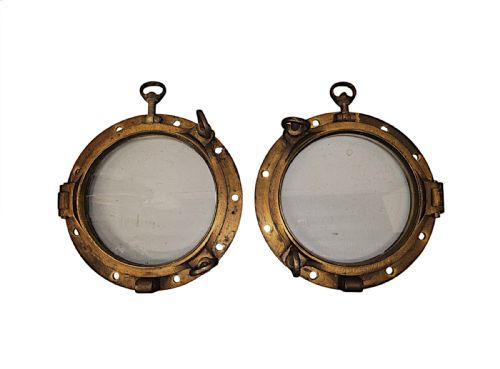
Alongside grand reception pieces, the selection includes specialised items such as brass port holes, ceramic-adorned tôleware fixtures and bronze table lamps. Each object reflects the prevailing interior design tastes of its decade, spanning neoclassical revivalism to early industrial utility.
Materials and construction methods
Makers utilised brass, bronze and gilt metal as the primary structural foundations for these fittings, often casting the metal in multiple sections before hand-finishing and assembling the components. Gilded bronze and plated brass surfaces provided a durable, decorative sheen designed to catch and reflect candlelight or early electric illumination.
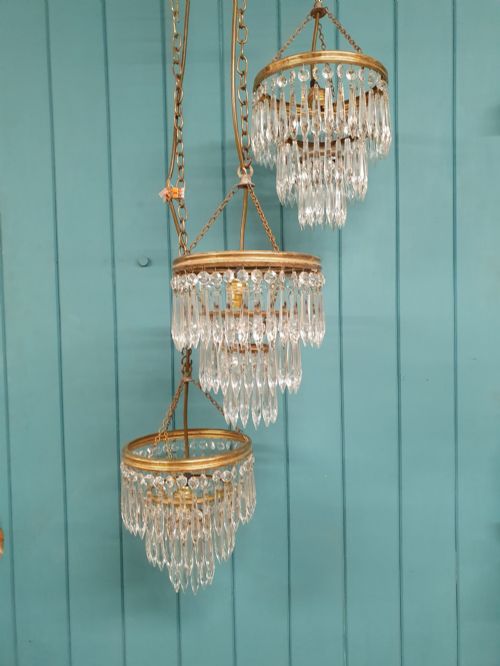
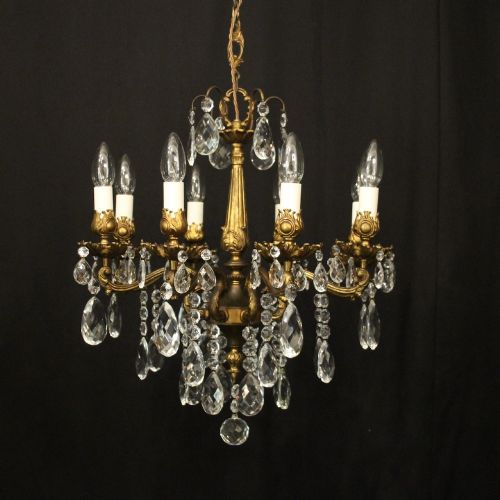
Crystal and cut glass elements were integrated extensively into chandeliers and wall lights, held in place by delicate brass wire loops or pins to create tent and waterfall configurations. Porcelains, ceramics and tôleware components were incorporated into specific models to introduce coloured floral motifs and contrasting textures.
One exceptional listing repurposed heavy brass marine port holes into striking interior architectural fixtures.
Factors that distinguish the work
The calibre of a fitting is defined by the crispness of its metal casting and the depth of its original gilding or patina. Heavy cast brass and bronze components retain sharper botanical or neoclassical details than thin pressed sheet metal alternatives.
The integration of high-grade cut glass or crystal drops elevates an assemblage, distinguishing standard commercial production from ambitious decorative commissions. Superior fittings display careful balance across every arm and branch, ensuring the fixture hangs level and presents a cohesive profile from all angles.
The Vintage Brass Light Fitting Glossary
- Plafoniere
- A ceiling-mounted light fitting designed to sit flush or very close to the plaster surface. These fixtures often feature moulded glass bowls held within brass or gilt metal mounts.
- Tent and waterfall
- A chandelier configuration where strings of small crystal beads form an upper conical tent shape, falling downwards over a central ring into a cascading skirt of larger drops.
- Gilt bronze
- An alloy of copper and tin treated with a gold leaf or mercury gilt finish to produce a lustrous metallic appearance. This material resists tarnishing while offering a rich surface texture.
- Tôleware
- Painted or enamelled sheet metal used to form decorative leaves, flowers and shades on mid-period lighting. It allowed makers to introduce bright colours and organic shapes into metalwork.
- Port hole
- A heavy brass marine-style frame fitted with thick glass, adapted for interior architectural use. These robust items provide a distinctive industrial porthole silhouette.
Vintage Brass Light Fitting: Frequently Asked Questions
How do I hang a heavy brass chandelier safely?
Suspension requires locating a substantial ceiling joist or installing a dedicated steel joist brace to bear the combined weight of cast metal and crystal. A professional electrician must tie the fitting's internal wiring safely into the building's mains supply.
Heavier multi-arm pieces demand steel chain links matched to the fitting's exact weight rating rather than decorative brass wire alone. Securing the canopy properly ensures the fixture remains stable during daily use.
Can these vintage fittings take modern LED bulbs?
Most vintage fittings accept modern LED lamps provided the bulb base matches the historic lamp holder size. Standard Edison screw or bayonet cap adapters allow contemporary low-energy bulbs to fit older sockets.
Care should be taken to select low-wattage warm white LEDs that replicate the soft glow of historic illumination without generating excess heat. Dimmer compatibility depends entirely on the simplicity of the internal wiring circuits.
How should I clean antique brass and crystal?
Dust crystal drops regularly using a soft feather duster or microfiber cloth while the chandelier remains suspended. Avoid harsh commercial brass cleaners that strip away historic patination and fine gilt surfaces.
Water and mild soap applied sparingly with a soft cloth will remove surface grime from metal arms without harming the finish. Crystal prisms can be washed individually in warm soapy water if removed carefully from their pins.
What is the difference between Edwardian and Art Deco lights?
Edwardian light fittings favour traditional neoclassical motifs, heavily influenced by French styles with elaborate castings, crystal drops and ornate botanical details. These pieces project formal elegance suited to high-ceilinged period properties.
Art Deco lighting embraces streamlined geometry, clean lines and simpler geometric silhouettes that reflect modern industrial production of the 1930s. The focus shifts towards frosted glass shades and minimalist metal frames.