

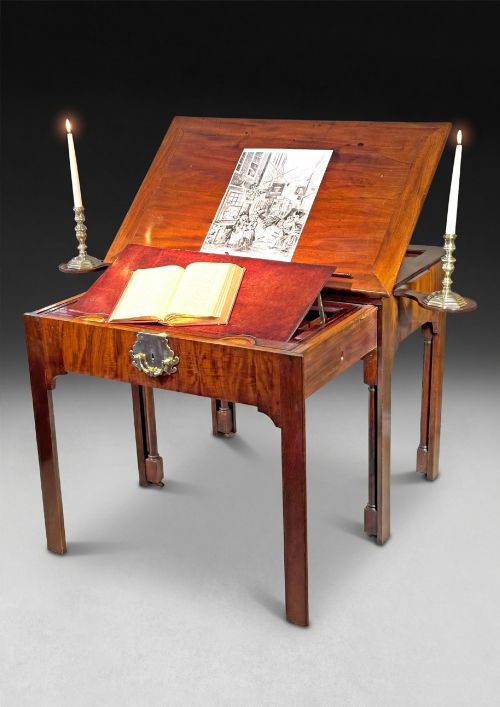
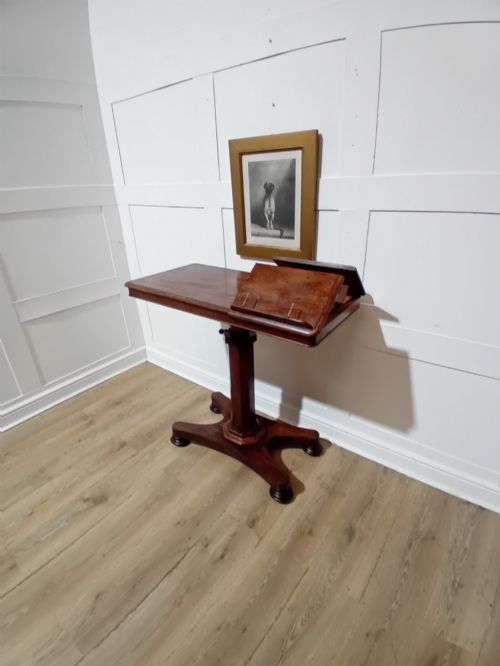
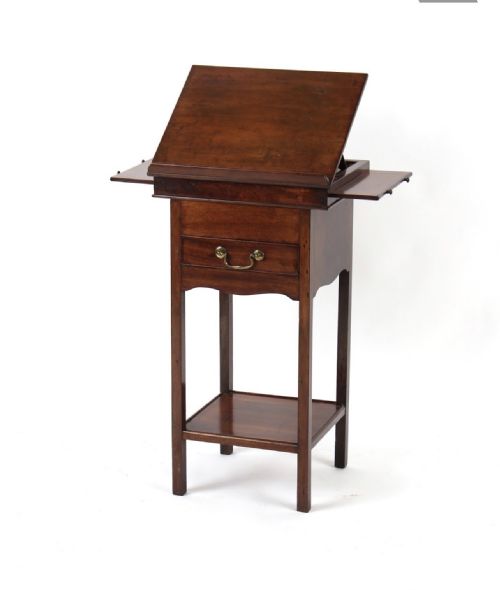
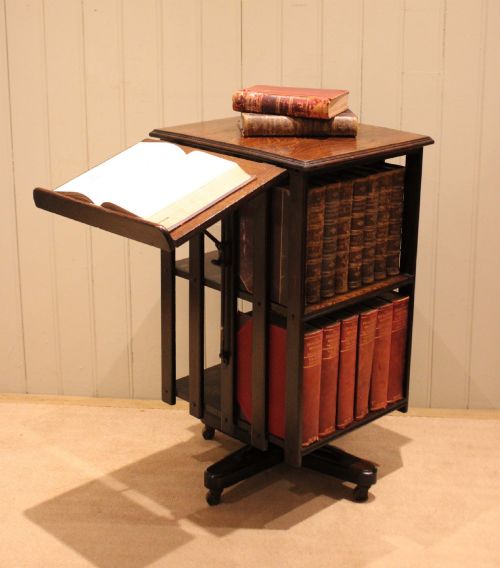

Adjustable Reading Table
When you search for an adjustable reading table, you are looking for a mechanical piece of furniture designed to hold books at a comfortable angle for study or leisure.

Adjustable Reading Table
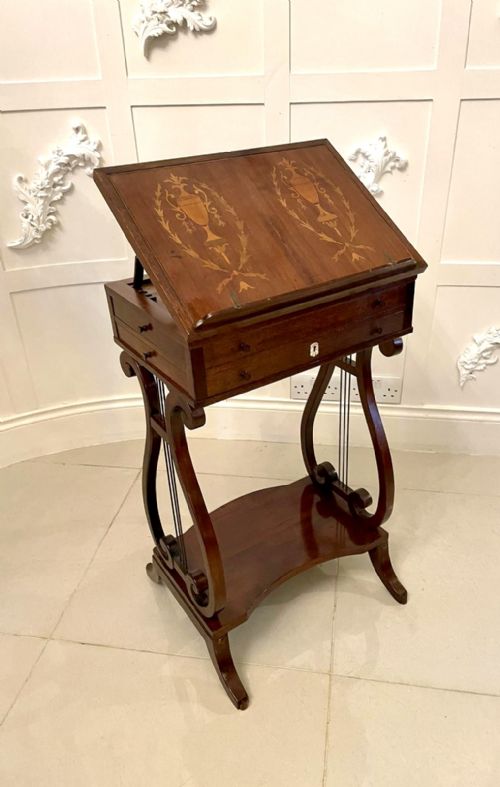
An adjustable reading table is a specialised piece of furniture engineered to alter its height and slope to suit the reader. These items emerge frequently from the Regency, Victorian, and Edwardian periods, appearing in forms such as chairside stands, library tables, and desk attachments.
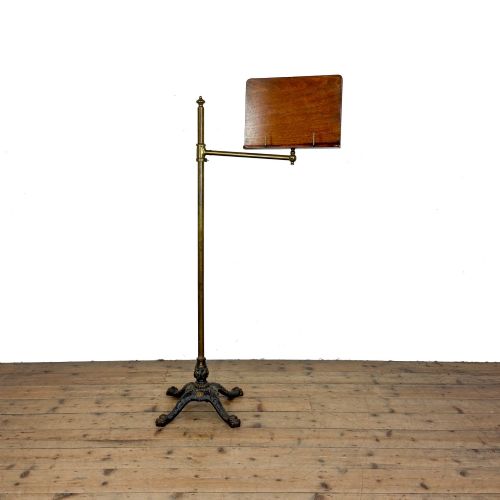
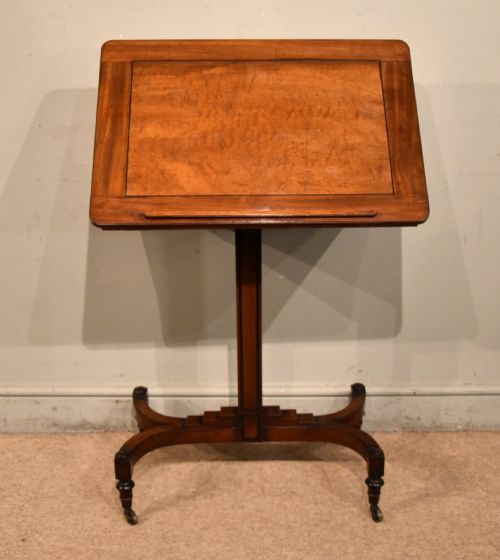
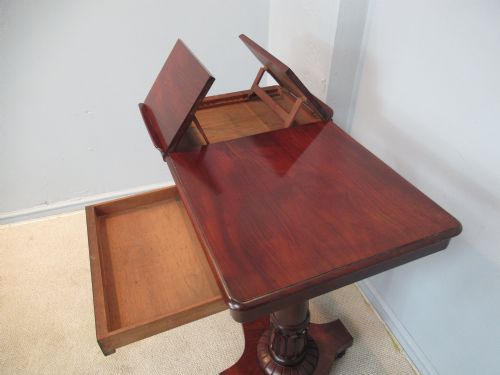
The versions most commonly met on this page are mahogany or rosewood reading stands featuring ratcheted slopes and telescopic pillars. They were built for domestic studies, libraries, and drawing rooms where books, folios, and music sheets required steady support.
Makers such as Carters of London applied industrial patents to domestic comfort, producing heavy cast-iron and oak mechanisms alongside lighter mahogany examples. Buyers also encounter revolving bookcases fitted with adjustable reading slopes from the early twentieth century.
How they were made
Cabinet makers utilised dense timbers like mahogany, rosewood, and oak to construct the main surfaces and tiered columns of each adjustable reading table. Brass fittings, including ratchets, hinges, and telescopic locking screws, provided the moving joints necessary for altering heights and angles.
Cast iron appeared in the heavier patent mechanisms designed for bed and chairside use, often paired with oak or pine. Inlaid brass details and leather writing inserts also feature on pieces originating from the Regency and Victorian eras.
Adjustable Reading Table Retail Price Guide 2026
Typical asking prices for adjustable reading table among the pieces listed under this phrase on Sellingantiques today, from the lower quarter to the upper quarter. They describe what is for sale here now, not the wider market.
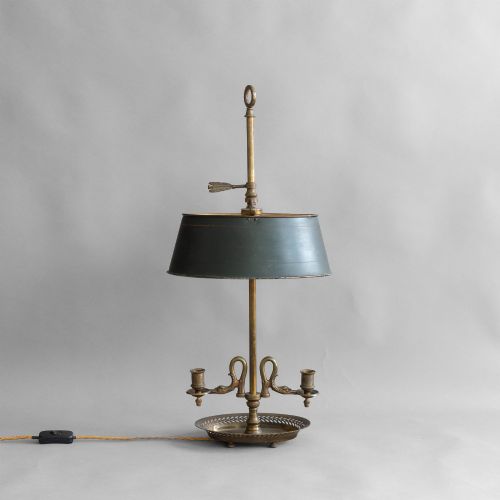
Some nineteenth-century models arrived with built-in candle arms so readers could strain their eyes long after daylight failed.
What varies in quality
The sophistication of the mechanical movement largely determines the standing of an adjustable reading table within its class. Simple wooden ratchets offer basic adjustment, whereas complex brass screw mechanisms and counterbalanced telescopic columns demonstrate superior manufacturing ambition.
Timber selection and secondary materials further distinguish individual pieces, with figured mahogany and solid rosewood commanding greater consideration than plain pine or oak. Original castors, intact reading ledges, and signed maker's stamps elevate the integrity of the piece.
W.A.S. Benson·Herbert Terry·Wild And Wessel·Carters Of London·Toate Company
The Adjustable Reading Table Glossary
- Telescopic
- A pillar construction allowing one tube to slide inside another to alter height. This mechanism relies on a thumbscrew or pin to lock the shaft at the desired level.
- Rachet
- A notched metal bar engaging with a catch to hold a reading slope at various fixed angles. It permits the reader to raise or lower the book rest simply by lifting the board.
- Folio
- A large book size or a flat case for holding loose paper prints and maps. Reading tables often incorporated ledges deep enough to support these heavy volumes.
- Lectern
- A freestanding or table-mounted stand with a slanted top designed to hold texts for a standing reader or speaker. Many examples in the archive combine this function with adjustable height stems.
- Patent
- A government license protecting a specific mechanical invention applied to furniture. Makers stamped these onto mechanisms to denote proprietary engineering.
Adjustable Reading Table: Frequently Asked Questions
How do you adjust the height?
Most pieces utilise a telescopic brass or iron column secured by a side thumbscrew or a spring-loaded pin.
You loosen the collar, raise the upper shaft to eye level, and tighten the mechanism firmly to lock the reading surface in place.
Were these used in bed?
Certain Victorian models feature cantilevered or H-shaped cast-iron bases designed to slide over a mattress or armchair.
Known as bed tables or invalid tables, they brought books and writing materials directly to a person confined to rest.
How do I date a table?
Dating relies upon timber choice, leg style, and the complexity of the brass or iron hardware.
Regency pieces often show brass inlay and reeded legs, while Victorian versions favour heavy mahogany pillars and patented mechanical ratchets.
What is a folio stand?
A folio stand is a specialised ledge or dual-sided rack built to display large art books, maps, and unbound sheets.
Many adjustable reading tables include pull-out flaps or deep wooden lips specifically designed to keep these oversized volumes secure.