



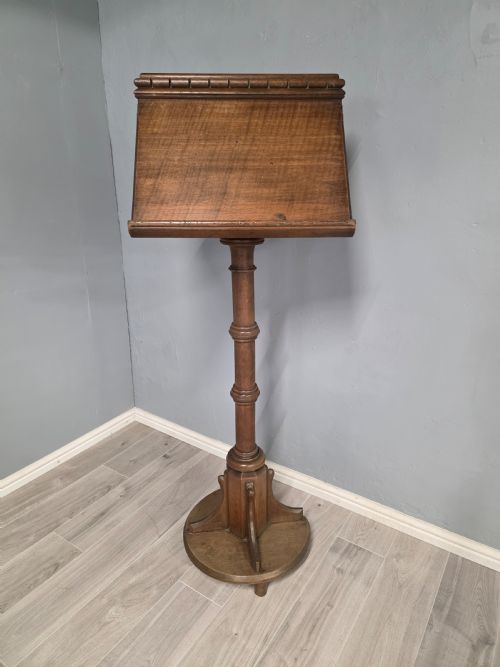


Brown Wood Lectern
A brown wood lectern is a practical stand for holding books or music, prized by collectors for period craftsmanship and architectural presence.
Brown Wood Lectern
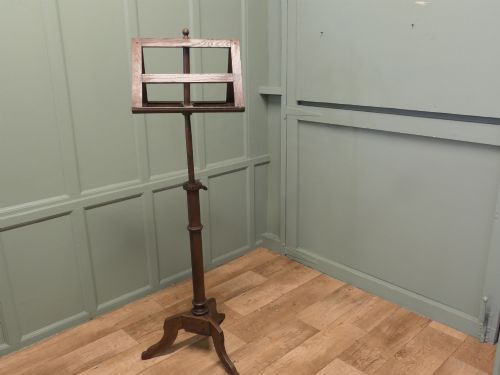
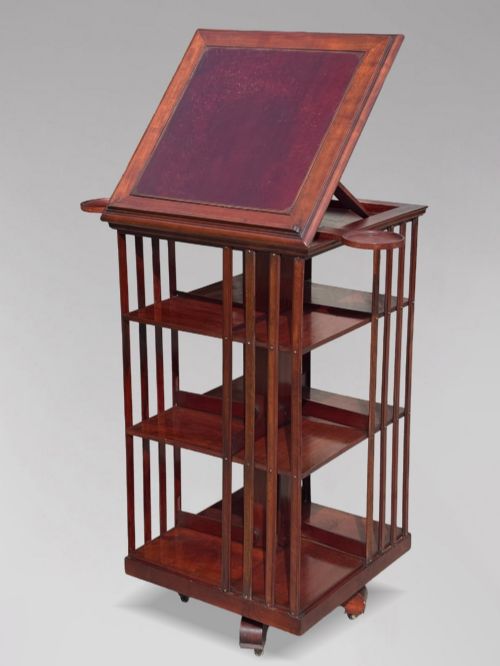
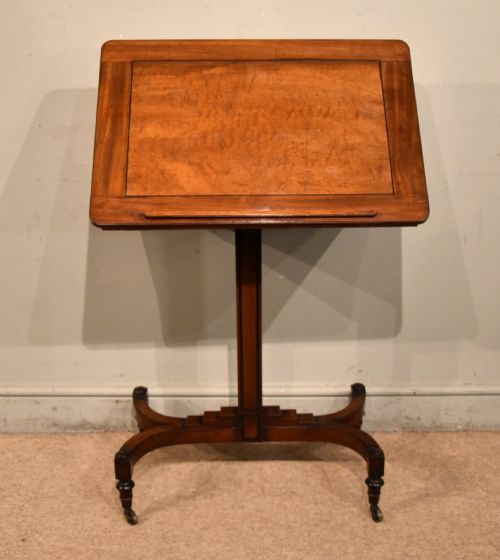
A brown wood lectern encompasses reading tables, stands, and Missal rests designed to support books at a comfortable angle. When searching for a brown wood lectern, buyers encounter forms ranging from George III reading tables to Regency music stands and Victorian church pieces.
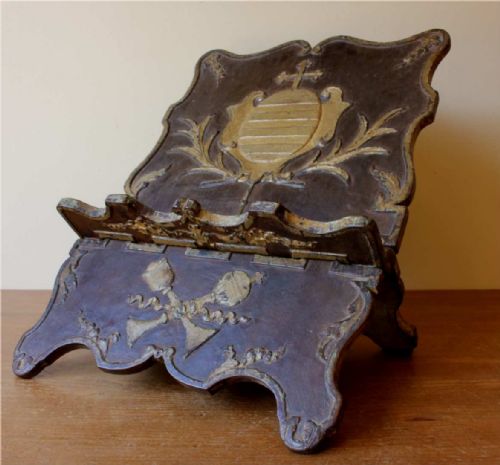
Forms vary from double-sided reading tables and campaign table tops to folding Bible rests and carved eagle designs. Each item serves the primary purpose of holding texts securely, whether for ecclesiastical use or domestic study.
How they were made
Cabinetmakers utilised dense timbers such as mahogany and oak to construct sturdy frames capable of supporting heavy volumes. Joinery techniques varied according to the period, accommodating folding mechanisms for travel or pivoting surfaces for adjustable reading angles.
Carving and brass details appear on select ecclesiastical and formal items, enhancing the structural wood with gilded highlights or bronze fittings. Pine and boxwood also feature in regional or decorative stands, finished with polished surfaces that highlight natural grain patterns.
Brown Wood Lectern Retail Price Guide 2026
Typical asking prices for brown wood lectern among the pieces listed under this phrase on Sellingantiques today, from the lower quarter to the upper quarter. They describe what is for sale here now, not the wider market.
Current listings span the eighteenth and nineteenth centuries, featuring Georgian, Regency, and Victorian periods alongside Gothic revival styles.
What varies in quality
The distinction between standard utility items and finer examples rests upon timber selection and the precision of mechanical adjustments. Well-figured mahogany and intricate hand-carved details elevate a piece beyond basic workshop production.
Integrity of moving parts, such as ratchets and folding hinges, dictates the enduring utility of reading tables and missal rests. Original surface patination and restrained decorative elements indicate a higher standard of period manufacture.
The Brown Wood Lectern Glossary
- Lectern
- A stand with a sloping surface to hold a book for a reader, often used in ecclesiastical settings or libraries. These stands elevate texts for standing or seated study.
- Campaign table top
- A portable furniture form designed for military use or travel, featuring folding or collapsible elements. These pieces combine compact transportability with domestic functionality.
- Missal stand
- A small inclined shelf or desk used to support a liturgical book on an altar or table. They frequently fold flat when not in use.
- Regency
- A British design period spanning the early nineteenth century, characterised by classical revival motifs and refined proportions. Furniture from this era often employs dark hardwoods and subtle brass mounts.
- George III
- The period of British design covering the latter half of the eighteenth century and early nineteenth century. Work from this era prioritises balanced proportions and high-quality mahogany construction.
Brown Wood Lectern: Frequently Asked Questions
What is a brown wood lectern used for?
These stands support heavy books, Bibles, or music sheets at an ergonomic angle for reading. They served functional roles in churches, private libraries, and study rooms.
Over time, their use expanded into domestic spaces where adjustable reading tables aided scholars and readers with large folios.
How do I date a brown wood lectern?
Dating relies on identifying period characteristics, timber choices, and construction methods. Georgian and Regency pieces typically show refined mahogany joinery, while Victorian examples often incorporate heavier Gothic revival motifs.
Examining the hinges, ratchets, and secondary woods provides further clues to the manufacturing decade.
Are all these lecterns made of solid wood?
Most pieces utilise solid timbers like mahogany, oak, and pine for their primary structures. Cabinetmakers occasionally applied veneers over secondary woods to display decorative grain patterns on large reading surfaces.
Checking the edges and undersides helps reveal the underlying construction methods used by period craftsmen.
How do I maintain the finish on a wood lectern?
Maintenance involves keeping the timber away from direct sunlight and extreme temperature fluctuations to prevent drying and cracking. Periodic application of appropriate wax preserves the surface sheen without damaging the historic finish.
Regular dusting with a soft cloth prevents abrasive particle buildup on carved or polished surfaces.