
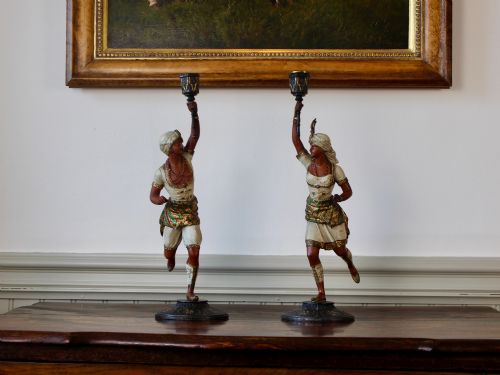


19th Century Vienna Bronze
These 19th century vienna bronze pieces bring whimsical miniature animals and figures into your home with vibrant cold-painted detail.
19th Century Vienna Bronze
When you search for 19th century vienna bronze, you enter a world of small-scale metalwork produced in Austrian workshops during the Victorian era and around 1900. These works capture everything from humorous animal figures to Orientalist scenes, miniature figurines, and wall plaques.
You are most likely to meet cold-painted bronze figures depicting birds, dogs, and human subjects like cavaliers or Arab ladies serving tea. Alongside pure bronze, the evidence shows related Austrian and continental pieces including painted terracotta, spelter, and intricate enamel table cabinets.
How they were made
Materials such as paint, enamel, and gilt bronze highlight specific surface details like clothing, feathers, and fur. Some larger items incorporate ebonised wood, marble, and terracotta to create structured cabinets and sculptural figures.
A bulldog and a dog cocking its leg join a flock of painted birds to keep nineteenth-century desks permanently lively.
What varies in quality
The nuance of the cold-painted surface distinguishes a masterwork from a simpler casting, particularly in the expression and fine detail of miniature figures. Early Austrian output relies on precise chasing of the bronze beneath the paint layer, whereas alternative metal alloys like spelter yield a different weight and texture.
Makers known for signed works, such as Franz Bergman, command attention through expressive poses and intricate polychrome surfaces. The complexity of the object also dictates its standing, moving from simple birds and dogs to elaborate equestrian groups and enamel bureau cabinets.
Franz Bergman·Stephan Buchinger·Goldscheider
The 19th Century Vienna Bronze Glossary
- Cold painted
- A finishing technique where pigment is applied to metal objects without subsequent high-temperature firing. This method preserves fine detail but remains susceptible to chipping over time.
- Spelter
- A zinc alloy commonly utilised as a substitute for bronze in decorative figures and candlesticks. It offers a lighter weight and a different surface texture under patination.
- Enamel
- A decorative coating formed by fusing powdered glass to a metal substrate at high heat. It provides a glossy, durable finish seen on Viennese table cabinets and wall plaques.
- Orientalist
- An artistic style reflecting western fascination with Middle Eastern and North African subjects. It frequently appears in figures of Arab ladies and desert scenes.
- Viennese Historicism
- An architectural and decorative style drawing inspiration from historical eras. This aesthetic manifests in ornate cabinets and plaques from the nineteenth century.
19th Century Vienna Bronze: Frequently Asked Questions
What is cold painted bronze?
Cold painted bronze refers to metal sculptures finished with oil paints or enamels applied directly to the unheated metal surface. This technique allows for a high degree of polychrome detail on small figurines.
Because the paint is not fired, these pieces require careful handling to preserve the original colour and finish.
How do I identify Austrian bronze?
Austrian bronzes from this period often feature realistic or whimsical animal subjects, humour, and distinctive cold-painted polychrome surfaces. Look for foundry marks or artist cachets where applicable.
The materials typically include cast bronze or brass with hand-applied pigment that shows age-appropriate wear.
What is the difference between bronze and spelter?
Bronze is a durable copper alloy that takes fine detail and heavy patination well. Spelter is a softer, lighter zinc-based metal used for more accessible decorative items.
Items cast in spelter generally feel lighter in the hand and may show different wear patterns compared to solid bronze.
Where were these items displayed?
These small sculptures and miniature figures were designed for display on desks, mantelpieces, and within specialist vitrines. Table cabinets and wall plaques served both decorative and functional roles in Victorian interiors.
Their intimate scale made them ideal cabinet pieces for close inspection by collectors.