




Heavy Bronze Desk Ornament
A heavy bronze desk ornament anchors a workspace with substantial presence, combining utilitarian function with figurative sculpture.
Heavy Bronze Desk Ornament
A heavy bronze desk ornament serves both practical duties and decorative roles on a writing surface, encompassing inkwells, bookends, cannons, and animal figures. When exploring this selection, buyers encounter functional items alongside pure sculptures designed for the desk.
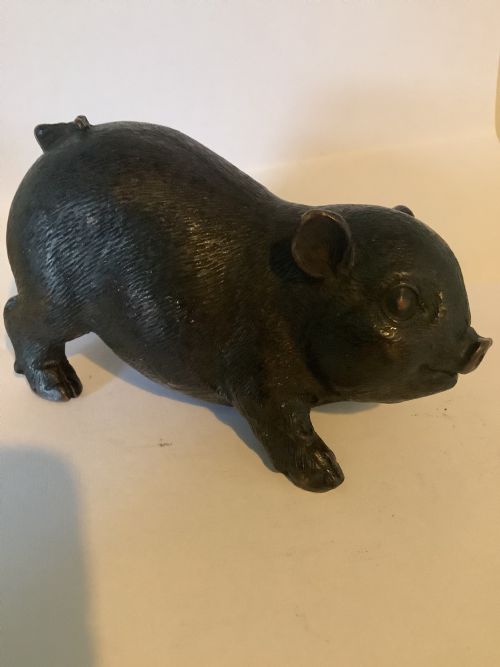
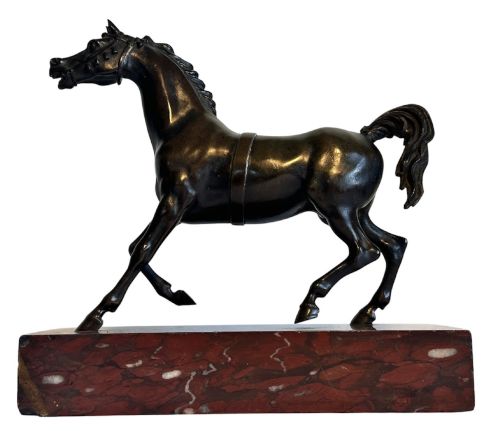
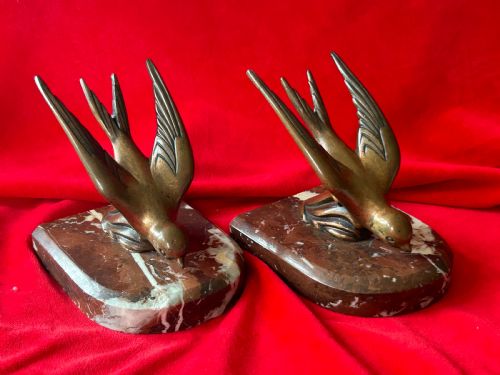
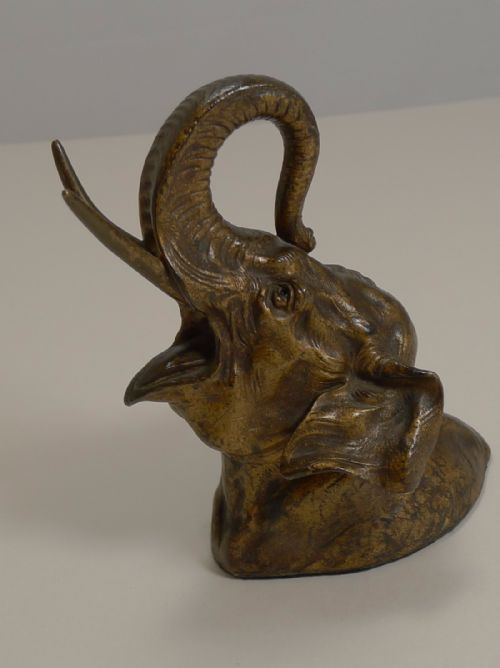
The objects span periods from the Victorian era and the nineteenth century through the art deco years to contemporary equestrian works, originating from English, French, Chinese, and Austrian makers. Animal subjects predominate, featuring pigs, stallions, bulls, cob horses, and dogs mounted on marble or fitted with wooden undercarriages.
How they were made
Makers utilised cast bronze, often pairing the metal with marble bases, stone, or mahogany undercarriages to add substantial weight. Some pieces employ cast iron finished with a bronze patina, while others feature hand-painted enamel details.
Techniques range from traditional foundry casting used for nineteenth-century animalier sculptures to cold-painted finishing methods seen on Austrian bronzes and English bulldog figures.
Current listings feature materials including bronze, marble, cast iron, stone, cold-painted enamel, paint, brass, and mahogany.
What varies in quality
Materials and secondary supports influence the overall substance of the piece, from polished bronze mounted on heavy marble to detailed undercarriages and fitted inkwells.
Philip Blacker·Franze Bergman·Ernest Louis Adnin
The Heavy Bronze Desk Ornament Glossary
- Animalier
- A nineteenth-century artistic movement focusing on the realistic depiction of animals, particularly in bronze sculpture. Works in this style capture creatures in natural or dynamic motion.
- Cold-painted bronze
- A technique where bronze sculptures are painted with oil or enamel paints without undergoing a high-temperature firing process. This finish requires careful preservation to prevent flaking over time.
- Inkwell
- A small container for holding ink, often incorporated into desk accessories alongside figural sculptures. These desk items frequently include hinged lids and glass or ceramic inserts.
- Patina
- The surface coloration and sheen developed naturally through age or applied artificially by the maker. A bronze finish patina enhances the visual depth of iron or metal castings.
Heavy Bronze Desk Ornament: Frequently Asked Questions
What is a heavy bronze desk ornament?
It is a substantial metal object designed for a writing desk, combining decorative sculpture with practical uses like holding ink or supporting books.
Such items range from nineteenth-century animal figures to art deco bookends and polished cannons.
How were these desk ornaments used?
Many served dual purposes, functioning as paperweights, bookends, or functional inkwells while adding decorative character to a study.
Others were purely sculptural representations of animals, such as bulls, stallions, and dogs placed upon desks.
What materials are used in these pieces?
Foundries primarily used bronze, occasionally employing cast iron treated with a bronze-finish patina.
Pieces frequently incorporate marble bases, stone, mahogany undercarriages, or cold-painted enamel details.
How do I identify nineteenth-century pieces?
Nineteenth-century examples often display animalier styling, heavy cast bronze construction, and mounting on marble or wooden bases.
Makers from this era frequently signed or recorded their animal subjects with detailed anatomical modelling.