



French Bronze Inkwell
A french bronze inkwell sits upon the desk as a heavy, decorative relic of correspondence from past centuries.
French Bronze Inkwell
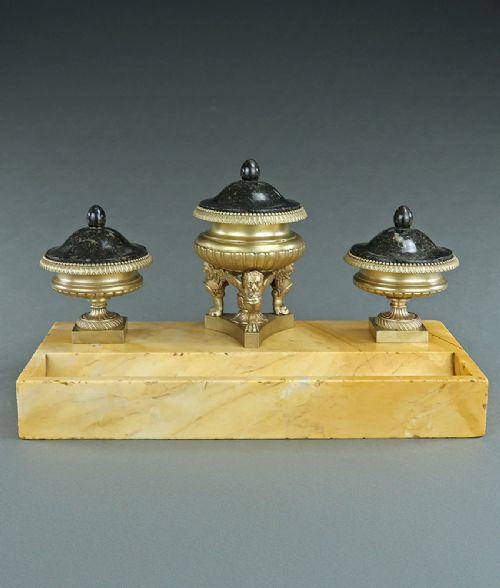
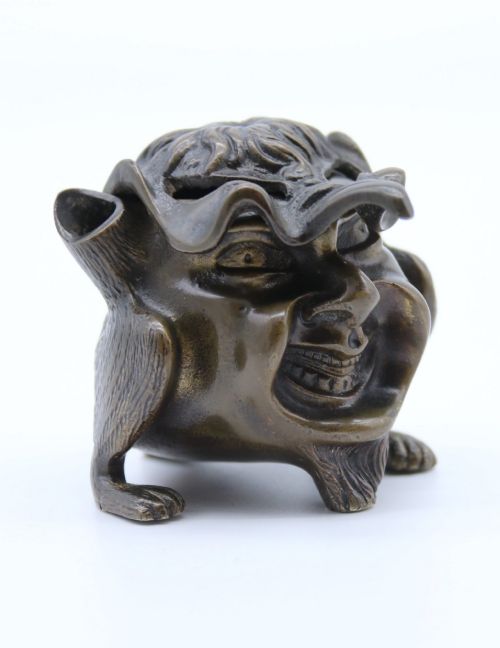
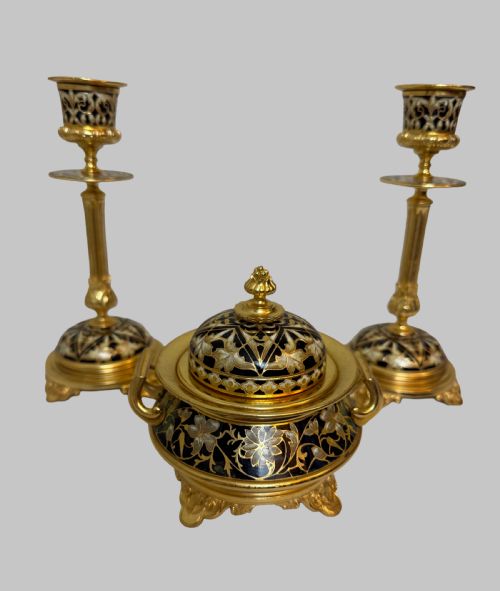
A french bronze inkwell appears on this page in various desk-top formats, ranging from simple standalone vessels to complete desk sets with candlesticks and clocks. These objects emerge primarily from nineteenth-century workshops and extend into the early twentieth century.
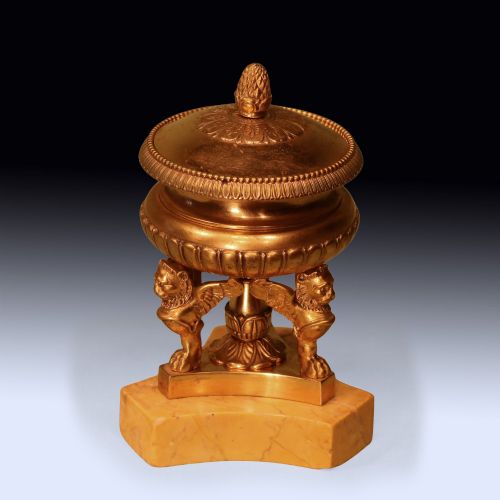
Buyers will frequently encounter pieces combining patinated or gilded bronze with marble bases, often taking the form of figural subjects, classical encriers, or animalier studies including lions, cats, and elephants.
Craftsmanship and Detail
The standard of chasing in the metalwork dictates the clarity of the cast details, separating mass-produced items from pieces bearing the crisp definition of skilled artisans and named makers.
The selection of mounting materials also defines the grade of the piece, with solid marbles and heavy fire-gilded bronze signifying superior production compared to lighter alloys and simpler wooden bases.
Materials recorded across the listings include ormolu, Sienna marble, champleve enamel, and patinated bronze.
Lefebvre of Belgium·Albert Marionnet·Jules Dalou·Maurice Dufrene·Ernest Louis Adnin·E. Dolivet
The French Bronze Inkwell Glossary
- Encrier
- A French term for an inkstand or inkwell, typically housing one or more glass or metal ink inserts alongside pen rests.
- Ormolu
- Gilded bronze produced through a mercury amalgamation process, yielding a rich golden finish characteristic of nineteenth-century decorative arts.
- Animalier
- A nineteenth-century artistic style focused on the realistic depiction of animals, frequently seen in sculptural desk ornaments.
- Champlevé
- An enamelling technique where troughs are dug into the metal surface and filled with vitreous enamel before firing.
- Grand Tour
- A period of travel through Europe undertaken by upper-class young men, resulting in the acquisition of classical souvenirs such as patinated bronze desk accessories.
French Bronze Inkwell: Frequently Asked Questions
What periods do these pieces date from?
The inventory spans the nineteenth century through to the early twentieth century, encompassing periods such as the French Empire, Napoleon III, and Art Nouveau.
Dates are assigned based on stylistic evidence, material composition, and recorded foundry marks where available on the desk stands.
How do I identify the materials used?
Listings distinguish between cast bronze, gilded bronze, ormolu, brass, and spelter, often paired with bases made from Sienna or vert marble.
Closer inspection reveals the weight and surface finish that separate solid cast metals from plated or substitute alloys.
Were these items used for writing?
These pieces served practical functions on writing desks, holding the ink required for feather quills and steel nibs before the widespread adoption of fountain pens.
Many incorporate glass liners inside the metal reservoirs to hold the liquid ink safely without corroding the surrounding bronze.
What is an animalier inkwell?
Animalier pieces feature realistic sculptural studies of animals, such as lions, cats, or horses, integrated into the design of the desk stand.
This nineteenth-century genre reflects a broader artistic interest in naturalism and zoological subjects.