




Antique Bronze Writing Accessory
An antique bronze writing accessory brings heft and character to a desk, usually taking the form of an inkwell, stand, or blotter.
Antique Bronze Writing Accessory
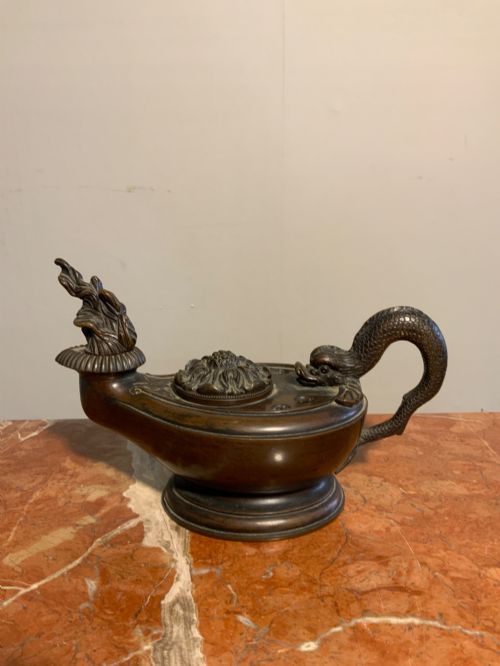
When you search for an antique bronze writing accessory, you encounter functional objects designed for elite nineteenth-century and early twentieth-century desks. The listings show a heavy concentration of inkwells, desk stands, and inkstands shaped by French Empire, Art Nouveau, and Victorian designs.
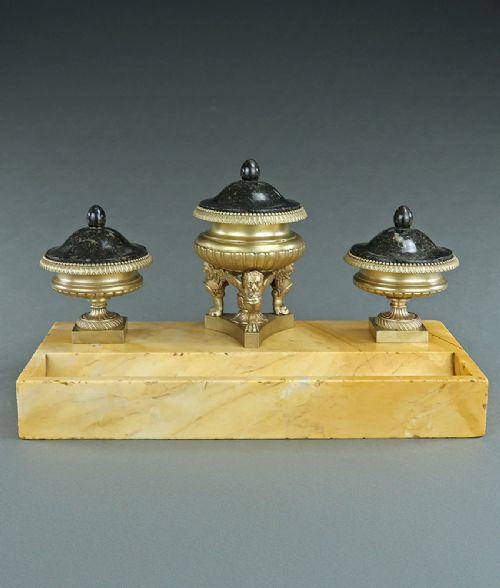
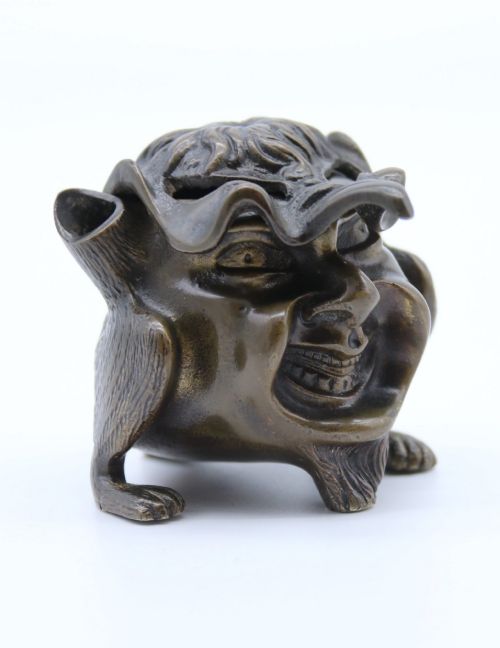
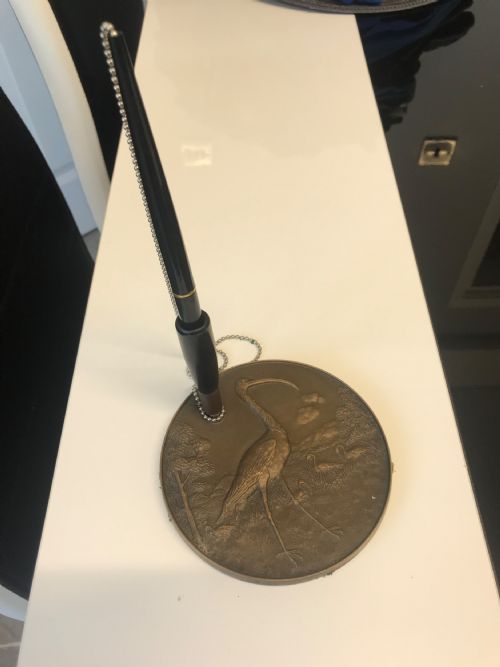
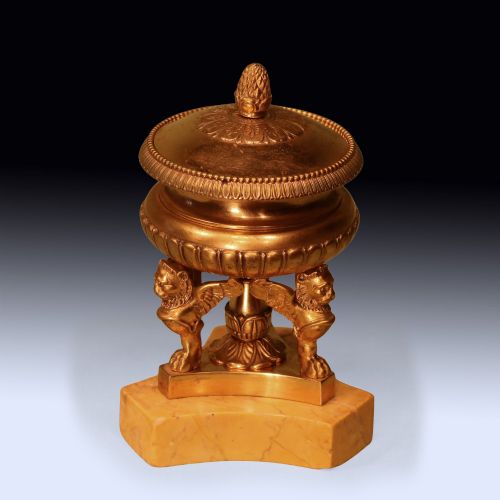
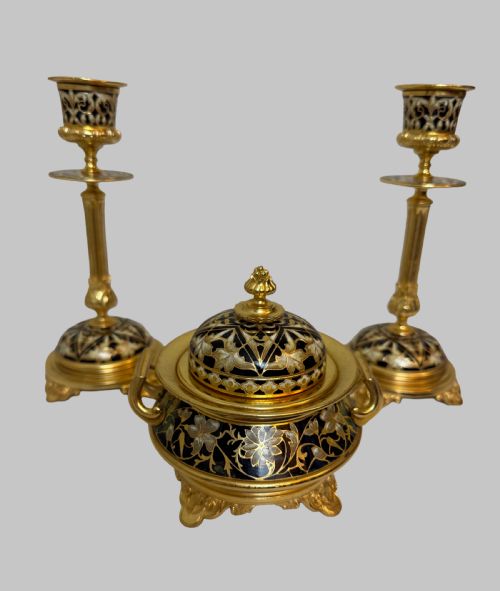
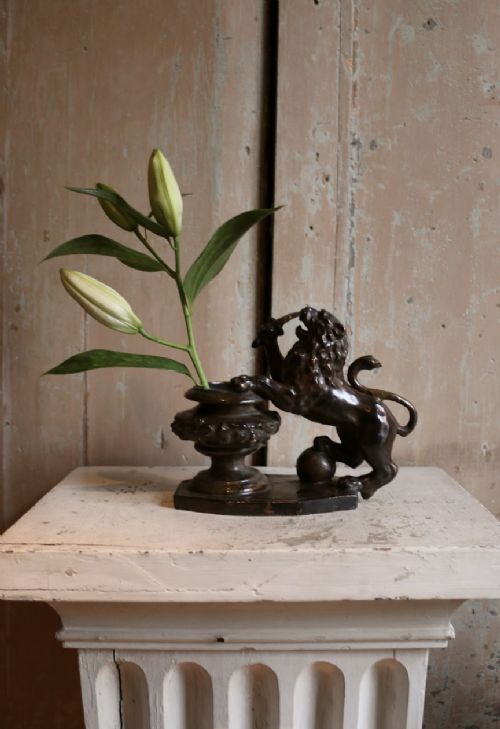
You are most likely to meet French ormolu and gilded bronze pieces mounted on marble bases, alongside figural novelties depicting animals, birds, or human characters. These range from simple seventeenth-century brass or bronze inkwells to elaborate multi-piece sets complete with candlesticks and cut crystal bottles.
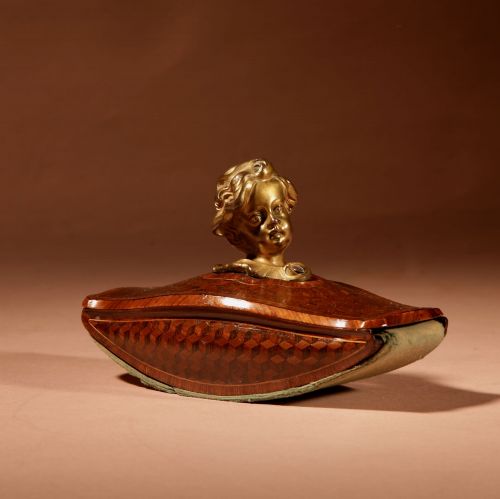
The objects served as status symbols in domestic studies and offices, combining utility with sculptural art. Makers and designers utilised varied materials such as Sienna marble, coromandel-wood, and glass to complement the cast metal work.
How they were made
The makers cast these accessories primarily in bronze, brass, or gilt bronze, frequently applying ormolu gilding or cold-painted finishes to the metal surface. Foundries combined the cast metal with heavy stone components, cutting and polishing marble bases in shades of green, black, or Sienna.
Craftsmen integrated functional glass ink bottles and ceramic liners into the metal frames, sometimes pairing the bronze with mahogany or coromandel-wood for larger desk stands. Detailing often involved champlevé enamel work or hand-set glass eyes on figural animal subjects.
Art Nouveau and Art Deco pieces demonstrate fluid casting techniques and stylised plant motifs, contrasting with the rigid symmetry and classical mounts of earlier Neoclassical and French Empire examples.
Several novelty inkwells depict playful animals, including monkeys and playing kittens with glass eyes staring back at the writer.
What varies in quality
Quality separates standard production items from masterworks through the crispness of the bronze casting and the depth of the ormolu or gilding. Superior pieces display finely chased details in feathers, fur, and facial expressions, whereas lesser items show softened edges and simplified surface texture.
The selection of materials dictates the upper tier of the range, seen in dense, unblemished marble bases, heavy crystal inserts, and fully intact original glass bottles. Maker attribution also elevates a piece, with signed works by known foundries commanding greater interest than unmarked foundry output.
Franz Bergman·Albert Marionnet·Maurice Dufrene·A.Cohen & Co Ltd London·Lefebvre of Belgium
The Antique Bronze Writing Accessory Glossary
- Ormolu
- Gilded bronze, where a layer of gold amalgam is applied to a bronze base through a mercury-gilding process that creates a rich, lasting metallic lustre. This finish defines many French desk accessories from the nineteenth century.
- Encrier
- A French term for an inkstand or inkwell set. These often incorporate pen rests and multiple wells on a decorative tray.
- Champlevé
- An enamelling technique where troughs are dug into the bronze surface and filled with vitreous enamel powder before firing. It appears on nineteenth-century desk sets alongside gilt bronze mounts.
- Grand Tour
- A cultural journey undertaken by wealthy young Europeans in the eighteenth and nineteenth centuries, often resulting in the acquisition of small bronzes and classical souvenirs. Such items frequently formed the basis for later desk ornaments.
- Cold-painted bronze
- A method of painting bronze sculptures with oil or cold paints rather than firing them in a kiln. The finish is delicate and requires careful preservation.
Antique Bronze Writing Accessory: Frequently Asked Questions
What is an antique bronze writing accessory?
It is a desk item made from bronze, brass, or ormolu, designed to hold ink, pens, or blotting paper during the nineteenth and early twentieth centuries.
These pieces range from plain utilitarian inkwells to elaborate sculptural desk sets featuring marble bases and figural animal designs.
How were antique inkstands used?
They sat on desks in studies, offices, and libraries to provide a stable reservoir for ink and a convenient place to rest dip pens.
Many sets included removable glass ink inserts for easy cleaning and refilling, alongside matching candle stands for sealing letters with wax.
How do I identify a French Empire desk stand?
French Empire pieces typically feature Neoclassical motifs, strict symmetry, and classical architectural elements cast in ormolu and mounted on dark marble.
They often date from the early nineteenth century and reflect the decorative tastes of the Napoleonic era.
Are Art Nouveau desk accessories different?
Art Nouveau accessories focus on asymmetrical designs, organic plant forms, and flowing lines rather than classical geometric symmetry.
Makers working in this style around 1900 utilised silvered bronze or gilded bronze to depict subjects like insects, women, and stylised floral motifs.
How should I care for a bronze inkwell?
Keep the piece away from direct sunlight and excessive moisture to protect the marble, wood, and gilded bronze surfaces.
Dust gently with a soft, dry cloth and avoid chemical metal cleaners that can strip the original patination or ormolu finish.