

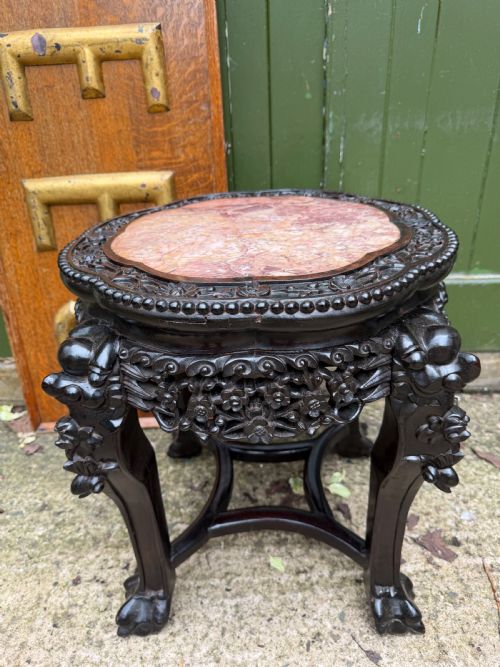


19th Century Vase Stand
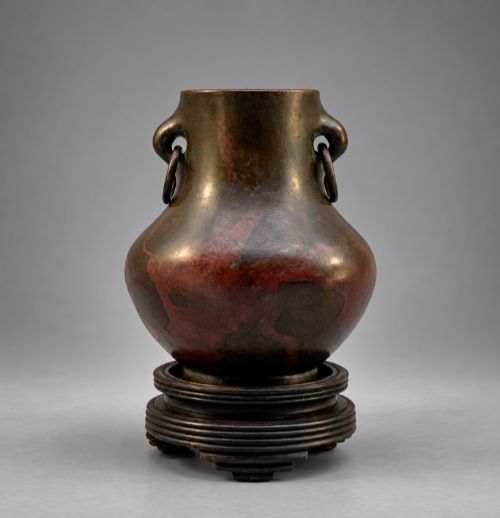
These 19th century vase stand examples provide a solid timber or bronze foundation to elevate heavy ceramic vessels.
19th Century Vase Stand
A 19th century vase stand functions primarily to raise decorative vessels off the floor or table surface, protecting surfaces and altering the visual weight of the piece. Buyers encountering this phrase typically find solid timber supports made for specific oriental ceramics, alongside occasional bronze pedestals from the European Grand Tour tradition.
The materials span dense Asian hardwoods like hongmu and huali alongside European bronze and turned wood. Forms range from low jardiniere tables with inset marble tops to taller columnar pedestals designed for large porcelain jars.
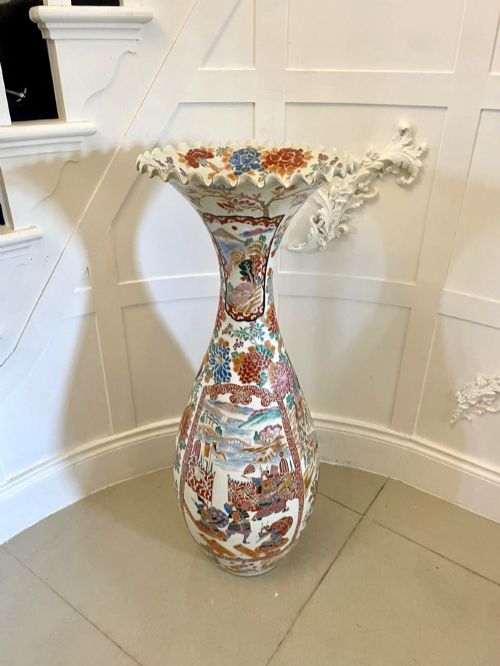
Origin points cluster around Chinese Qing Dynasty workshops and Japanese Meiji period studios, reflecting global trade patterns of the period. These pieces frequently accompany Imari, Kutani, or Rose Medallion ceramics, though many survive independently as modular supports.
How they were made
Carpenters constructed Asian examples using dense tropical hardwoods, employing traditional joinery to accommodate the seasonal expansion of wood without splitting. Surfaces received hand-rubbed finishes that highlighted natural grain patterns.
European workshops utilised cast bronze and turned wood, often incorporating applied mounts or patinated surfaces to mimic ancient artefacts. Marble inserts served as stable, heat-resistant tops for heavy ceramic placements.
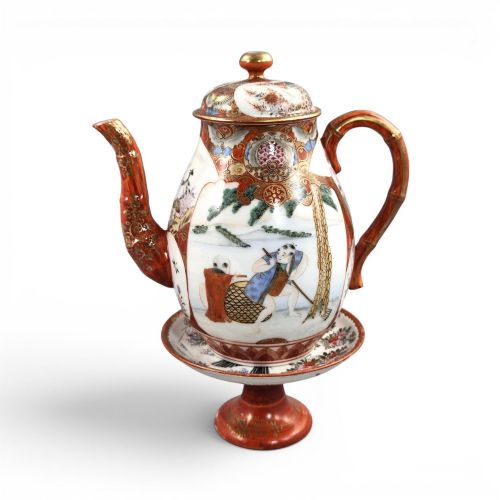
Some stands were built strictly for lonely tea pots, proving that even small vessels deserved a proper architectural elevation.
What varies in quality
Quality rests on the precision of the carving and the density of the chosen timber, with heavier rosewood and hongmu specimens demanding greater skill to shape. Finely articulated floral motifs and snug joinery separate standard utility pieces from exhibition-grade furniture.
Proportion dictates visual success, where superior stands balance the diameter and weight of the vessel they carry without tipping. The inclusion of unblemished inset marble or original bronze mounts elevates the overall execution.
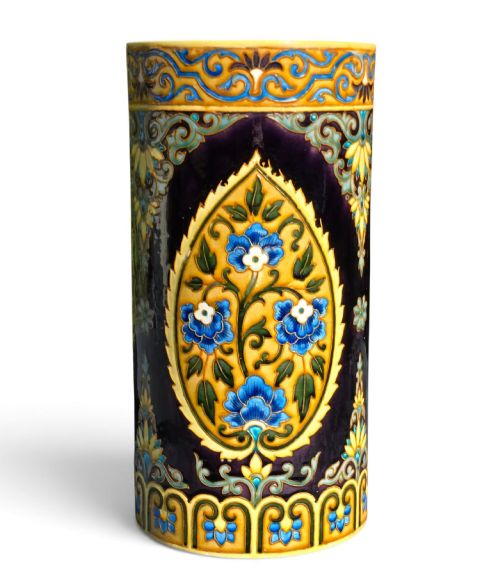
Théodore Deck
The 19th Century Vase Stand Glossary
- Hongmu
- A dense, dark tropical hardwood utilised in Chinese furniture manufacturing. It translates literally as red wood.
- Jardiniere
- A large ornamental pot or stand intended to hold plants or flowers. These items often double as structural bases for heavy ceramic vessels.
- Meiji Period
- The era in Japanese history spanning from 1868 to 1912. Production during this time often catered to Western export markets.
- Grand Tour
- A traditional trip through Europe undertaken by upper-class young men for educational purposes. Souvenirs from these travels included small bronze urns and tripod stands.
- Rose Medallion
- A style of Chinese porcelain decoration characterised by panels of figures and birds set against green and pink grounds. These ceramics frequently sit atop carved wooden stands.
19th Century Vase Stand: Frequently Asked Questions
What is a 19th century vase stand used for?
These pieces elevate heavy ceramic vessels to protect underlying furniture and improve the display height in a room. They support items such as large Imari jars or umbrella stands.
Historically, they protected expensive carpets and wooden floors from dampness or weight damage associated with large planters and ceramic vases. Today, collectors use them to anchor decorative arrangements in domestic interiors.
How do I identify Chinese hardwood stands?
Look for dense, heavy tropical timbers such as hongmu or huali that display dark, natural grain patterns without artificial staining. The joinery should rely on traditional interlocking methods rather than modern metal fasteners.
Examine the carving depth and sharpness around the apron and legs. Period pieces exhibit hand-carved detailing that accommodates the weight of heavy porcelain vessels safely.
Are stands sold separately from vases?
Many examples survive independently because owners separated the vessels over decades of use and relocation. Listings frequently offer these platforms as standalone items.
Matching a loose stand to an antique vase requires careful measurement of the base diameter and weight capacity. Solid timber and bronze versions both appear as individual furniture items.
How do I clean wooden vase stands?
Dust the timber regularly with a soft, dry cloth to prevent dirt accumulation in carved recesses. Avoid liquid cleaners or harsh chemical polishes that can degrade historical finishes.
Maintain stable indoor humidity levels to prevent the dense tropical hardwoods from splitting or warping over time. A light application of microcrystalline wax helps protect the surface when needed.