




Oriental Plant Table Display
An oriental plant table display brings architectural presence to a room, holding heavy ceramic planters and bronze vessels at a considered height.
Oriental Plant Table Display
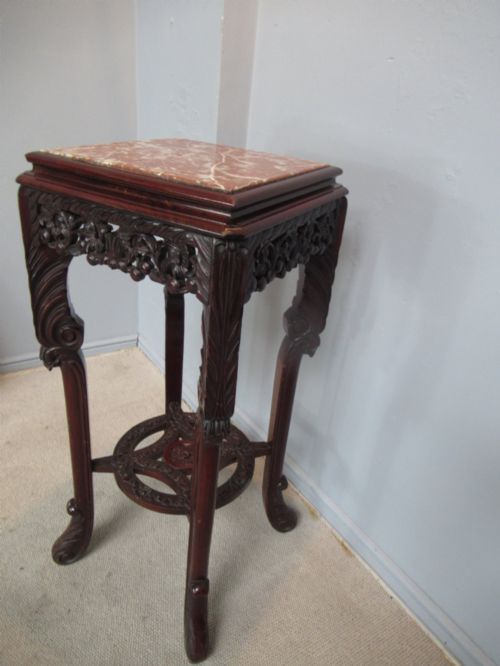
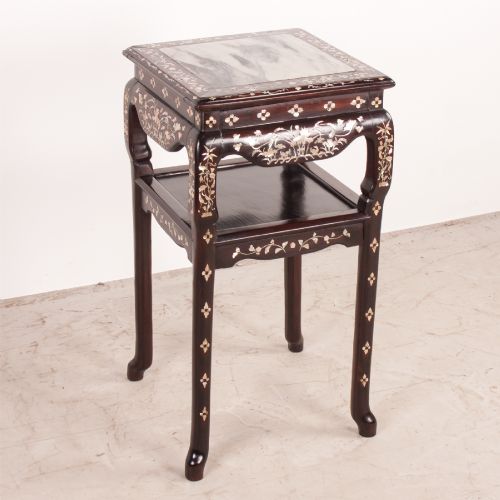
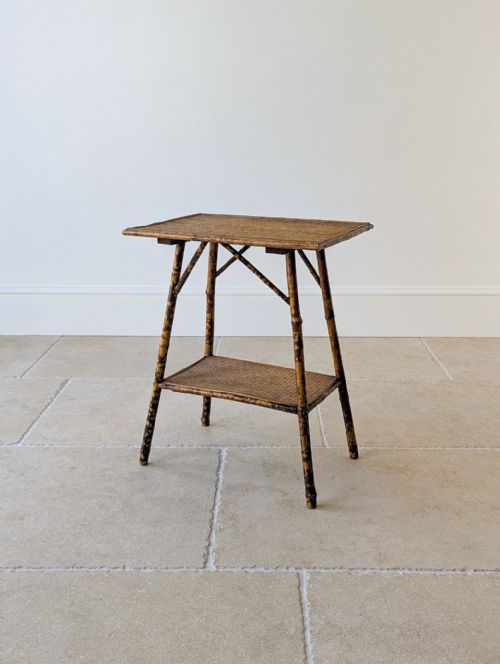
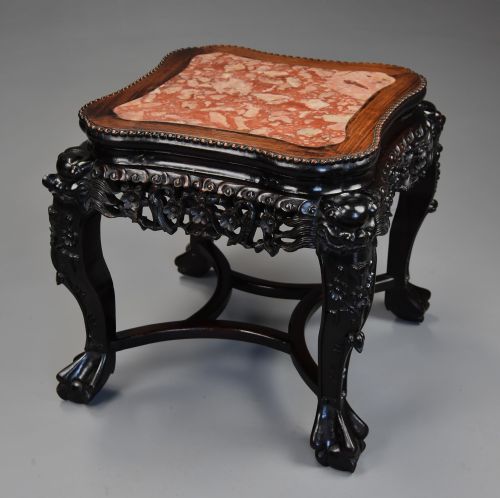
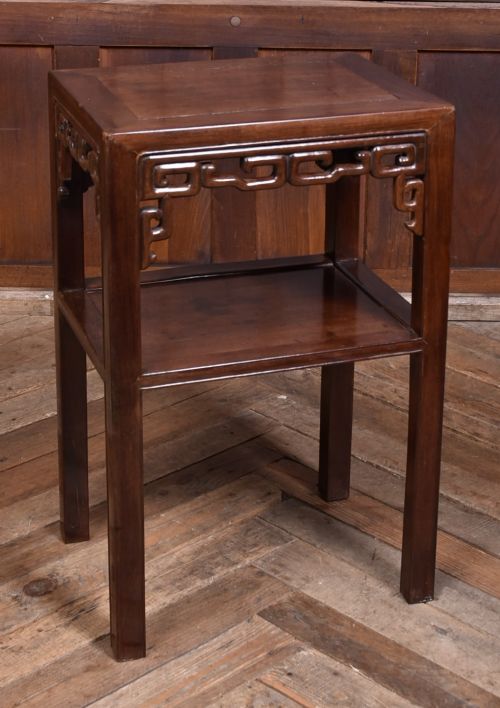
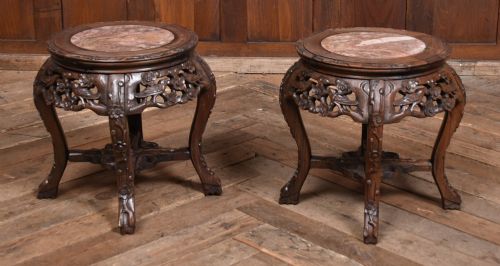
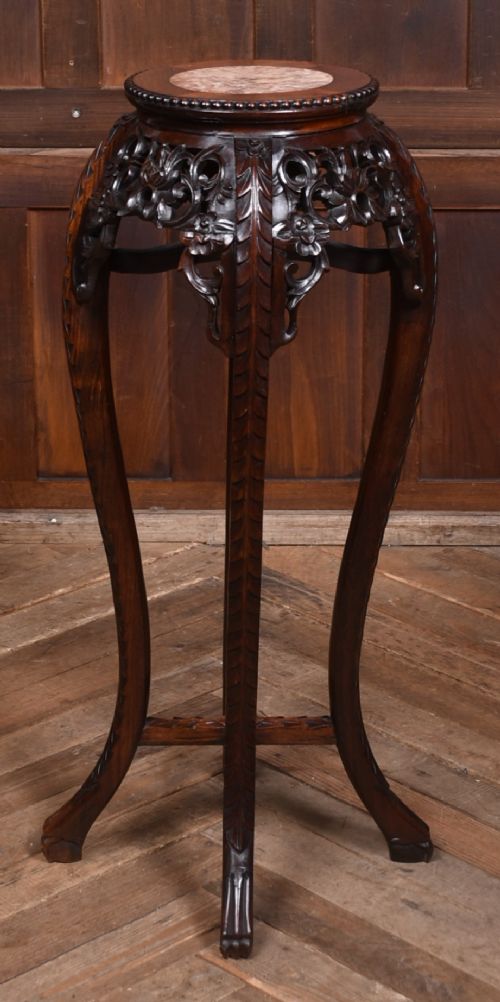
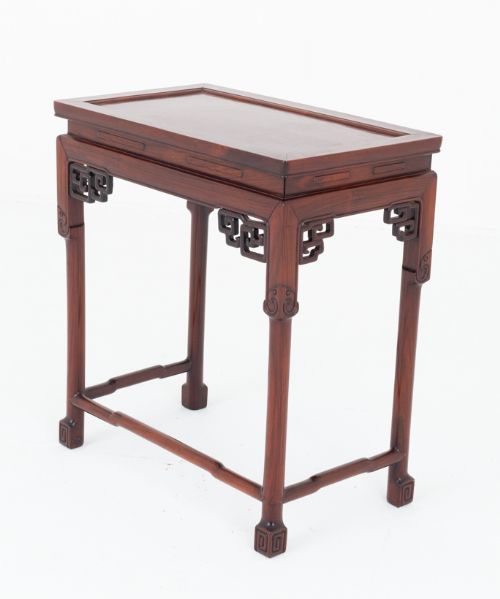
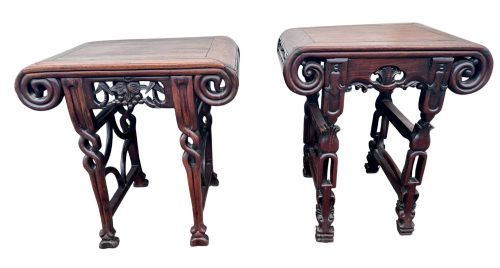
An oriental plant table display serves to elevate heavy pottery, bronze vessels, and floral arrangements within a room. These pieces appear in forms ranging from low pot stands to tall pedestals, alongside occasional tables and side tables adapted for display.
The selections here are predominantly nineteenth century creations, spanning the Victorian era and the Qing dynasty. Workshops in China and Japan produced these tables for export and domestic interiors, favouring robust timber construction paired with inset stone.
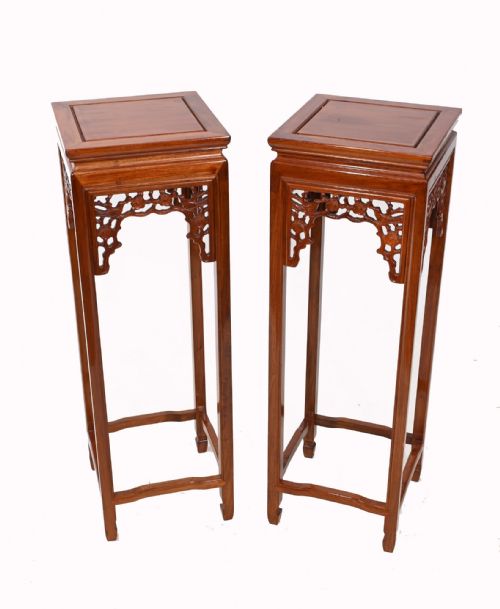
Buyers encounter individual stands, matched pairs, and graduated nest tables designed to hold jardiniieres, lamps, and ornamental objects. The forms vary from round and square tops to rectangular shapes with shaped aprons and pierced carvings.
Materials and construction
Carpenters utilised dense exotic timbers such as hardwood, rosewood, padouk, hongmu, and ebonised elm to bear the weight of heavy stone and ceramics. These woods received careful carving, often featuring intricate floral motifs, prunus blossom, and scrolling foliage.
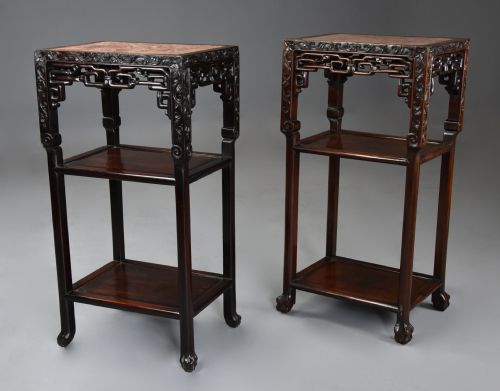
Makers set smooth panels of rouge and white marble, porcelain plaques, or mother-of-pearl inlay directly into the wooden frames of the tops. Joinery relied on traditional mortise and tenon techniques, creating rigid structures capable of supporting substantial vertical loads without metal fasteners.
The listings here feature nineteenth century Chinese and Japanese plant stands constructed from hardwood, rosewood, and ebonised elm with marble inserts.
Standards of craftsmanship
The distinction between ordinary and superior pieces rests upon the depth and crispness of the hand carving on the apron and legs. Finer examples display undercut relief work with smooth ground surfaces, whereas lesser pieces show shallow, machine-tooled or hastily finished detailing.
The selection of the inset marble or porcelain panel dictates the grade of the piece, with well-figured, unblemished stone tightly fitted to the rebates representing superior output. Heavier gauge timbers and stable joints distinguish the workshops that supplied high-end retailers from routine commercial production.
Liberty of London·Gabriel Viardot
The Oriental Plant Table Display Glossary
- Jardiniere stand
- A tall or low table specifically constructed to hold a ceramic plant pot or flower bowl. These stands feature sturdy tops designed to withstand moisture and heavy loads.
- Hongmu
- A dense, dark traditional Chinese hardwood prized for its strength and rich natural grain. Cabinetmakers used this timber for high-status Qing dynasty furniture and display pieces.
- Padouk
- A heavy, durable tropical hardwood displaying rich red or brown tones that darken with age. This timber provided a stable base for heavily carved plant stands.
- Japonisme
- A late nineteenth century European artistic movement inspired by Japanese art and design. Makers in the West adopted Asian forms and motifs to create eclectic domestic furnishings.
- Mother-of-pearl inlay
- A decorative technique involving the insertion of thin pieces of lustrous shell into carved recesses within wood. Artisans secured these fragments to form geometric and floral patterns.
Oriental Plant Table Display: Frequently Asked Questions
How were these tables used originally?
These tables served primarily to elevate large jardiniieres filled with plants or flowering shrubs within domestic interiors. They also functioned as side tables for lamps and decorative ornaments.
Placed in reception rooms and hallways, they added vertical interest and brought nature into formal living spaces.
How do I style a plant table today?
A plant table suits a corner or hallway where a tall silhouette creates architectural contrast against a plain wall. Pair the stand with a ceramic bowl, a trailing plant, or a bronze sculpture.
The sturdy construction allows the table to support heavy ceramics safely in daily use.
How do I distinguish Chinese and Japanese pieces?
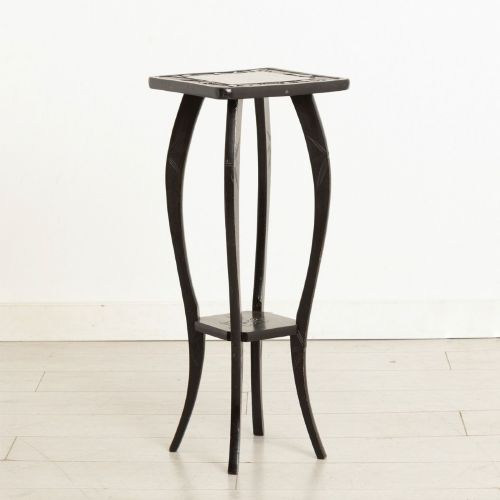
Chinese pieces from the nineteenth century frequently utilise dense hardwoods like hongmu and padouk with deep, naturalistic floral carvings. Japanese examples from the Meiji period often incorporate ebonised elm, bamboo, or distinct Aesthetic movement details.
Examining the joinery and carving style helps clarify the regional origin of each stand.