


Oriental Bonsai Display Table
An oriental bonsai display table elevates a small tree or ceramic vessel, bringing proportion and focus to interior spaces.
Oriental Bonsai Display Table
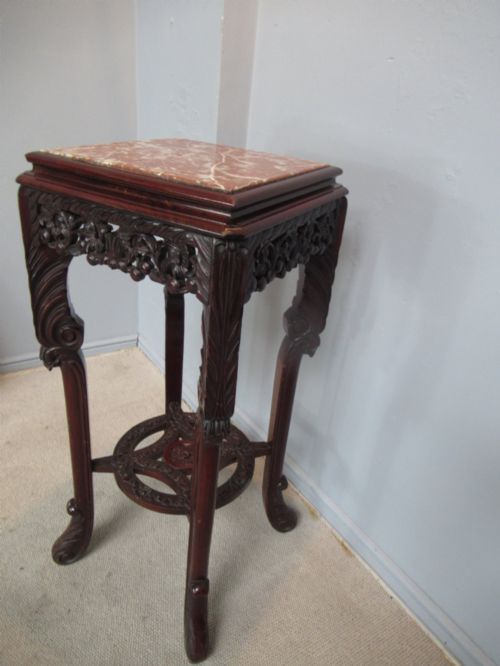
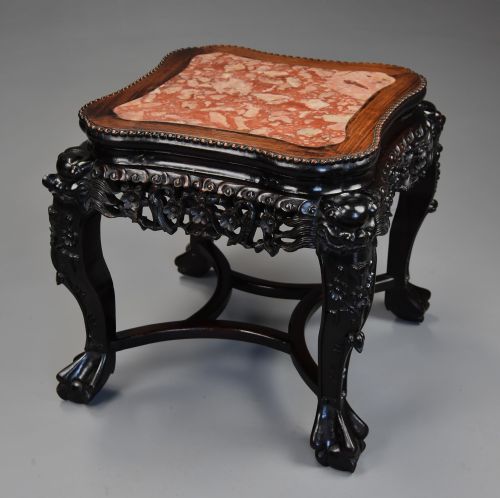
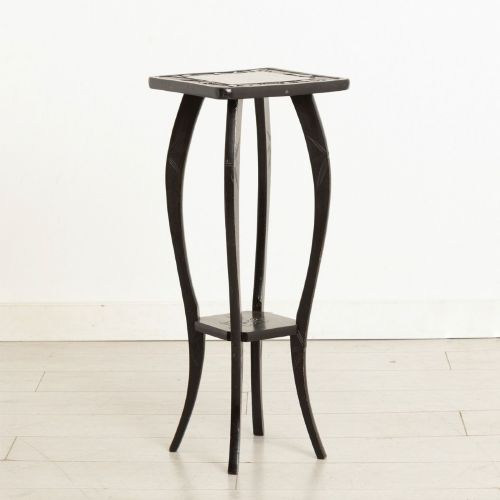
An oriental bonsai display table serves as a raised platform for plants, vases, and scholar's objects, originating primarily from nineteenth-century China and Japan. These low tables and tall pedestals appear frequently in Victorian homes through trade and export, taking forms such as jardiniere stands, kang tables, and small display platforms.
The objects span periods from the Victorian era into the early twentieth century, reflecting both traditional Qing Dynasty aesthetics and later Arts and Crafts or Aesthetic Movement tastes. Most pieces function as plant stands or vase stands, designed with sturdy tops to support heavy ceramics and dense timbers.
How they were made
Joinery relies on dense exotic timbers such as rosewood, hongmu, padouk, and other heavy hardwoods, selected for strength and deep natural grain. Cabinetmakers carved these materials by hand, shaping cabriole legs, aprons, and pierced frames to support inset panels.
Many examples incorporate marble panels into the top surface, providing a cool, stable contrasting texture for potted plants and vessels. Ebonised wood and painted hardwoods also appear, showing the diverse finishing techniques applied to export furniture.
Many a Victorian parlour acquired its exotic character entirely through a single carved plant stand holding an oversized fern.
What varies in quality
The depth and crispness of the hand carving distinguish finer examples from simpler production, particularly in pierced aprons and floral motifs. Dense, heavy timbers like hongmu and rosewood carry greater authority than lighter secondary woods.
The integration of the marble inset and the tightness of the structural joints indicate the skill of the original maker. Well-balanced proportions and refined surface patination elevate individual stands above standard utility pieces.
Liberty of London
The Oriental Bonsai Display Table Glossary
- Hongmu
- A traditional Chinese term denoting dense, dark hardwoods used for fine furniture and scholar's objects. This heavy timber develops a rich patina over time.
- Jardiniere stand
- A tall or low table specifically constructed to hold a ceramic flower pot or plant container. These stands protect interior surfaces and elevate greenery.
- Kang table
- A low table traditionally placed on a heated brick platform in Chinese interiors for dining or writing. Smaller scale examples serve well as display surfaces.
- Padouk
- A heavy tropical hardwood valued for its durability and reddish-brown coloration. Makers utilised this timber for robust carved plant stands.
- Aesthetic Movement
- A late nineteenth-century design current emphasising visual beauty over narrative content. British makers influenced by this style drew heavily on Japanese motifs.
Oriental Bonsai Display Table: Frequently Asked Questions
How were these stands used historically?
Historically, these tables held potted plants, jardiniere bowls, vases, and scholar's rocks in traditional Asian interiors and later in Victorian European homes. They placed prized natural objects in prominent positions.
Shorter kang tables sat upon raised platforms for daily tasks, while taller stands occupied corners and hallways as plant pedestals.
How do I care for a hardwood stand?
Maintain hardwood stands by dusting them regularly with a dry cloth and keeping them away from direct heat sources and sudden humidity changes. Natural wax can be applied sparingly to nourish the timber.
Protect marble insets from moisture and acidic spills by using suitable coasters or pads beneath heavy planters.
How can I tell the period of a stand?
Dating relies on timber selection, carving styles, and construction methods, matching pieces to nineteenth-century Qing Dynasty or Victorian export periods. Signs of hand tool work and natural wear help confirm age.
Late nineteenth-century examples often reflect trade influences such as the Aesthetic Movement or Japanese Meiji period design.