


19th Century Turkmen Textile
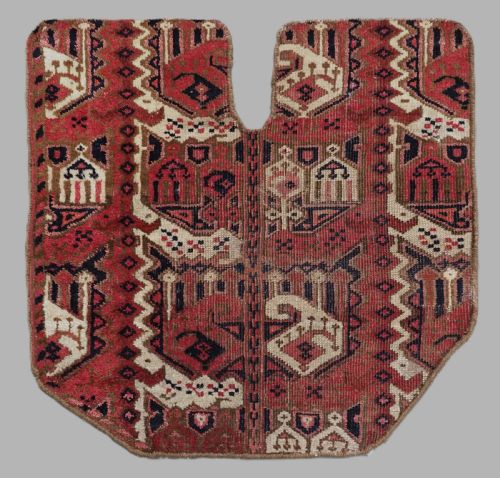
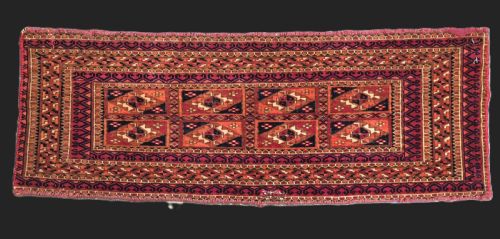
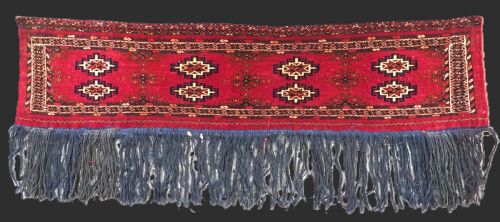
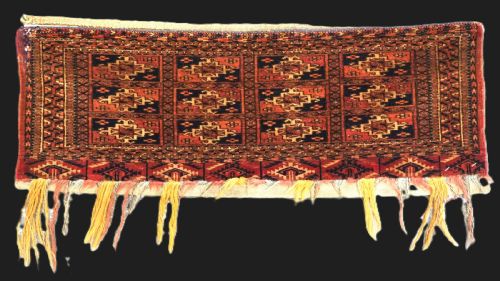
These 19th century turkmen textile examples are tribal trappings and bags woven by Central Asian weavers that bring rich nomadic design into a modern room.
19th Century Turkmen Textile
A 19th century turkmen textile is a tribal trapping, torba, asmalyk, or okbash originating from Central Asian makers during the decades of the late nineteenth century, specifically around eighteen seventy to eighteen ninety. These pieces served functional roles within nomadic households and tribal life, woven to decorate tents or store belongings.
Tribal weaving traditions such as Ersari, Yomut, Saryk, and Beshir define the selection available on this page, reflecting the rich heritage of Central Asian textile arts.
Materials and construction
Every 19th century turkmen textile utilises wool, frequently hand-spun wool, providing a sturdy and textured foundation for the weaving. Artisans applied natural dyes to colour the yarn, achieving deep and enduring hues across the field.
The construction involves careful pile weaving and decorative techniques, occasionally incorporating tassels or specific structural forms such as the okbash cover. The combination of hand-spun wool and natural dyes accounts for the tactile character of these Central Asian works.
19th Century Turkmen Textile Retail Price Guide 2026
Typical asking prices for 19th century turkmen textile among the pieces listed under this phrase on Sellingantiques today, from the lower quarter to the upper quarter. They describe what is for sale here now, not the wider market.
Listings exclusively feature wool materials combined with natural dyes across periods spanning eighteen seventy to eighteen ninety.
Assessing quality in tribal weaving
Quality in a 19th century turkmen textile rests on the precision of the tribal design, such as the rendering of specific gul motifs, star in octagon patterns, or ikat designs. Finer execution of these traditional patterns distinguishes exceptional weaving from simpler work.
The condition of the wool pile and the vibrancy achieved through natural dyes also shape the visual impact of each piece. Intact structures, complete tassels, and well-preserved pile enhance the integrity of the textile.
Ersari Turkmen·Yomut Turkmen·Saryk Turkmen·Chodor
The 19th Century Turkmen Textile Glossary
- Torba
- A small Turkmen wall hanging or storage bag used in nomadic tents. These pieces typically feature wide proportions and prominent tribal guls.
- Asmalyk
- A pentagonal trapping traditionally mounted on the flank of a wedding camel. They are among the most decorative forms produced by Yomut and other tribal weavers.
- Gul
- A repeating medallion or floral-derived motif used by Turkmen tribes to identify specific lineages and groups. Each design carries traditional significance.
- Ersari
- A major Turkmen tribal group known for varied designs, including Beshir influences and large-scale geometric patterns. Their weaving employs rich natural dyes.
19th Century Turkmen Textile: Frequently Asked Questions
What is a torba?
A torba is a small storage bag or trapping woven by Turkmen tribes. They were traditionally hung inside nomadic tents.
These pieces often display distinct tribal motifs such as the gul or star in octagon design.
How were these textiles used?
Nomadic groups used these woven items for practical storage, tent decoration, and ceremonial purposes during weddings.
Trappings like asmalyk decorated animal flanks, while okbash covered wooden tent poles.
What materials are used?
The pieces are constructed from wool, frequently employing hand-spun wool for the pile and foundation.
Weavers utilised natural dyes to colour the yarn, producing stable and rich tones.
How do I identify different tribes?
Tribal attribution relies on specific design vocabulary, including signature gul motifs and structural formats.
Groups such as Yomut, Saryk, and Ersari each maintain distinct visual traditions.