



19th Century Turkish Rug
A 19th century turkish rug brings centuries of Anatolian weaving tradition, rich natural dyes and distinctive village designs directly into a modern interior.

19th Century Turkish Rug
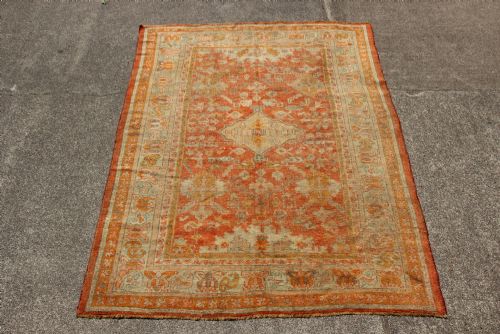
When you examine a 19th century turkish rug, you are looking at floor coverings and textiles woven across the towns and villages of Anatolia during the Ottoman era. These pieces range from large carpets originating in major production centres like Oushak to smaller village and tribal formats.
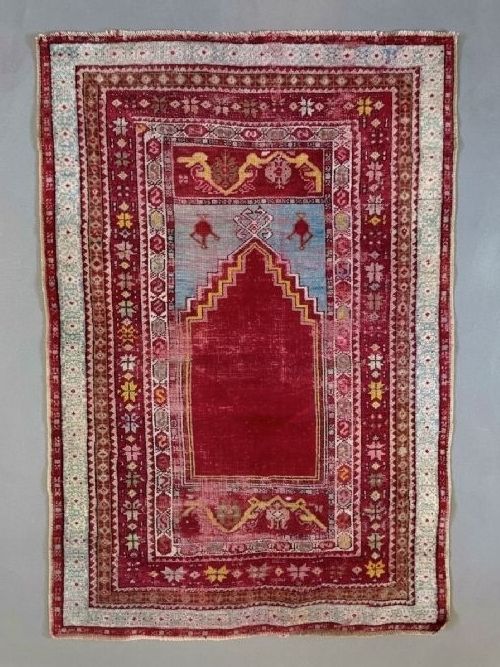
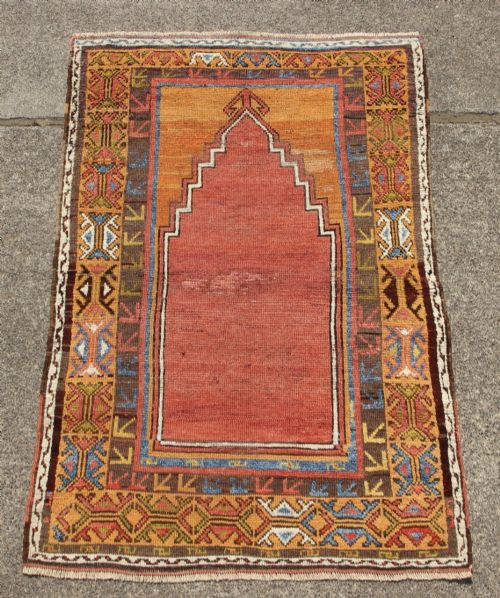
The most common examples encountered on this page are prayer rugs created in regional centres such as Ghiordes, Milas, Konya and Kirsehir. Collectors also find utilitarian formats like yastiks, kilims, saddlebags and runner rugs.
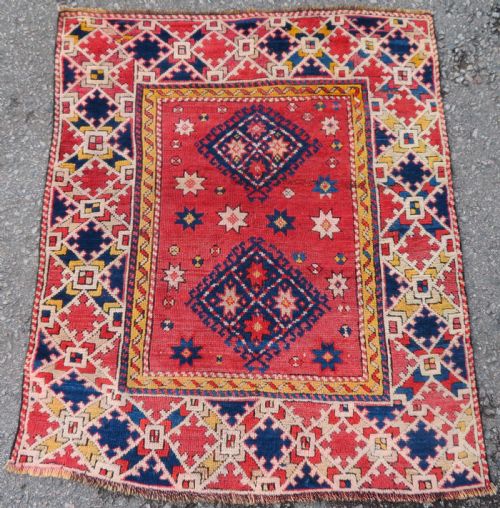
Village and nomadic pieces dominate the selection, displaying geometric motifs, stylized florals and architectural mihrab designs linked to specific weaving districts. Each item reflects the local traditions and materials available to the weavers of that specific region.
How They Were Made
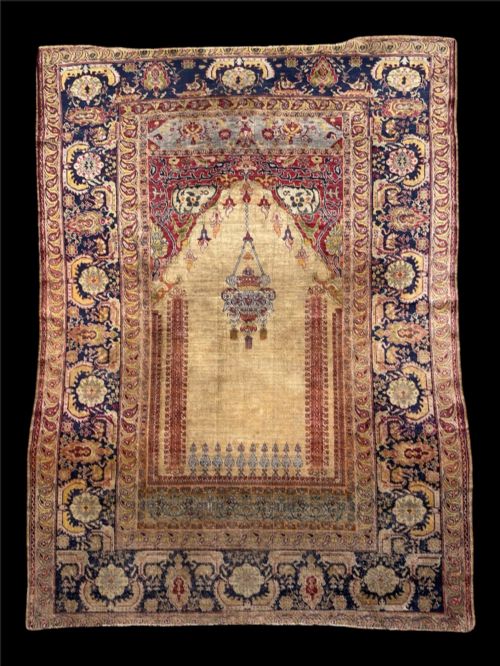
Weavers constructed these textiles using hand-spun wool for the pile and foundation, occasionally incorporating cotton or silk for finer pieces and detailed highlights. Metallic thread also appears in select luxury examples from urban workshops.
The colours derive from natural dyes extracted from plants, roots and insects, producing rich, saturated tones that soften gracefully over time. Skilled artisans tied wool onto cotton or wool warp and weft threads using the symmetrical knot.
Nomadic and village weavers worked on portable vertical or horizontal looms, creating authentic tribal rugs alongside workshop productions. Specialised regional looms produced specific formats, from long runners to small square mats and multi-niche safs.
19th Century Turkish Rug Retail Price Guide 2026
Typical asking prices for 19th century turkish rug among the pieces listed under this phrase on Sellingantiques today, from the lower quarter to the upper quarter. They describe what is for sale here now, not the wider market.
Materials recorded across the archive include hand-spun wool, silk, cotton, metallic thread, natural dyes, and leather.
What Varies in Quality
The distinction between standard village pieces and exceptional masterworks lies in the fineness of the knotting and the complexity of the design. Superior examples display precise drawing, balanced proportions and intricate border systems.
Material selection significantly influences the tier of a piece, with fine hand-spun wool, high-grade silk and well-preserved natural dye palettes elevating the status of the rug. Secondary materials like cotton foundations also indicate targeted urban production.
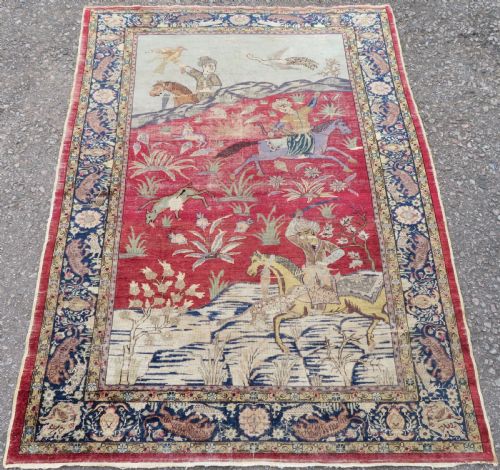
Original condition and completeness strongly affect desirability, particularly in older prayer rugs and kilims that retain their original borders and end finishes. Rarity of design, such as unusual green fields or pictorial hunting scenes, separates ordinary rugs from museum-grade specimens.
The 19th Century Turkish Rug Glossary
- Mihrab
- The arched niche design found predominantly on prayer rugs, representing the direction of prayer towards Mecca. This architectural motif often forms the central focus of Anatolian village pieces.
- Kilim
- A flat-woven textile produced without a pile by tightly interweaving warp and weft threads. These rugs offer crisp geometric patterns and lightweight versatility.
- Yastik
- A small Turkish cushion cover or short rug traditionally used for leaning against on divans. Their compact size makes them accessible entry points for collectors.
- Saf
- A multi-niche prayer rug featuring several mihrabs side by side in a continuous row. Historically used in mosques by multiple worshippers, these carpets are exceptionally scarce.
- Oushak
- A major carpet-weaving town known for large-scale floral designs and subdued terracotta or golden colour palettes. Pieces from this centre heavily influenced European interior decoration.
19th Century Turkish Rug: Frequently Asked Questions
How do I identify a prayer rug?
Prayer rugs feature a distinct pointed arch or architectural niche at one end, known as a mihrab, which directed the worshipper toward Mecca. These formats typically display compact dimensions designed for individual use.
Secondary motifs often include hanging lamps, columns, or floral sprays framing the central field. Regional variations in the arch shape help attribute the piece to weaving centres like Ghiordes, Ladik, or Milas.
Where were these rugs woven?
Weaving took place across Anatolia, spanning urban workshops in Oushak and Kayseri as well as rural villages in Bergama, Konya, and Kirsehir. Each region developed distinct colour preferences and geometric or floral motifs.
Nomadic tribes travelling through Eastern and Central Anatolia also produced distinctive pieces like saddlebags and runner rugs. Local geography heavily dictated the materials and wool qualities available to the makers.
Are these rugs suitable for daily floor use?
Many nineteenth-century pieces were built for practical domestic application using durable hand-spun wool and sturdy foundations. Placing a quality underlay beneath the textile absorbs foot traffic and prevents slipping on hard surfaces.
Fragile silk examples, delicate pictorials, and antique fragments require careful placement out of heavy thoroughfares. Rotating the rug periodically ensures even exposure to light and wear.
What is a yastik rug?
A yastik is a traditional Turkish cushion cover woven in smaller dimensions for placement on low seating divans. Their portable format and rich regional designs made them popular household items in nineteenth-century Anatolia.
Collectors prize these smaller textiles because they often showcase the same meticulous knotting and natural dye palettes found in full-sized carpets. Their scale allows them to function easily as wall hangings or small accent floor pieces.