



19th Century Trinket Chest
A 19th century trinket chest provides a small, secure repository for keepsakes, combining period craftsmanship with practical utility.
19th Century Trinket Chest
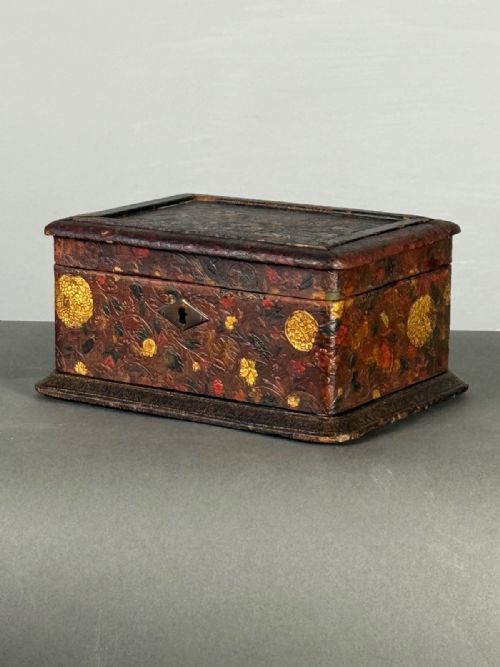
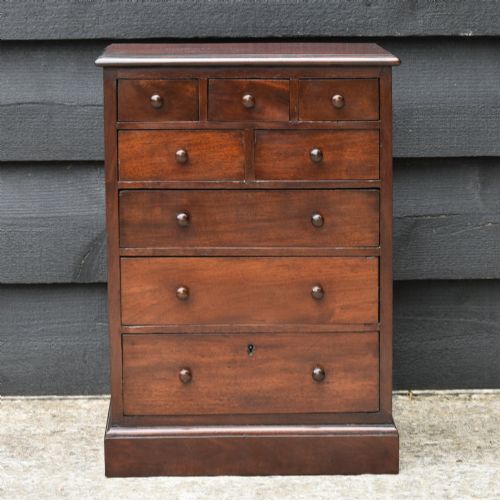
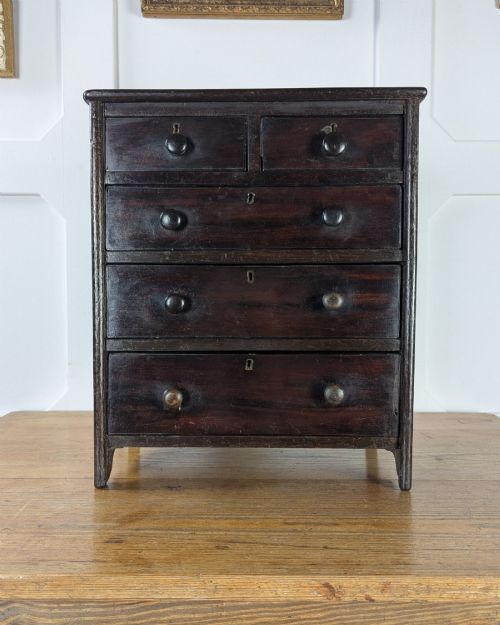
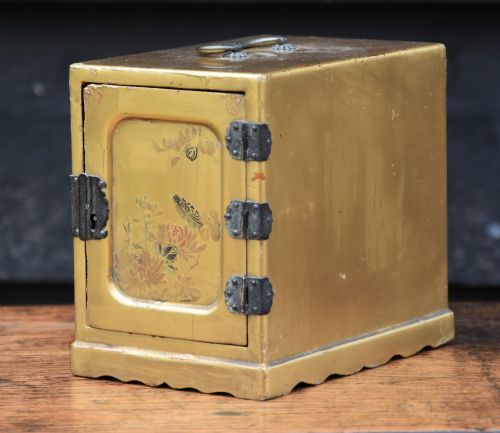
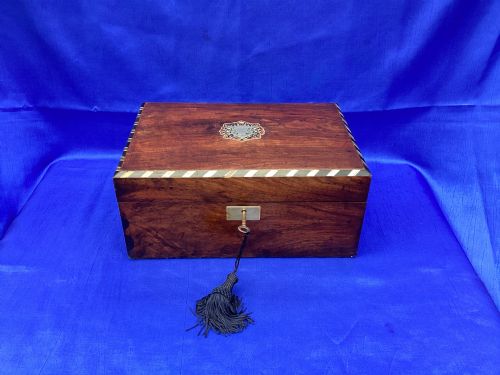
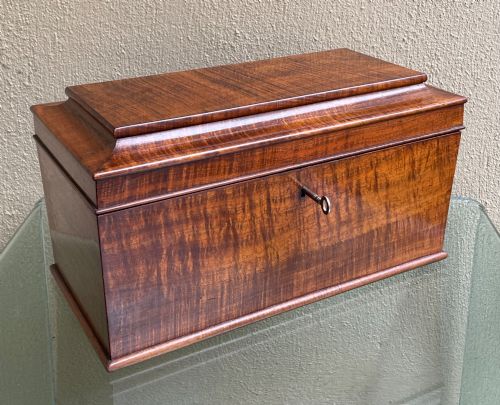
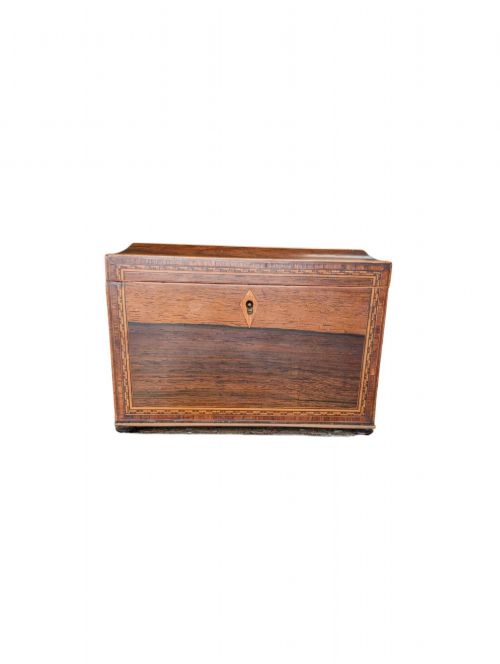
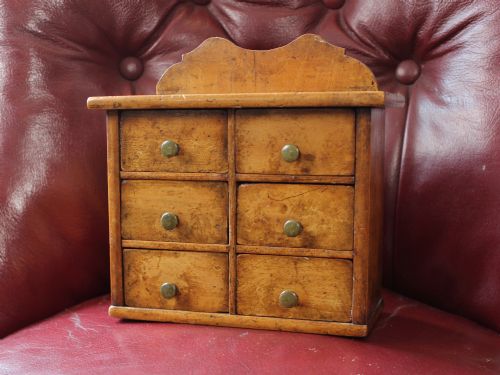
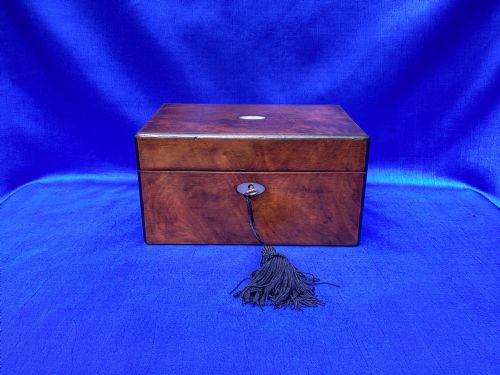
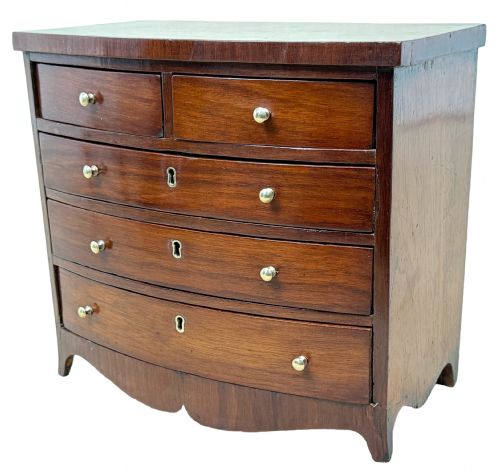
A 19th century trinket chest encompasses diverse forms such as miniature chests of drawers, jewellery caskets, tea caddies, and small decorative boxes. The pieces originate from Victorian, Regency, and broader nineteenth-century periods, capturing the functional domestic storage needs of the era.
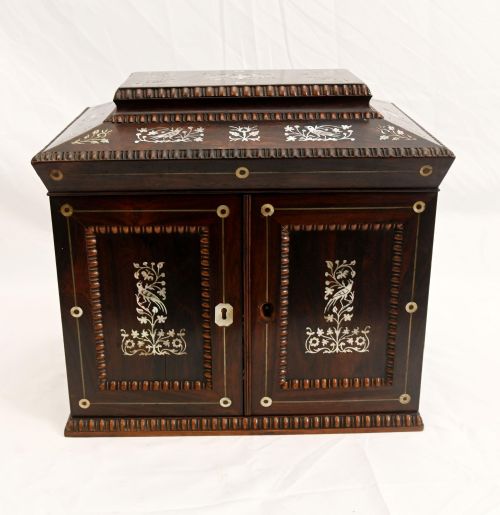
Miniature chests of drawers and apprentice pieces dominate the selection alongside rosewood jewellery boxes, mahogany tea caddies, and inlaid Sorrento ware. Buyers encounter various regional variations, including Japanese gilt lacquer, Scandinavian folk art pine, and French leather-covered boxes.
How They Were Made
Construction relies heavily on dense timbers such as mahogany, rosewood, walnut, and fruitwood, often enhanced by brass mounts, boxwood stringing, or mother-of-pearl inlay. Artisans shaped these materials using traditional joinery methods suited to miniature cabinetry and portable caskets.
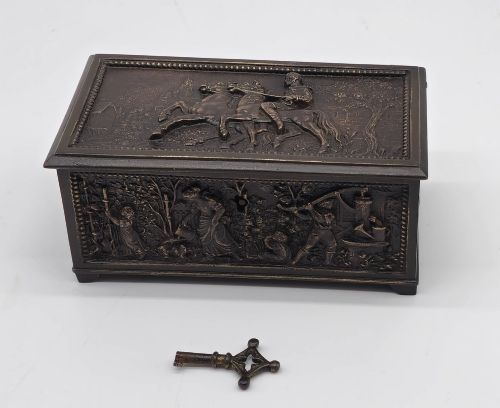
Surface ornamentation ranges from Tunbridge Ware mosaic patterns and hand-painted pine to fine marquetry, pokerwork, and silver inlay on bronze or brass bases. Interiors frequently retain fitted compartments, paper linings, and original locking mechanisms.
The inventory spans Victorian, Regency, and 1860 periods, including French, Italian, Scandinavian, and Japanese origins.
What Varies in Quality
Quality rests upon the precision of the cabinetwork, the complexity of the internal fittings, and the integrity of decorative inlays like mother-of-pearl or Tunbridge Ware. Superior examples display tight dovetail joints, well-matched timber veneers, and intact original hardware without excessive replacement parts.
The sophistication of the design - such as curved bowfronts, hand-painted motifs, or complex brass binding - separates standard utility boxes from high-status presentation pieces and miniature furniture made by skilled makers.
Susse Freres Paris
The 19th Century Trinket Chest Glossary
- Apprentice piece
- A small-scale item of furniture created by a craftsman to demonstrate skill for trade guild membership.
- Tea caddy
- A small container designed to store loose tea leaves securely, often featuring internal lidded compartments.
- Tunbridge ware
- Woodwork decorated with mosaic tesserae forming detailed pictorial or geometric surface patterns.
- Sorrento ware
- Woodwork featuring intricate marquetry and mosaic designs originating from Italy.
- Kodansu
- A traditional small Japanese cabinet with multiple drawers or doors for storing valuables.
19th Century Trinket Chest: Frequently Asked Questions
What is a 19th century trinket chest used for?
These small containers held jewellery, keepsakes, sewing implements, or correspondence on dressing tables and desks.
Today, they serve the same organisational purpose while acting as decorative antique accessories in domestic interiors.
How do I identify a Regency period box?
Regency pieces often display classical proportions, brass inlay, rosewood veneers, and clean architectural lines typical of the early nineteenth century.
They frequently take the form of tea caddies, work boxes, or miniature chests produced around the early decades of the eighteen-hundreds.
What distinguishes an apprentice piece?
Apprentice pieces are miniature versions of full-sized furniture, such as bowfront chests or sideboards, made with meticulous detail.
Craftsmen created them to prove their technical mastery before attaining full guild status.
How should I care for a wood trinket chest?
Keep wooden boxes away from direct sunlight and fluctuating radiator heat to prevent timber shrinkage and veneer lifting.
Apply occasional traditional wax polish to nourish rosewood, mahogany, or walnut surfaces and maintain the patina.