
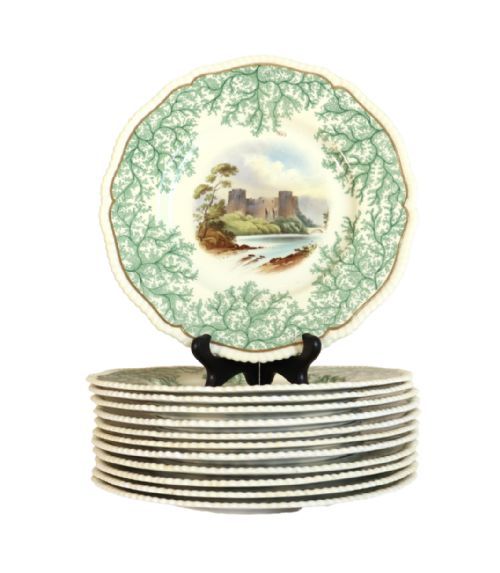
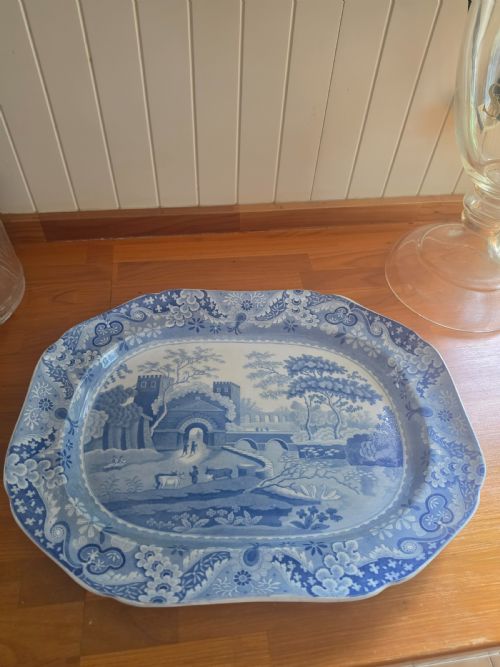
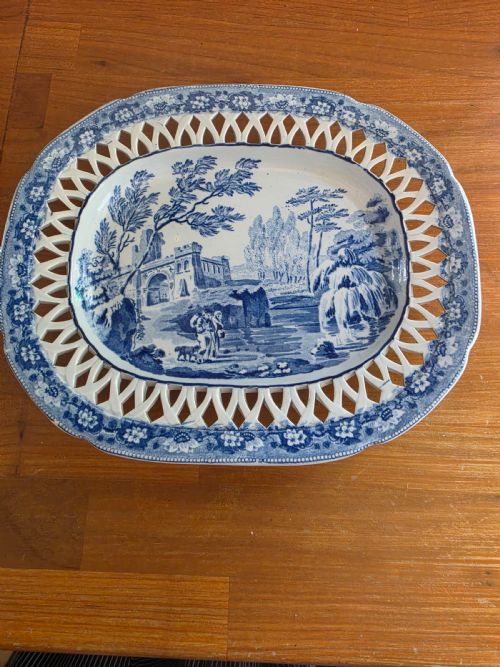
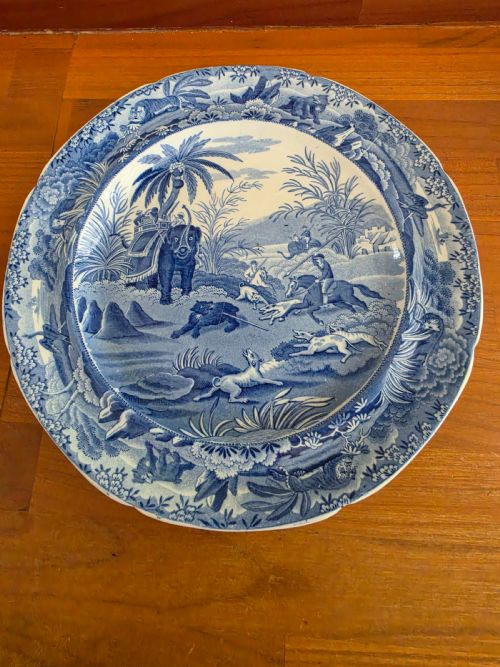




19th Century Transferware Plates
These 19th century transferware plates bring intricate historical scenes and durable ceramic bodies to the table.
19th Century Transferware Plates
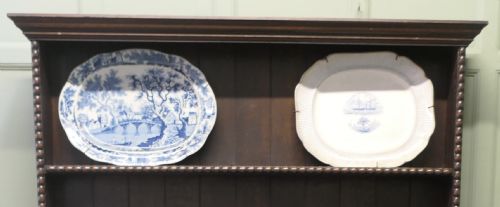
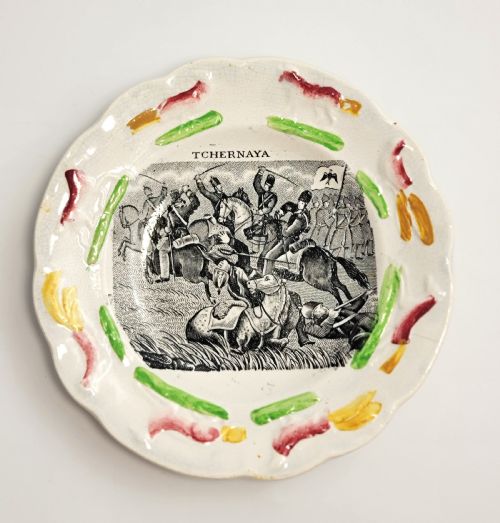
Collectors searching for 19th century transferware plates encounter earthenware, pearlware, and stoneware vessels decorated with printed pictorial designs. These pieces range from small individual dessert plates to large meat platters and serving dishes created during the Georgian and Victorian eras.
The inventory on this page draws heavily from English factories, featuring named patterns such as Spode Italian, Willow, and various scenic views. Buyers frequently meet sets of dinner plates alongside single large platters bearing blue and white prints.
How they were made
Potters produced these items using earthenware or pearlware bodies shaped on wheels or in moulds. Artisans then applied engraved copper-plate prints transferred via tissue paper onto the porous ceramic surface before glazing.
Fired in kilns, the glaze fused with the metallic oxide print, typically cobalt blue, to create a permanent glossy finish. Some wares incorporated enamel highlights or ironstone formulations for added strength.
Named topographical scenes and botanical series appear alongside classical architectural motifs on these ceramic plates.
What varies in quality
Quality depends upon the crispness of the transfer print and the clarity of the underlying ceramic body. Well-defined lines without blurring indicate superior copper-plate engraving and careful firing control.
The complexity of the pattern and the prestige of the pottery influence the desirability of the piece. Uniform glaze coverage and minimal kiln artefacts distinguish finer examples from standard utilitarian wares.
Spode·Davenport·John Ridgway·Minton·Wedgwood·Brameld and Co·John Rogers and Son
The 19th Century Transferware Plates Glossary
- Transferware
- Pottery decorated by printing a design from an engraved copper plate onto tissue paper, then transferring that ink onto the unglazed or biscuit ceramic body.
- Pearlware
- A refined earthenware developed in the late eighteenth century featuring a bluish glaze that pooled in recesses to create a whiter appearance.
- Tazza
- A shallow ornamental bowl or plate mounted on a stem and foot, often utilised for serving fruit or sweets.
- Ironstone
- A heavy, durable type of earthenware patented in the nineteenth century that mimics porcelain in strength.
19th Century Transferware Plates: Frequently Asked Questions
How do I date these plates?
Dating relies on maker marks, ceramic bodies such as pearlware versus later ironstone, and stylistic cues from the printed borders. Examining the registration marks stamped into the reverse helps narrow down the production decade.
Changes in glaze colour and the evolution of transfer printing techniques from soft blurry lines to sharp details provide further chronological markers.
Can I use them for dining?
Many of these plates remain structurally sound for gentle daily use or special dining occasions. Hand washing protects the historical glaze and prevents crazing over time.
Avoiding modern dishwashers and microwaves preserves the integrity of the nineteenth-century ceramic bodies and enamel decorations.
What caused the blue colour?
The iconic blue comes from cobalt oxide applied beneath the transparent glaze. Cobalt withstands the high temperatures required to melt the glass glaze without burning away.
Engravers cut fine lines into copper plates to hold the cobalt pigment, which absorbed into the porous earthenware during the kiln firing.
Are Willow pattern plates common?
Willow pattern plates appear frequently because multiple Staffordshire potteries reproduced the popular Chinoiserie design throughout the nineteenth century. Variations in the border and printing quality distinguish different factory outputs.
This romantic landscape scene became a staple of British households during the Victorian era.